
Photos Reveal Moths Sipping Tears from a Moose
Deep in the hushed embrace of a northern forest, where the air hangs thick with the scent of pine and damp earth, most eyes are drawn upwards, scanning for the majestic sweep of an eagle’s wing or the subtle flick of a deer’s ear. But for those of us who carry a magnifying glass in our souls, the true drama unfolds beneath our feet, within the intricate architecture of a single leaf, or in the buzzing orbit around a dewdrop. It’s a world brimming with life, often unseen, always astonishing. Here, creatures the size of a thumbnail orchestrate lives of profound complexity, engaging in behaviors that challenge our very understanding of nature’s ingenuity. We think we know the forest, but it’s only when we shrink our perspective, when we truly lean in, that the curtain begins to rise on its most exquisite performances. And sometimes, these performances are so unexpected, so utterly bizarre, that they redefine what we thought possible.
The very idea of a moth, that fluttery, nocturnal shadow, typically conjures images of delicate wings beating around a porch light or perhaps a caterpillar munching on a garden leaf. Their diets are often perceived as straightforward: nectar from flowers, decaying fruit, or the occasional fabric in a forgotten closet. Yet, the insect world is a masterclass in adaptation, a realm where nutritional needs drive creatures to exploit resources in ways we often find startling. From dung beetles rolling their pungent treasures to certain flies that feast on carrion, the menu of the invertebrate universe is vast and varied. But what if a creature, seemingly so benign, sought sustenance from the very wellspring of emotion? What if it looked to the tears of another animal, not just as a casual sip, but as a vital part of its existence?
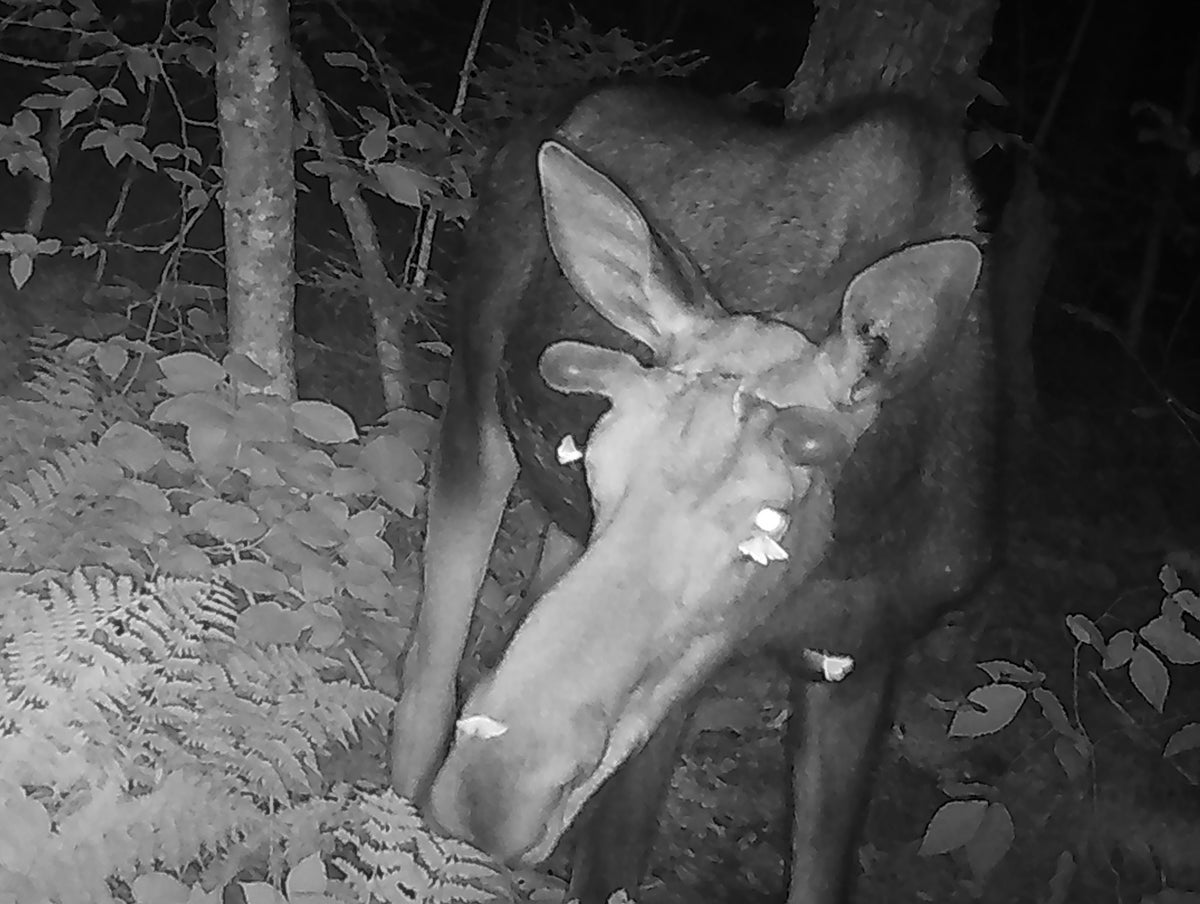
This is precisely the extraordinary scene captured recently in the wilds of North America, a discovery that has sent ripples of excitement through the entomological community. New photographs have emerged, revealing several species of moths delicately probing the eyes of a moose, their slender proboscises extended to sip the tears flowing from the animal’s ducts. This behavior, known scientifically as lachryphagy, is not entirely new to science, but its observation outside of tropical regions is exceptionally rare. Until now, most documented instances of moths drinking tears have come from the steamy, biodiverse rainforests of the Amazon and Southeast Asia, where butterflies and moths are known to seek out the tearful bounty of turtles, crocodiles, and even birds. To witness it in a temperate zone, involving a large mammal like a moose, is a significant event, marking only the second such observation outside the tropics. These images are more than just captivating; they are a window into a previously unappreciated facet of northern ecology, challenging our preconceived notions of where and how these intricate interactions occur.
The sheer audacity of these small insects, approaching an animal many thousands of times their size, speaks volumes about the powerful drive for survival. The moose, for its part, appears largely unfazed, a testament to the gentle and non-invasive nature of the moths’ feeding. The insects are not causing harm, nor are they likely to transmit disease in this context. Instead, they are simply harvesting a precious resource. What makes tears so appealing? The answer lies in their chemical composition. Tears are rich in sodium, a vital electrolyte that is often scarce in the diets of many herbivores and, by extension, the insects that feed on them or their byproducts. Beyond sodium, tears contain proteins, amino acids, and other essential minerals. For a moth whose diet might primarily consist of sugary nectar, a supplemental source of these crucial nutrients can be a game-changer for reproduction, egg development, and overall vitality.
The Micro Hook: A Whisper in the Wilderness
Imagine a twilight moment in the boreal forest. The sun dips below the horizon, painting the sky in hues of deep purple and fiery orange. A moose, having spent its day wading in a cool pond, emerges onto the shore, perhaps shaking a few droplets from its thick fur. As it blinks, a glint of moisture catches the fading light. Most would see only the serene majesty of the animal, a symbol of wild solitude. But if you were to slow down, to truly observe, you might notice a subtle flicker near its eye. Not a fly, not a gnat, but something more deliberate, more focused. This is the moment when the hidden world reveals itself. A moth, often dismissed as a mere fluttering shadow, approaches with a purpose born of ancient, evolutionary drives. It’s not just a creature of beauty; it’s a living, breathing scavenger of a most unusual kind, tapping into a nutrient source that has remained largely overlooked by scientific inquiry in this particular context. This single interaction, fleeting and easily missed, reminds us that every corner of our planet, no matter how familiar, holds secrets waiting to be unearthed by those with curious eyes and an open mind.
The Discovery: An Unlikely Feast
The photographs that brought this revelation to light are a triumph of patient observation. They detail not just one moth, but multiple individuals, sometimes from different species, clustered around the moose’s eyes. Each moth extends its proboscis – a straw-like mouthpart – with surgical precision, drawing up the saline solution. The images are a stark reminder of the power of citizen science and dedicated field researchers. These aren’t staged encounters; they are candid snapshots of nature’s relentless pursuit of sustenance. The fact that these observations are so rare outside the tropics suggests either that the behavior is genuinely less common in temperate zones, or simply that it has been incredibly difficult to document. Northern environments, while rich in biodiversity, often present harsher conditions and different nutrient landscapes compared to the lush tropics. This makes the discovery even more compelling, highlighting the incredible adaptability of these insects to exploit available resources wherever they may be found.
Scientists hypothesize that the specific species of moths involved might be generalists, capable of adapting their feeding strategies to whatever is available. The scarcity of certain minerals, particularly sodium, in the diets of herbivorous mammals (and thus in the plants they consume) means that any concentrated source of these nutrients becomes highly valuable. Tears, therefore, represent a liquid mineral lick, a readily accessible and renewable resource for these opportunistic feeders. The behavior itself is a delicate balance: the moths must be quick and precise enough to obtain their meal without irritating the host, which could lead to a swift, fatal swat. The apparent tolerance of the moose suggests that the interaction is minimal, perhaps even unnoticed by the large animal, allowing the moths to complete their unusual feast without disturbance. This kind of interspecies interaction, where one benefits without significantly harming the other, is a fascinating example of commensalism, a subtle thread in the vast web of life.
Ecological Context: The Web of Life’s Hidden Threads
This tear-drinking behavior, while seemingly bizarre, fits perfectly into the broader ecological narrative of nutrient cycling and resource exploitation. In many ecosystems, essential minerals like sodium are not evenly distributed. Animals, from large mammals to tiny insects, have evolved myriad strategies to acquire these vital elements. Moose, for example, are known to seek out natural salt licks or even consume aquatic plants rich in sodium. For moths, whose adult lives are often brief and energy-intensive, every opportunity to gather critical nutrients is seized. Lachryphagy is just one striking example of this drive. Other insects, such as certain species of bees and butterflies, are known to drink sweat, urine, or even blood for similar reasons – to acquire salts and other compounds. This intricate dance of resource acquisition underscores a fundamental principle of ecology: every organism, no matter how small, plays a role in the grand scheme, often in ways that defy our initial assumptions.
The presence of lachryphagous moths in northern latitudes adds another layer of complexity to our understanding of temperate ecosystems. It suggests that even in environments we consider well-studied, there are still vast gaps in our knowledge of micro-interactions. These moths are not just individuals seeking a meal; they are indicators of broader ecological dynamics. Their behavior speaks to the nutrient availability within the local environment and the evolutionary pressures that shape insect adaptations. It reminds us that the health of a forest is not just about the trees or the apex predators, but also about the unseen armies of invertebrates that pollinate, decompose, and, in this case, even sip tears, contributing to the intricate balance that sustains life. It’s a powerful illustration of how the smallest creatures can reveal the biggest ecological truths, demonstrating the profound interconnectedness of all living things, from the largest moose to the most delicate moth.
The Field Angle: Where Can a Traveler Witness the Unseen?
For the intrepid ‘Wandering Science’ enthusiast, the thought of witnessing such an extraordinary event might spark an irresistible urge to embark on a quest. While observing moths sipping tears from a moose is an exceptionally rare and challenging endeavor, the spirit of discovery it embodies is entirely accessible. The first step is to cultivate patience and a deep appreciation for the small. This behavior, like so many of nature’s subtle wonders, reveals itself to those who are willing to slow down, to truly look, and to listen to the whispers of the wilderness.
To increase your chances of encountering unique insect-animal interactions, focus your travels on areas rich in biodiversity and with diverse habitats. Northern forests and wetlands, particularly those frequented by large mammals like moose, deer, or elk, would be prime locations. Consider national parks and remote wilderness areas in places like Alaska, Canada, or the northern reaches of the contiguous United States. These environments offer the best opportunities for undisturbed wildlife observation. Timing is also crucial; many moths are nocturnal, so venturing out at dusk or dawn, or even after dark with a red-light headlamp (to minimize disturbance), might yield unexpected sightings.
What tools should a ‘Wandering Science’ traveler pack? A good pair of binoculars is essential for observing wildlife from a respectful distance. For closer inspection of insects, a macro lens for your camera or a simple hand lens can open up a world of detail. A reliable field guide to local insect species will help you identify what you’re seeing. Most importantly, bring an open mind and a profound respect for the natural world. Remember that these are wild animals and their behaviors should never be interfered with. Observe from a distance, minimize your impact, and leave no trace.
While you might not capture the next viral image of a lachryphagous moth, the journey itself will be immensely rewarding. You might observe butterflies “puddling” on damp soil, bees gathering sap from tree wounds, or a myriad of other fascinating insect behaviors that often go unnoticed. Each observation, no matter how small, contributes to your understanding of the intricate web of life. The story of the tear-drinking moths reminds us that wonder is everywhere, often hidden in plain sight, waiting for us to stop, look closer, and marvel at the endless inventiveness of the natural world. So, pack your bags, sharpen your senses, and prepare to be amazed by the incredible lives unfolding in the small spaces all around us.

About admin
A curious explorer documenting the intersection of science and travel. Join the journey to discover the hidden stories of our planet.
Leave a Reply