
Leveraging insights from neuroscience to build adaptive artificial intelligence
Deep beneath the gnarled roots of an ancient redwood, where perpetual twilight reigns and the air hums with the scent of damp earth and decaying wood, a drama unfolds. A slender, segmented creature, barely an inch long, navigates a labyrinth of fallen needles and crumbling bark. This is Pterostichus californicus, a ground beetle, and its journey isn’t random. Its antennae, flickering like miniature divining rods, constantly sample the chemical landscape, mapping out a world far richer and more complex than our own. It’s searching for prey – a springtail, perhaps, or a tender larva – and every twitch, every directional shift, is a micro-decision, a computation performed by a brain no larger than a poppy seed. This isn’t mere instinct; it’s an elegant, adaptive intelligence at work, a biological algorithm honed over millions of years to thrive in an ever-changing environment. For us at Wandering Science, these moments are not just observations; they are windows into the very essence of problem-solving, a living blueprint for understanding how intelligence itself operates.
The sheer efficiency and adaptability of insect and arachnid nervous systems are astounding. Consider the common garden spider, Araneus diadematus. Its web, a marvel of bio-engineering, isn’t just spun once and left. If a section is damaged by wind or a clumsy bird, the spider doesn’t abandon its entire creation. Instead, it senses the vibrations, identifies the compromised strands, and meticulously repairs or rebuilds only the necessary portions. This isn’t a fixed program; it’s dynamic adaptation. The spider processes sensory input – tension in the silk, air currents, the presence of prey – and generates an appropriate, energy-efficient response. This real-time learning, this capacity to generalize from past experiences and adapt to novel challenges, is precisely what researchers in artificial intelligence aspire to emulate. They look to these creatures not just for inspiration, but for tangible models of robust, flexible computational systems that operate with remarkable precision despite limited resources.
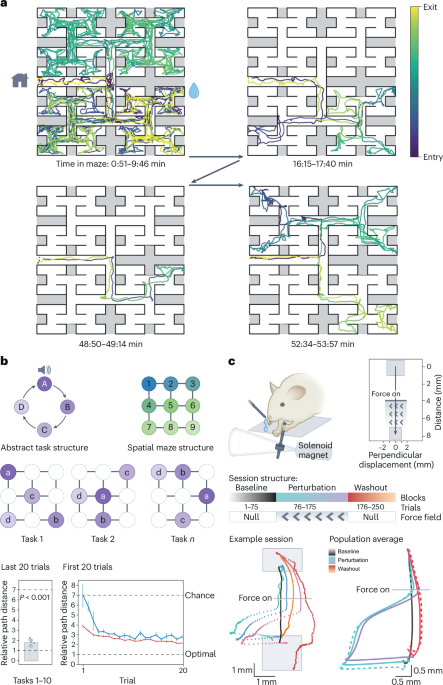
Our fieldwork continually reveals these sophisticated biological “discoveries.” Take the desert ants of the genus Cataglyphis, which forage in scorching, featureless landscapes. These ants navigate vast distances, often on winding, unpredictable paths, yet they can return to their tiny nest entrance with astonishing accuracy, even if they’ve never taken that exact route before. How? They employ a sophisticated form of path integration, constantly calculating their position relative to the nest by integrating their heading and distance traveled. This involves processing celestial cues (polarized light from the sky), an internal pedometer, and even olfactory gradients. When researchers disrupt one of these cues, the ants demonstrate remarkable compensatory strategies, relying more heavily on others. This isn’t just following a map; it’s creating and updating a dynamic mental model of their environment, a feat that requires complex neural computations. Such systems offer a profound lesson for AI developers striving to build autonomous robots capable of navigating unknown terrains without constant human intervention or pre-programmed maps. The biological “data analysis” here shows a multi-modal sensory fusion and decision-making process that prioritizes adaptability and resourcefulness.
The ecological context of these behaviors is crucial. Every adaptive strategy, every neural shortcut, has been forged in the crucible of natural selection. The ground beetle’s keen sensory array allows it to locate food in a cluttered environment, securing its survival and playing its part as a predator of smaller invertebrates, helping to regulate their populations. The spider’s ability to repair its web ensures it can continue catching prey, thus maintaining its energy balance and reproductive success, while also controlling insect populations in its immediate vicinity. The desert ant’s navigation skills mean it can exploit ephemeral food sources in a harsh environment, efficiently bringing sustenance back to the colony, which in turn aerates the soil and disperses seeds. These creatures are not isolated entities; they are integral threads in the grand, intricate fabric of life. Their “small world” intelligence, far from being simplistic, is a vital engine driving nutrient cycles, pollination, decomposition, and predator-prey dynamics across every ecosystem on Earth. Understanding their neural architectures and behavioral algorithms isn’t just about building better robots; it’s about appreciating the deep wisdom embedded in biodiversity and the interconnectedness of all living things.
For the curious traveler, the beauty of observing these marvels is that they are everywhere. You don’t need a passport to a remote jungle (though those are fantastic too!). Start in your own backyard. Turn over a flat stone in your garden, and you might find a colony of ants meticulously tending to aphids, or a rove beetle scuttling away, its segmented body a testament to ancient design. Visit a local park at dusk and watch for orb-weaving spiders spinning their intricate traps between lampposts or branches. Their webs, glistening with dew, are not just engineering wonders but also dynamic neural extensions, providing constant feedback on the environment. Head to a nearby forest trail, and pay attention to the leaf litter. Bring a magnifying glass and spend time patiently observing; you’ll be astonished by the sheer diversity of life – springtails, millipedes, mites, and countless beetle species – each with its own incredible adaptations. Even a cracked sidewalk can host a fascinating array of insect life, demonstrating resilience and ingenuity in the face of urban sprawl.
For those seeking more specialized encounters, consider a trip to a national park or a dedicated wildlife sanctuary. In the Sonoran Desert, you can witness the incredible foraging treks of Cataglyphis ants firsthand, especially during the cooler parts of the day. Tropical rainforests, with their unparalleled biodiversity, offer opportunities to see leaf-cutter ants marching in vast, organized columns, each ant performing a specific task, a living superorganism guided by distributed intelligence. Observing a trap-door spider patiently waiting in its camouflaged burrow, only to spring out with lightning speed, offers a glimpse into predatory neurobiology. The key is patience, a keen eye, and a willingness to slow down and truly look. These small creatures, often overlooked, hold profound lessons not just for the future of artificial intelligence, but for our understanding of life itself. They remind us that complexity and genius are not exclusive to large brains, but flourish in myriad forms, waiting to be discovered, understood, and cherished.

About admin
A curious explorer documenting the intersection of science and travel. Join the journey to discover the hidden stories of our planet.
Leave a Reply