
Inflammageing and clonal haematopoiesis interplay and their impact on human disease
Deep in the leaf litter, where sunlight struggles to penetrate and the air hangs thick with the scent of decay and damp earth, a drama unfolds. A minute, iridescent rove beetle, no bigger than a grain of rice, scurries with frantic energy, its antennae twitching, scanning for the faint chemical signature of its next meal. It’s a relentless pursuit, a dance of survival played out on a stage of crumbling leaves and fungal networks. This tiny hunter is a marvel of biological engineering, a living testament to millions of years of evolutionary refinement, navigating a world that to us would seem alien and chaotic, yet for the beetle, it is home, a complex arena of life and death.
This hidden world, just beneath our feet or buzzing past our ears, is far more intricate than most realize. We often overlook these small inhabitants, dismissing them as mere ‘bugs’ or ‘pests,’ yet within their diminutive forms lie biological mechanisms so profound, so elegantly designed, that they echo, in their own unique ways, the fundamental processes that govern all life, including our own. The challenges they face – from defending against microscopic pathogens to repairing cellular damage – are universal, even if their solutions are distinctly arthropodan.
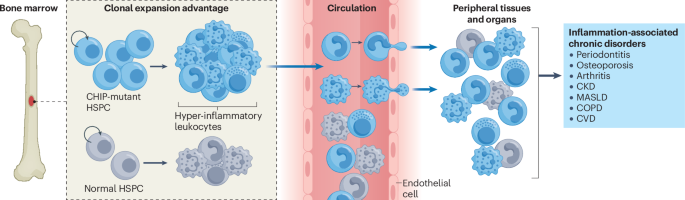
While the headlines often focus on the complex interplay of biological processes within human systems, exploring conditions like inflammageing and clonal haematopoiesis, the insect world offers its own compelling narratives of cellular resilience, immune response, and population dynamics. For the entomologist, these terms, while specific to vertebrate pathology, invite us to ponder analogous, if not identical, phenomena in the invertebrate realm. How do insects manage cellular wear and tear? What are their strategies for maintaining health and vigor against the constant onslaught of environmental stressors and pathogens? Their answers, often starkly different from ours, are no less sophisticated, demonstrating an astonishing array of adaptations that allow them to thrive across nearly every terrestrial and freshwater environment on Earth.
Consider the immune system of an insect. Lacking the adaptive immunity of vertebrates, their innate immune responses are remarkably robust and rapid. When a parasitic wasp lays its egg inside a caterpillar, the caterpillar’s immune cells – haemocytes – spring into action. They encapsulate the foreign invader, forming layers of melanin around it, effectively suffocating and walling off the threat. This is an inflammatory-like response, localized and highly effective. But what happens if this response is chronic? If the insect is constantly battling multiple infections or exposed to environmental toxins, does this sustained immune activation lead to a form of accelerated aging or reduced physiological function, an invertebrate echo of inflammageing? Research into insect lifespan and immune challenge suggests a tantalizing connection. Insects under constant immune stress often exhibit shorter lifespans and reduced reproductive success, highlighting the energetic cost of defense and the delicate balance required for survival.
Then there’s the concept of ‘clonal’ populations. While insects don’t develop haematopoietic stem cells in the same way mammals do, the idea of a population descending from a single source has fascinating parallels in social insect colonies. Take a honey bee hive, for instance. The vast majority of individuals – the workers – are sterile daughters of a single queen. This creates a highly related, almost ‘clonal’ population within the colony, where genetic interests are tightly aligned. The queen herself is the ultimate ‘founder cell’ for the entire worker population, continuously producing genetically similar individuals. Any somatic mutations that accumulate in her reproductive cells could, in a sense, be passed down to an entire generation of workers, influencing colony health and longevity. The genetic homogeneity within these colonies, while distinct from human clonal haematopoiesis, offers a unique model for studying how the genetic makeup of a founding individual can profoundly shape the fate and resilience of a large, complex biological entity.
Beyond social insects, many species exhibit forms of asexual reproduction, like parthenogenesis in aphids or stick insects, where an entire population can arise from a single female without fertilization. These populations are, by definition, clonal, and their long-term survival hinges on their ability to adapt despite limited genetic diversity. How these clonal lineages maintain vigor, resist pathogens, and cope with environmental changes over many generations provides insights into the fundamental trade-offs between genetic stability and adaptive potential, a challenge faced by all life forms, from microscopic bacteria to complex multicellular organisms.
The ecological context of these insect phenomena is vast and profound. Every immune battle won by a beetle, every successful brood reared by a parthenogenetic aphid, contributes to the intricate web of life. Insects are the primary decomposers, turning dead organic matter into nutrient-rich soil, fueling the growth of plants that sustain everything else. They are the pollinators, ensuring the reproduction of countless plant species, including many of our food crops. They are a critical food source for birds, bats, fish, and amphibians. A healthy insect population, with robust immune systems and effective reproductive strategies, signifies a healthy ecosystem. Conversely, declines in insect populations, often linked to environmental stressors, pesticide use, and habitat loss, signal a deeper disruption in the natural world, impacting everything up the food chain and threatening the very services ecosystems provide.
For the curious traveler or aspiring citizen scientist, observing these hidden worlds is remarkably accessible. You don’t need a research grant or specialized lab equipment; often, all that’s required is a keen eye and a bit of patience. Start in your own backyard or a local park. Turn over a log or a flat stone and watch the flurry of activity – springtails leaping, millipedes unfurling, ants scurrying. A magnifying glass can transform a seemingly mundane patch of grass into a bustling metropolis. Observe the industriousness of ants, carrying fragments many times their own weight, or the delicate precision of a spider spinning its web. Look for signs of insect defense: the frothy white spittle bug nymphs secrete for protection, the camouflage of a stick insect, or the warning colors of a monarch caterpillar. In the tropics, the diversity explodes; rainforests offer an unparalleled spectacle of insect life, from iridescent beetles to camouflaged katydids. Even a quiet evening with a porch light can reveal a nightly migration of moths, each one a miniature marvel of navigation and adaptation.
For those truly inspired, consider visiting a dedicated insectarium or botanical garden with an invertebrate exhibit. These institutions often have live displays and knowledgeable staff who can explain the intricacies of insect behavior and physiology. Joining a local entomological society or a nature club can also provide opportunities for guided walks and shared learning experiences. The key is to slow down, look closer, and approach these small creatures with a sense of wonder and respect. What you uncover might not be a direct parallel to human inflammageing or clonal haematopoiesis, but you will undoubtedly discover biological solutions to universal challenges that are equally complex, equally vital, and profoundly inspiring. The small world, once seen through a new lens, reveals itself as an unending source of fascination, a constant reminder of the incredible diversity and resilience of life on Earth.

About admin
A curious explorer documenting the intersection of science and travel. Join the journey to discover the hidden stories of our planet.
Leave a Reply