
Deep in the frigid, crushing dark of the North Atlantic, where sunlight is a forgotten myth and time itself seems to slow to a glacial crawl, moves a creature of mythic proportions. Not in size, perhaps, but in years. This is the realm of the Greenland shark, Somniosus microcephalus, a living relic, a silent witness to centuries of human history unfolding above the waves, while it navigates the abyssal plains below. For us at Wandering Science, who typically find our greatest wonders in the intricate, often overlooked worlds beneath our feet or under a microscope, the sheer scale of this shark’s existence—its unparalleled longevity—offers a profound reflection on life’s incredible persistence.
Consider the profound silence of its existence, punctuated only by the subtle currents and the distant echo of its own slow, deliberate movements. For generations, scientists believed these ancient mariners were practically blind, their eyes clouded by parasites and the perpetual gloom of their habitat. It was a convenient narrative, fitting for a creature that seemed to defy so many biological norms. Why would a denizen of the deep need keen eyesight? Its other senses – an acute sense of smell, perhaps, or a lateral line system finely tuned to pressure changes – must surely compensate. This assumption, like so many initial interpretations of the natural world, painted an incomplete picture, a mere sketch of a masterpiece.
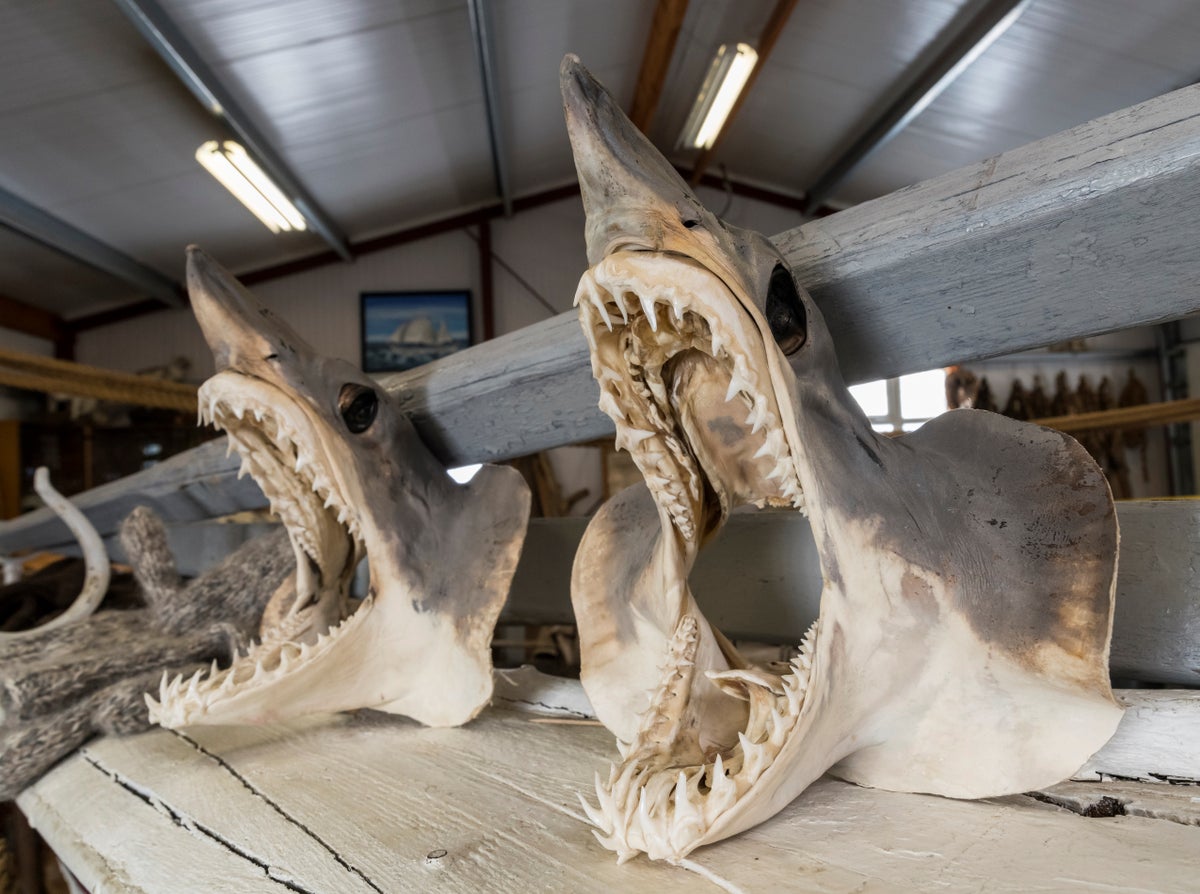
But the true marvel of the Greenland shark, and indeed of life itself, often lies in the details we miss, the adaptations we underestimate. Just as we might marvel at the intricate compound eyes of a mantis shrimp, capable of perceiving polarized light, or the astonishing visual acuity of an owl’s nocturnal gaze, a recent study has turned our understanding of the Greenland shark’s vision on its head. Far from being functionally blind, these bizarre, centuries-old creatures possess not only the capacity to see but also maintain this crucial sense into their astonishing old age. This revelation forces us to zoom in, to scrutinize the microscopic structure of their eyes, their neural pathways, and the very chemistry of their vision, much like we’d examine the delicate photoreceptors of a cave-dwelling beetle.
The discovery, published in Scientific American, isn’t just about a shark’s eyesight; it’s a window into the mechanisms of extreme longevity and physiological resilience. Researchers meticulously analyzed the ocular tissues of Greenland sharks, finding that despite the frequent presence of parasitic copepods attached to their corneas, the underlying retinal structures remained remarkably intact and functional. What does this mean? It suggests that the visual system of Somniosus microcephalus is not merely surviving but thriving, adapting to its unique environmental pressures in ways we are only just beginning to comprehend. This isn’t just passive endurance; it’s active, sustained function across lifespans that dwarf most vertebrates on Earth. Imagine the cellular maintenance, the slow, deliberate repair mechanisms at play, keeping these delicate biological components operational for 300, 400, or even 500 years.
From an entomologist’s perspective, this level of sustained physiological integrity is utterly captivating. We often marvel at the incredible lifespan of a queen termite, living for decades, or the diapause states of certain insects that allow them to survive extreme conditions for years. But the Greenland shark operates on an entirely different temporal scale, and its active vision through such an immense span of time adds another layer to its biological enigma. It suggests a remarkable resistance to age-related degeneration, a biological superpower that could hold clues for everything from human ophthalmology to understanding cellular senescence. What chemical compounds protect their photoreceptors? What genetic pathways ensure such slow, pristine aging of neural tissues? These are the questions that ignite the scientific imagination.
The Greenland shark is not just an isolated marvel; it is an integral, ancient thread in the ecological fabric of the Arctic and North Atlantic deep waters. As an apex predator, its incredible longevity means it has been a consistent, stabilizing force in its ecosystem for millennia. Think of the generations of seals, fish, and even other sharks that have come and gone while one individual Greenland shark continued its slow, deliberate patrol. Its sustained presence likely shapes the behavior and population dynamics of its prey in ways we can only speculate about. A healthy population of these long-lived predators suggests a robust and stable deep-sea environment, capable of supporting life across vast timescales. Any disruption to this creature’s millennia-old rhythm could have cascading effects throughout the deep-sea food web, impacting species we haven’t even fully discovered yet.
Its role as a scavenger, too, is critical. The deep sea is a realm of scarcity, and the decomposition of large carcasses can be a rare but vital input of nutrients. A shark that has lived for centuries has likely participated in countless such events, acting as a crucial recycler, ensuring that no energy goes to waste in its nutrient-poor environment. Understanding its vision, therefore, isn’t just about its personal sensory experience; it’s about understanding how it navigates, hunts, and scavenges across vast distances and through immense periods, influencing the flow of energy and the health of an entire, largely unseen ecosystem. It’s a reminder that even in the most extreme environments, every organism, no matter how slow or how ancient, plays a vital, interconnected role.
So, where does one go to witness this ancient wonder, or at least feel its profound presence? Direct observation of the Greenland shark in its natural habitat is, for most travelers, an impossibility. These creatures dwell in depths ranging from hundreds to thousands of meters, in waters that hover just above freezing. However, the spirit of Wandering Science isn’t always about direct visual contact; it’s about appreciating the vastness of the natural world and the scientific endeavors that bring its secrets to light. You can connect with the world of the Greenland shark by visiting institutions that are at the forefront of Arctic and deep-sea research. Research centers in places like Tromsø, Norway, or Halifax, Canada, often have public outreach programs or museums that showcase their work on polar ecosystems and deep-sea life.
Aquariums with excellent cold-water exhibits can also provide a tangible, if simulated, connection to the shark’s world. Imagine standing before a massive tank, witnessing species adapted to frigid environments, and letting your mind wander to the unseen giants that patrol the true depths. More broadly, any journey to the high Arctic, perhaps a cruise through the fjords of Greenland or Svalbard, offers a chance to stand at the edge of their world. While you won’t see the sharks themselves, you’ll experience the raw, immense power of their environment – the towering icebergs, the biting winds, the stark beauty of a landscape that has remained largely unchanged for the entirety of the shark’s incredible life. It’s a powerful reminder of the deep time and enduring resilience of our planet.
Ultimately, the story of the Greenland shark’s vision is a profound call to scientific curiosity. It teaches us that even when we think we know a creature, especially one as enigmatic as this deep-sea leviathan, there are always deeper layers of understanding to uncover. For an entomologist, it reinforces the core principle that the truly bizarre and magnificent often lie hidden, requiring patience, meticulous observation, and a willingness to challenge long-held assumptions. Whether it’s the intricate mechanics of an ant colony or the centuries-long visual journey of a Greenland shark, the natural world consistently rewards those who are willing to look closer, to question what they see, and to appreciate the truly astonishing superpowers that evolution has bestowed upon life on Earth.

About admin
A curious explorer documenting the intersection of science and travel. Join the journey to discover the hidden stories of our planet.
Leave a Reply