
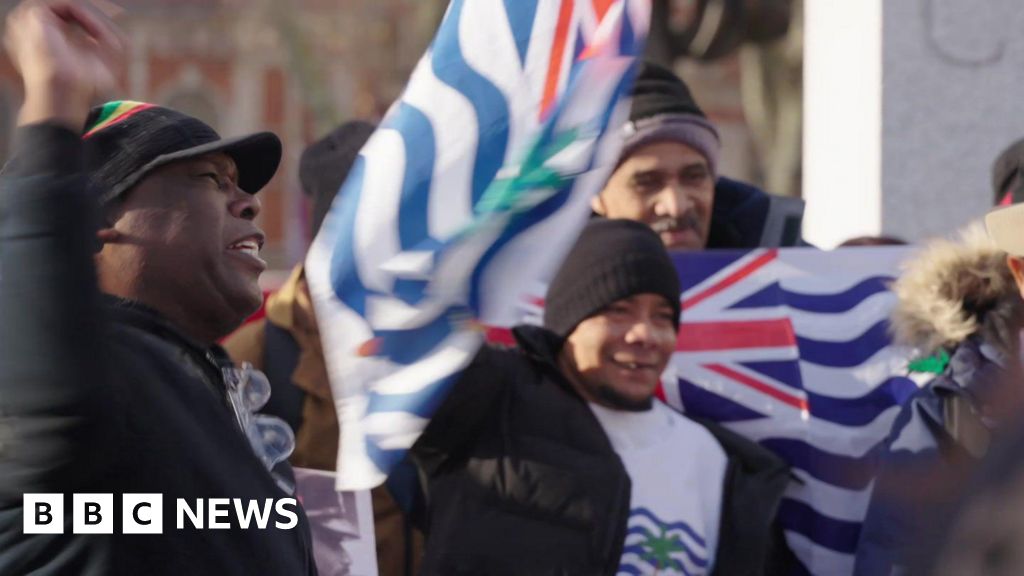
Minister: Chagos deal to go ahead despite protests
The sun, a relentless orb, beats down on an expanse of turquoise so vivid it seems painted onto the earth. Below the shimmering surface, a kaleidoscope of life thrives, vibrant corals forming cities for iridescent fish, while sharks patrol with ancient grace. This is the Chagos Archipelago, a remote constellation of more than 50 islands and atolls scattered across the heart of the Indian Ocean – a place of astonishing natural beauty, a scientific marvel, and for decades, a flashpoint of geopolitical tension. For those who yearn for truly wild places, Chagos has long represented the ultimate, almost mythical, frontier of marine wilderness, a sanctuary largely untouched by the relentless march of human development. Now, a seismic shift in its governance is underway, promising to reshape its future in ways both hopeful and deeply complex.
The scientific community has long regarded the Chagos Archipelago as a crown jewel of marine research. Designated the British Indian Ocean Territory (BIOT) Marine Protected Area (MPA) in 2010, it encompasses an area larger than the UK itself, boasting the world’s largest contiguous coral atoll system. This isolation, coupled with strong environmental protections, has allowed its ecosystems to flourish, providing an invaluable natural laboratory for understanding ocean health. Researchers from institutions worldwide have flocked here (when permitted), studying its remarkably resilient coral reefs, which have shown unusual capacity to recover from bleaching events compared to other global sites. The archipelago is home to an extraordinary biodiversity, including over 220 species of coral, 1,000 species of fish, and significant populations of green and hawksbill turtles, as well as being a crucial breeding ground for seabirds. Deep-sea expeditions have uncovered unique abyssal ecosystems, challenging long-held assumptions about life in the ocean’s darkest reaches. The sheer scale and pristine nature of Chagos offer unparalleled insights into ecosystem dynamics, the impacts of climate change, and the potential for resilience in the face of global environmental pressures. Any shift in administrative control inherently raises questions about the continuity of these vital research programs and the future of this irreplaceable natural heritage.
The recent agreement between the UK and Mauritius to transfer sovereignty over the Chagos Islands to Mauritius, while leasing back the strategically vital Diego Garcia for a joint UK-US military base, marks a pivotal moment. This move aims to resolve a long-standing dispute rooted in the era of decolonization. Mauritius has claimed sovereignty over the archipelago since its independence in 1968, arguing that the islands were unlawfully detached from its territory by the UK in 1965 to form the BIOT. This claim has been supported by several international bodies, including the International Court of Justice and the UN General Assembly, which have deemed the UK’s administration of Chagos unlawful. For the UK, the agreement offers a path to align with international law and mend diplomatic ties, particularly within the Commonwealth. However, the deal is not without its fervent critics. At its heart lies the deeply painful legacy of the Chagossians, also known as the Ilois people, who were forcibly removed from their homes in the late 1960s and early 1970s to make way for the US base on Diego Garcia. Their decades-long struggle for the right to return to their ancestral lands has been a powerful humanitarian and human rights issue. While Mauritius has committed to facilitating their return, the details remain complex, and many Chagossians express skepticism, fearing their voices may once again be sidelined in a deal primarily driven by state interests. The delicate balance between historical justice, military necessity, environmental conservation, and the aspirations of a displaced community makes this a multifaceted challenge.
For the intrepid traveler, the Chagos Archipelago has largely remained an enigma, a place of scientific fascination but practical inaccessibility. Its status as a highly restricted territory, coupled with its remoteness, has meant that few outside of the scientific and military communities have ever set foot on its shores. Yet, the spirit of exploration and the desire to witness such pristine marine environments remain strong. While Chagos itself might remain out of reach for the general tourist, the lessons it offers about marine conservation and the sheer wonder of a healthy ocean can be experienced elsewhere. Imagine diving into the crystal-clear waters of the Maldives, just to the north, where vibrant reefs teem with life, offering a glimpse into the interconnectedness of Indian Ocean ecosystems. Or perhaps a journey to the Seychelles, particularly to the outer atolls like Aldabra, a UNESCO World Heritage site renowned for its giant tortoises and untouched marine life, which shares a similar ecological heritage with Chagos. Even further afield, the remote atolls of Palau in the Pacific, or the Fakarava Atoll in French Polynesia, offer comparable experiences of vast, biodiverse lagoons and thriving coral ecosystems, providing crucial perspective on what a truly healthy ocean looks like. These destinations, while distinct, allow the curious explorer to immerse themselves in the kind of natural splendor that Chagos safeguards, fostering a deeper appreciation for the global effort required to protect our planet’s most vulnerable and vital marine habitats. The Chagos deal, therefore, becomes not just a geopolitical headline, but a potent reminder of the preciousness of such places, urging us to seek out and support conservation efforts wherever we can, whether through direct travel or through informed advocacy for the wild corners of our world.

About admin
A curious explorer documenting the intersection of science and travel. Join the journey to discover the hidden stories of our planet.
Leave a Reply