
Same-sex sexual behaviour can help primates to survive — and reproduce
Deep within the shadowed crevices of a decaying log, where the air hangs thick with the scent of damp earth and decomposition, a pair of darkling beetles engage in a silent, intricate dance. Their antennae twitch, sensing the world, as they navigate the miniature landscape of fungi and detritus. For an entomologist like myself, these are the moments of pure revelation – the hidden lives, the unexpected strategies, the sheer ingenuity encoded in the smallest creatures. We often think of the natural world as a grand, sweeping canvas, but its most profound lessons are often whispered in the rustle of a leaf, the scurry of an ant, or the silent, complex interactions playing out beneath our very feet. It’s in these often-overlooked moments, these minute interactions, that we begin to grasp the profound complexity of life, realizing that what we assume to be simple is anything but.
My work at Wandering Science typically focuses on the six-legged and eight-legged marvels, the arthropods that form the very foundation of ecosystems. But every so often, a discovery emerges from the broader biological community that resonates deeply with my own observations of nature’s endless adaptability. It reminds me that the same fundamental pressures – survival, reproduction, resource allocation – drive evolution across all branches of the tree of life. And sometimes, the most unexpected behaviors reveal the deepest evolutionary strategies, even in creatures far removed from my usual subjects – creatures like our primate cousins, whose social intricacies are now being illuminated by surprising new research.
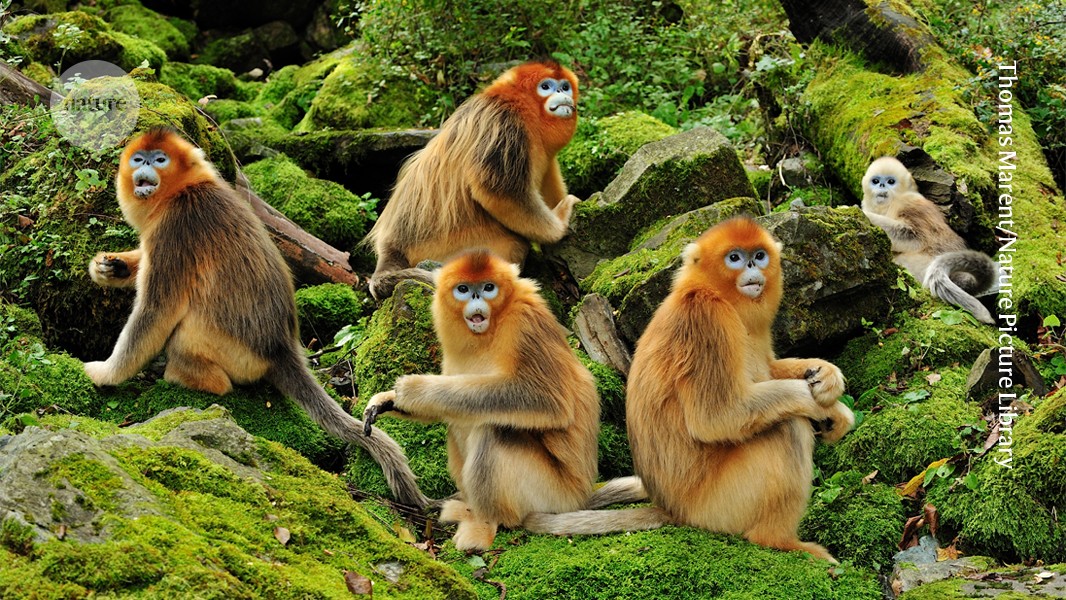
The recent findings regarding same-sex sexual behavior in primates offer a striking parallel to the subtle, often misunderstood complexities I encounter daily in the insect world. It’s a powerful reminder that our preconceived notions about animal behavior, particularly around reproduction, are often too narrow. This groundbreaking research, highlighted on Nature.com, suggests that bonds formed through same-sex sexual interactions are not merely incidental, but actively contribute to the survival and reproductive success of apes and monkeys. It’s a revelation that challenges long-held assumptions and opens a fascinating window into the adaptive power of sociality.
The Discovery: Unpacking Primate Social Strategies
When we observe animal behavior, especially something as seemingly counter-intuitive as non-reproductive sexual acts, our initial human-centric biases can often cloud our understanding. Yet, the data from extensive primate studies paints a clear picture: same-sex sexual behavior in these animals is a robust, observable phenomenon with tangible benefits. Researchers have meticulously documented these interactions across numerous primate species, from macaques to bonobos, and the patterns suggest a much deeper purpose than simple pleasure or mistake.
The core finding is that these bonds serve crucial social functions. Imagine a troop of monkeys navigating a harsh, unpredictable environment. Resources are scarce, predators lurk, and internal conflicts can easily splinter the group. In such a scenario, strong alliances are not just beneficial; they are essential for survival. This is where same-sex sexual behaviors appear to play a vital role. By engaging in these interactions, individuals forge and strengthen social bonds, creating a cohesive network of support within the group. These bonds help to manage conflict effectively, diffuse tension after aggressive encounters, and solidify alliances that can be critical during territorial disputes or when facing external threats. It’s a sophisticated form of social glue, working to maintain group harmony and stability.
Consider the practical implications: a male baboon who has engaged in same-sex grooming and mounting with another male might be more likely to receive support in a fight, or to share access to a prime feeding spot. Similarly, female chimpanzees forming close same-sex bonds could better coordinate childcare, share foraging information, or collectively defend against infanticide. These aren’t isolated acts; they are integrated into the complex fabric of primate social life, influencing hierarchy, cooperation, and resource access. The research indicates that these behaviors are particularly pronounced in challenging environments – dry habitats where food and water are scarce, or predator-rich landscapes where collective vigilance and defense are paramount. In these contexts, the selective pressure for strong, adaptable social structures is immense, and same-sex sexual behavior emerges as a powerful tool in the evolutionary toolkit.
Ecological Context: The Web of Life
From my perspective as an entomologist, I see how every seemingly small behavior, every intricate adaptation, plays a role in the grander ecological scheme. Just as a specific pheromone can dictate the entire social structure of an ant colony, or a particular mating ritual ensures the genetic fitness of a beetle species, these primate behaviors are not isolated incidents. They are deeply embedded within the ecological strategies of the species, influencing everything from population dynamics to resource utilization.
When same-sex bonds enhance conflict resolution, they reduce internal strife that could otherwise lead to injury, death, or group fragmentation. A more cohesive, less conflict-ridden group is more efficient at foraging, more effective at predator defense, and ultimately, more successful at raising offspring. This translates directly to increased survival rates for individuals and, crucially, improved reproductive success for the group as a whole. It’s an indirect but powerful pathway to fitness, demonstrating that reproductive success isn’t solely about direct copulation, but also about creating the optimal social environment for offspring to thrive.
Moreover, the existence of such behaviors highlights the incredible plasticity of evolution. Life finds a way, often through means we might not predict. If a behavior, regardless of its primary function, confers a survival advantage, it can persist and even become widespread. In environments where cooperation is a stronger driver of survival than individual competition, any mechanism that fosters that cooperation will be favored. This research expands our understanding of what constitutes “adaptive behavior,” pushing us to look beyond simplistic models of reproduction and consider the multifaceted ways in which species navigate their worlds. It reminds us that social complexity is a powerful ecological force, shaping species distributions, resource partitioning, and ultimately, the biodiversity of entire ecosystems.
The Field Angle: Where to Witness Nature’s Nuances
For the curious traveler, the ‘Wandering Science’ enthusiast eager to observe these profound insights firsthand, the world offers numerous opportunities. While observing specific same-sex sexual behaviors might require patience and a keen eye – and often, the assistance of experienced field guides – witnessing the underlying social dynamics that these behaviors reinforce is readily accessible.
One excellent destination would be the forests of Uganda or Rwanda, home to mountain gorillas and chimpanzees. Here, guided treks allow you to observe these incredible primates in their natural habitats. Pay close attention to the intricate social grooming, the subtle gestures of reassurance, and the ways in which individuals interact after a minor skirmish. While the more explicit sexual behaviors might be fleeting or less obvious to an untrained eye, the bonds of alliance and friendship are constantly on display. Observe how certain individuals consistently support each other, share food, or protect younger members. These are the visible manifestations of the strong social fabric that research suggests is woven, in part, by same-sex interactions.
Another fascinating region is East Africa, particularly in reserves like the Maasai Mara or the Serengeti, where olive baboons and vervet monkeys are prevalent. These highly social primates live in large, complex troops, and their daily lives are a masterclass in negotiation, alliance-building, and conflict resolution. A good field guide can help you interpret the nuances of their interactions, pointing out how dominant individuals maintain their status, how subordinates form coalitions, and how tension is diffused within the group. Look for instances where individuals seem to be “making up” after a dispute, or where unexpected pairs seem to have a particularly strong bond – these are the subtle clues to the rich, adaptive social strategies at play.
Finally, for those interested in the most extensively studied species regarding same-sex sexual behavior, a visit to the Democratic Republic of Congo to observe bonobos is unparalleled. Often described as our “make love, not war” cousins, bonobos exhibit frequent same-sex sexual interactions, particularly among females, which are known to play a significant role in their peaceful social structure and conflict resolution. While access can be challenging, the insights gained from observing these primates are invaluable.
No matter where you go, remember that understanding nature requires an open mind and a willingness to question assumptions. Just as I find endless wonder in the microscopic world beneath a rotting log, there is profound complexity and ingenious adaptation to be found in every corner of the planet, revealing that life, in all its forms, is far more diverse and resourceful than we often imagine. These primate studies are a powerful reminder that the natural world continues to challenge our paradigms, urging us to look closer, observe deeper, and appreciate the full spectrum of evolutionary brilliance.

About admin
A curious explorer documenting the intersection of science and travel. Join the journey to discover the hidden stories of our planet.
Leave a Reply