
How did birds evolve? The answer is wilder than anyone thought
The swift, silent arc of a peregrine falcon across a winter sky is a marvel of biological engineering. Its aerodynamic precision, the effortless power of its wings, speak of millions of years of refinement. But what if the story of that refinement, the very genesis of avian flight, began not with tentative glides or clumsy leaps, but with an astonishing burst of aerial mastery far earlier than we ever dared imagine? For decades, the narrative of bird evolution painted a slow, incremental ascent from ground-dwelling dinosaurs to feathered flyers. Now, a series of remarkable discoveries, unearthed from the ancient rocks of the Jurassic, suggests that the skies were conquered with a boldness and sophistication that forces us to rewrite one of life’s most compelling sagas.
Our understanding of bird origins has long been anchored by Archaeopteryx lithographica, a creature from the Late Jurassic of Germany, famously possessing both reptilian teeth and a bony tail, alongside fully formed feathers. For over a century, Archaeopteryx served as the quintessential “missing link,” a feathered dinosaur capable of some form of flight, though often envisioned as more of a glider or a clumsy flapper. Its asymmetrical flight feathers pointed to aerial capabilities, but the overall skeletal structure hinted at a creature still heavily tied to its dinosaurian roots, perhaps clambering up trees before launching itself. The consensus was that true, sustained, powered flight evolved gradually, a slow dance of adaptation over millions of years, with early birds performing at best a rudimentary version of what we see today.
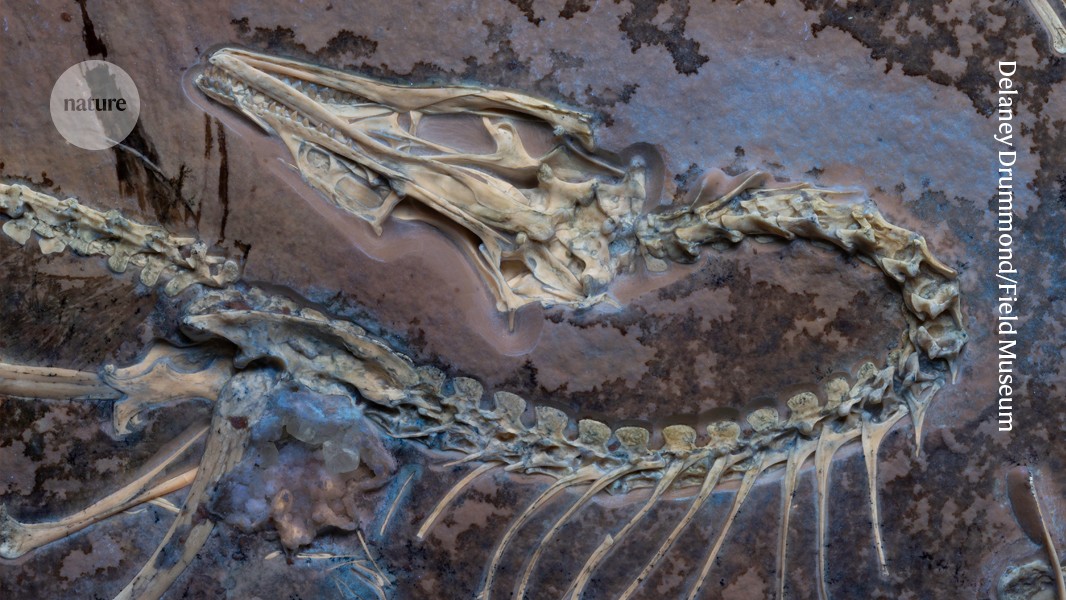
Yet, the fossil record, a stubborn keeper of secrets, has begun to yield surprises that challenge this long-held view. Recent excavations, particularly in the fossil-rich beds of China, have brought to light a plethora of avian fossils dating back to the Jurassic period, some even contemporary with or slightly older than Archaeopteryx. These new specimens, detailed in recent reports from institutions worldwide and highlighted in publications like Nature.com, reveal an unexpected degree of skeletal specialization for flight. We are not just seeing feathers; we are seeing advanced avian anatomy. These creatures possessed keeled sternums, the robust breastbones essential for anchoring powerful flight muscles. Their bones often show the characteristic pneumaticity – hollow, air-filled structures – that lighten the skeleton without sacrificing strength, a hallmark of efficient flight in modern birds. Furthermore, the fusion of vertebrae in their tails and the structure of their wing bones suggest a skeletal architecture geared for precise control and sustained flapping, rather than just passive gliding. This evidence points to early birds that were not merely experimenting with flight, but were already adept, highly maneuverable aerialists, navigating complex three-dimensional environments with skill.
This shift in perspective is profound. It implies that the evolutionary pathway to powered flight was not a singular, slow progression but perhaps a more rapid and diversified exploration of aerial niches than previously thought. The idea that multiple lineages of bird-like dinosaurs and early birds were independently or convergently evolving sophisticated flight capabilities during the Jurassic suggests an intense period of evolutionary innovation. It paints a picture of skies teeming with various feathered forms, some perhaps more specialized for soaring, others for agile pursuit, much like the diversity we observe in modern avian communities. This earlier mastery of flight would have opened up vast new ecological opportunities, allowing these pioneering birds to exploit resources unavailable to their ground-bound relatives, from insects in the canopy to escaping terrestrial predators with ease. It also adds a layer of complexity to the bird-dinosaur transition, blurring the lines further and demonstrating the incredible plasticity of the dinosaurian body plan. The evolutionary pressures driving this rapid aerial adaptation could have been manifold: the need to escape burgeoning populations of terrestrial predators, access to new food sources like arboreal insects or fruit, or even competition among early avian forms themselves. The Jurassic was a time of immense environmental change, and the ability to take to the air would have been a powerful advantage in a rapidly shifting world.
For the wandering scientist and the curious traveler alike, this reimagined narrative of bird evolution offers a compelling new lens through which to view both the ancient world and the living one. While we cannot journey back to witness these Jurassic skies firsthand, their echoes resonate in the modern world. To connect with this story, one might begin in the hallowed halls of natural history museums. Institutions like the Natural History Museum in London, the Senckenberg Museum in Frankfurt, or the American Museum of Natural History in New York house exquisite fossil collections, including casts of Archaeopteryx and other early bird specimens. Here, you can stand before the tangible evidence, examining the delicate feather impressions and skeletal structures that tell tales of ancient flight. Imagine the paleontologists, meticulously cleaning rock from bone, unearthing the very clues that have reshaped our understanding. Beyond the museums, the spirit of these discoveries can be found in the field. While access to active paleontological digs is often restricted, places like the Jurassic Coast in Dorset, England, offer a chance to walk along cliffs where similar ancient sediments are exposed, fostering a tangible connection to deep time. For a more direct, living connection, simply observe the birds around you. Watch a swift carve effortless patterns against the evening sky, or a robin dart through dense foliage. Each flap of their wings, each aerodynamic maneuver, is a living legacy of those pioneering Jurassic fliers. Understanding that their ancestors were not merely fumbling into the air, but perhaps soaring with surprising grace millions of years ago, lends a new depth to every avian encounter. It’s a reminder that the story of life is never static, always evolving, always ready to reveal a wilder, more astonishing truth than we could have ever conceived.

About admin
A curious explorer documenting the intersection of science and travel. Join the journey to discover the hidden stories of our planet.
Leave a Reply