
The little-known phenomenon that’s making it harder for some animals to mate in the wild
Deep in the leaf litter, where the sun’s rays filter through a canopy of emerald and jade, a drama unfolds with an urgency few of us ever perceive. It’s a world measured not in miles, but in millimeters; a realm of antennae twitching, compound eyes scanning, and the almost imperceptible vibrations of tiny legs. Here, a male field cricket, Gryllus bimaculatus, meticulously prepares his nightly serenade. His hardened forewings, or tegmina, are raised, ready to rub together, one acting as a file, the other as a scraper, to produce a call designed with singular purpose: to attract a mate. Each chirp, a precise sequence of pulses and pauses, carries vital information – species, fitness, location. For millennia, this acoustic beacon has been a reliable guide for females navigating the labyrinthine undergrowth, a promise of perpetuation.
But what happens when that signal, so carefully crafted and broadcast, never reaches its intended receiver? What if the delicate symphony of the forest floor, a chorus perfected over evolutionary eons, is suddenly overwhelmed by an alien noise, a discordant clamor that renders native voices mute? Or, more insidiously, what if the very visual cues, the flashes and dances that punctuate the twilight, are obscured by a new, intrusive presence? As a resident entomologist for Wandering Science, my gaze is often fixed on these micro-dramas, and what we are increasingly observing is a subtle, yet profound, disruption to the most fundamental act of life: finding a partner and reproducing.
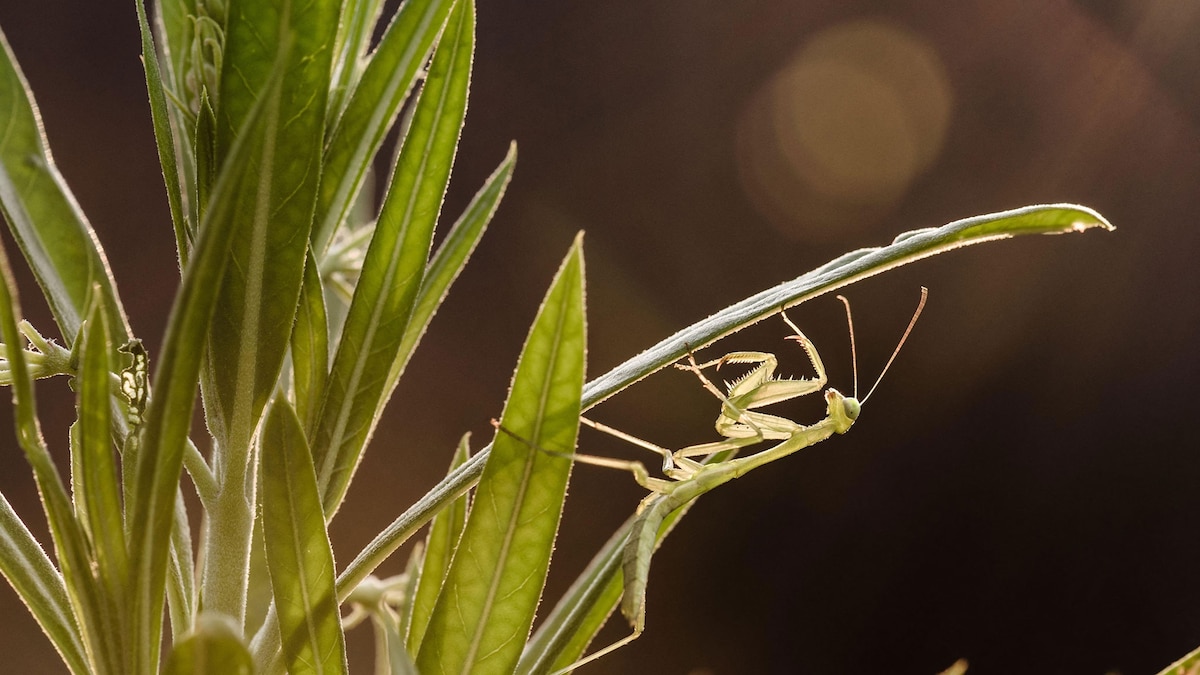
Scientists are just beginning to understand the full scope of a phenomenon where mating calls and rituals, once clear and distinct, are being intercepted, drowned out, or even mimicked by invasive species. Imagine our cricket, chirping his heart out, only to be utterly overshadowed by a much louder, more aggressive invasive cricket species recently introduced to his habitat. His carefully calibrated frequency, his species-specific rhythm, becomes mere background static in an auditory free-for-all. This isn’t just about volume; it’s about the very integrity of the communication channel. Research from places like Hawaii has shown how the arrival of the loud, non-native Common Coqui frog (Eleutherodactylus coqui) has dramatically altered the soundscape, potentially impacting native insect and amphibian species that rely on acoustic signals for courtship. The sheer decibel level produced by thousands of these frogs can create a veritable wall of sound, making it incredibly difficult for native species to hear or be heard.
The problem extends beyond acoustics. Visual cues are equally vulnerable. Consider the captivating dance of fireflies, those nocturnal jewels whose flashing patterns are intricate Morse codes of love. Each species boasts a unique flash sequence – a specific number of flashes, duration, and interval. This bioluminescent choreography is how they differentiate friend from foe, and potential mate from hungry predator. But what if an invasive plant species, with its dense foliage, physically blocks the line of sight? Or, more abstractly, what if an invasive species introduces novel light pollution, confusing or obscuring these delicate signals? Similarly, the elaborate courtship dances of many jumping spiders, involving precise leg movements and abdominal displays, could be rendered ineffective if an invasive spider species with similar, but subtly different, patterns confuses the receiver, or if an altered habitat structure prevents the display from being seen clearly. The costs of misidentification or failed communication are immense: wasted energy, increased predation risk, and ultimately, a failure to reproduce, leading to dwindling populations and a loss of genetic diversity.
The ecological context of this phenomenon is profound, rippling through the intricate web of life. When native species struggle to find mates, their populations inevitably decline. This isn’t just a matter for individual species; it impacts entire food webs. A reduction in a specific insect population, for example, can mean less food for insectivorous birds, bats, or other arthropods. The delicate balance of predator and prey relationships can be thrown into disarray. Furthermore, the inability of native species to effectively communicate can lead to what scientists call “reproductive isolation,” where populations, though physically close, become reproductively separated due to signal interference. Over time, this can reduce gene flow, make populations more vulnerable to environmental changes, and even lead to local extinctions. It’s a subtle form of ecosystem degradation, often invisible until the long-term consequences become starkly apparent. This silent assault on reproduction is a stark reminder of how deeply interconnected every living component of an ecosystem truly is, and how a single invasive species can unravel threads far beyond its immediate impact.
As a traveler with Wandering Science, you have a unique opportunity to become an active observer of this hidden struggle. While the scientific community is diligently working on understanding these complex interactions, the sheer scale of the problem means that every pair of observant eyes and ears can contribute. Where can you witness this phenomenon? Look to areas with high rates of invasive species introduction – often islands, coastal regions, or fragmented habitats near human settlements. Listen carefully in the evenings; can you discern distinct calls, or is there a pervasive, monotonous hum? Are there visual signals being obscured? For instance, in many parts of the southeastern United States, the invasive Cuban Treefrog (Osteopilus septentrionalis) emits a loud, grating call that can easily drown out the softer, more melodic calls of native treefrog species. In other regions, the proliferation of invasive plants like Japanese honeysuckle or kudzu can create dense understories, physically blocking the visual pathways necessary for many insect and amphibian courtship displays.
You don’t need to be a trained entomologist to notice when a natural soundscape feels ‘off,’ or when a familiar flash of light is missing from the twilight. Pay attention to the subtle cues that define a healthy ecosystem: the diversity of insect chirps, the varied calls of amphibians, the intricate dance of fireflies. By simply being present and observant, you contribute to a greater understanding. Consider using apps like iNaturalist or eBird to record your observations, noting any unusual dominance of a particular sound or visual display. Furthermore, being a responsible traveler means understanding and adhering to biosecurity measures. Clean your boots and gear meticulously between locations to prevent inadvertently carrying invasive seeds or insect eggs. Support local conservation initiatives focused on invasive species removal. By becoming an informed and engaged participant, you help protect the delicate, often imperceptible, language of love that underpins the very fabric of our wild world. The future of nature’s symphony depends on our collective awareness and action, ensuring that every creature, no matter how small, has a clear channel to call out to its mate.

About admin
A curious explorer documenting the intersection of science and travel. Join the journey to discover the hidden stories of our planet.
Leave a Reply