
Scotland’s Isle of Skye is perfect for a winter road trip—here’s how to plan
The wind, a ceaseless sculptor, whips across the Sound of Raasay, carrying the tang of salt and ancient peat. Grey waves crash against a shore of black basalt, polished smooth by millennia of Atlantic fury. Above, the sky shifts from bruised purple to a fleeting, brilliant silver as a low winter sun glances off the jagged peaks of the Cuillin. This isn’t a postcard idyll; this is Skye in its raw, untamed glory, a landscape that whispers of deep time and colossal forces. To experience it in winter is to strip away the summer crowds and tourist-brochure gloss, revealing the island’s elemental heart – a heart forged in fire and carved by ice, offering a profound journey not just across a map, but through the very geological history of our planet.
Far from being a mere backdrop for dramatic photographs, Skye is a living laboratory, an open textbook for understanding Earth’s dynamic past. Its breathtaking formations are not random acts of nature but the direct, observable consequences of immense geological events that shaped the North Atlantic. What visitors see as stunning vistas, geologists recognize as the exposed remnants of a vast igneous province, a volcanic hotbed that once dwarfed even modern Iceland. This island, relatively small in human terms, holds a disproportionate story of mantle plumes, tectonic rifting, and the relentless march of erosion, offering insights into processes that continue to mould our world.
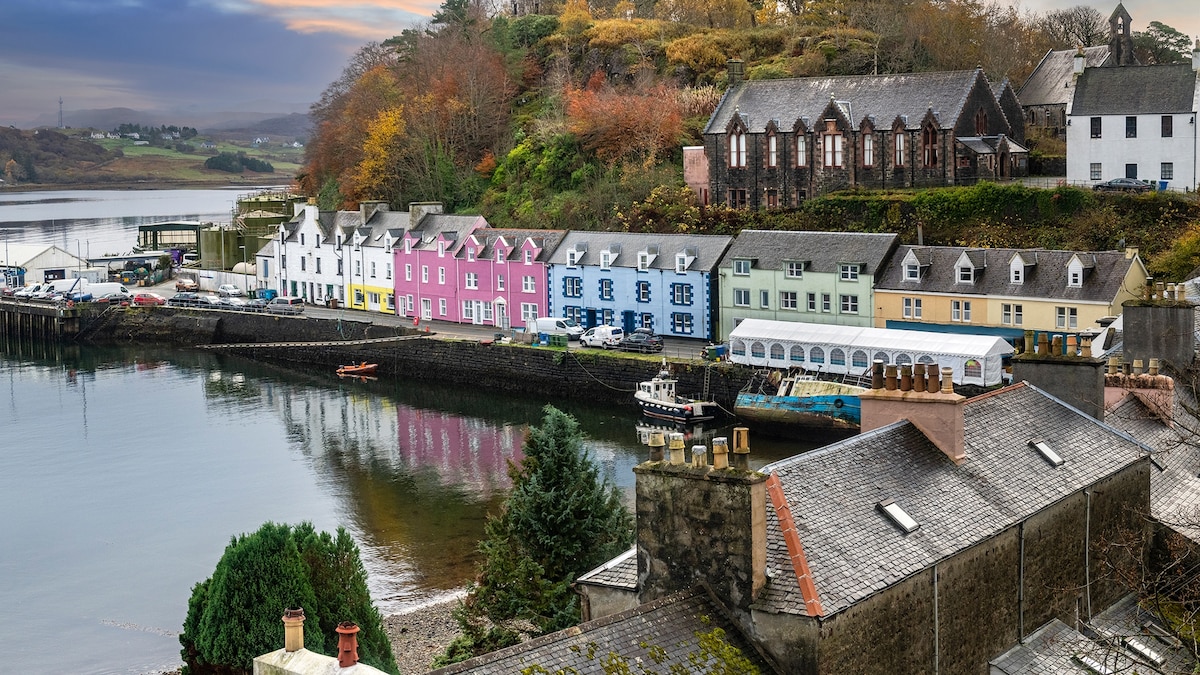
The hard science behind Skye’s dramatic beauty begins approximately 60 million years ago, during the Paleogene period. At this time, a massive mantle plume rose beneath what is now the North Atlantic, causing the Earth’s crust to stretch and fracture. This process, known as continental rifting, ultimately led to the opening of the Atlantic Ocean and the separation of Europe from Greenland. Skye found itself at the fiery heart of this activity, experiencing intense volcanism. Molten rock, or magma, surged upwards, forming vast igneous intrusions and effusive lava flows. The island’s signature mountain range, the Black Cuillin, is a prime example of this magmatic activity. Composed primarily of gabbro, a coarse-grained, dark igneous rock, the Cuillin are the eroded remains of a central igneous complex – essentially, the solidified plumbing system of ancient volcanoes. The gabbro, resistant to chemical weathering but prone to physical fracturing, has been sculpted by successive glaciations, resulting in the sharp, serrated ridges and deep, U-shaped valleys that define their menacing beauty.
Further north, the Trotternish Peninsula tells a different, yet equally compelling, geological tale. Here, successive layers of basaltic lava flows, erupted from fissures, accumulated to form a thick plateau. Beneath these hard basalt caps lie softer sedimentary rocks, including shales and sandstones. This juxtaposition of resistant rock atop weaker strata, combined with the island’s persistent rainfall and the angle of the underlying beds, created the conditions for the legendary Trotternish Landslip. This is the largest landslip in the United Kingdom, a slow-motion geological ballet that has been ongoing for millennia. Features like the Old Man of Storr and the Quiraing are not isolated pinnacles but are integral parts of this colossal, creeping landslide, where massive blocks of basalt have detached and slid seawards, creating a chaotic yet geometrically stunning landscape of pinnacles, plateaus, and hidden valleys. The columnar jointing visible in many basalt outcrops, where lava cools and contracts into hexagonal columns, further illustrates the physical processes at play, perfectly preserved examples of geological mechanics in action.
Skye’s geological narrative extends beyond its immediate physical features, offering a broader context for understanding planetary processes. The basaltic plains and volcanic structures found here bear striking resemblances to landscapes on other terrestrial planets and moons. Studying the erosion patterns, weathering processes, and hydrological features on Skye can provide valuable analogues for interpreting data from Mars or even the Moon, helping scientists understand how water and geological forces might have shaped these distant worlds. Furthermore, the island’s unique geology has profoundly influenced its ecological and human history. The nutrient-poor, acidic soils derived from basalt and gabbro support specific plant communities, while the rugged terrain dictated settlement patterns and defensive strategies for centuries. The harsh beauty of Skye is not just a visual spectacle; it’s a crucible where geology, ecology, and human endeavor have intertwined, creating a distinct cultural identity rooted deeply in the land.
For the intrepid traveler, particularly one drawn to the spirit of exploration and a deeper understanding of our world, a winter road trip around Skye offers an unparalleled experience. The relative quiet, the dramatic light, and the raw power of the elements allow for a more intimate connection with the island’s geological wonders. You don’t need a geology degree to appreciate the sheer scale of these forces; you just need a keen eye and a sense of wonder.
Start your journey at the Fairy Pools in Glen Brittle, nestled at the foot of the Black Cuillin. Here, the crystal-clear waters, filtered through ancient gabbro, tumble into a series of enchanting pools. While wild swimming in winter demands extreme caution and appropriate gear, the sight alone is invigorating. The purity of the water and the smooth, dark riverbed rocks are direct results of the Cuillin’s geological composition, a testament to the slow, steady work of erosion on some of Earth’s hardest rock. The vibrant greens of moss and algae clinging to the rocks provide a stark contrast, showcasing how life finds a foothold even in these seemingly desolate environments.
Next, venture north to the Trotternish Peninsula. The iconic Old Man of Storr, a basaltic pinnacle standing sentinel over the Sound of Raasay, is a must-see. The walk, though potentially muddy and windswept in winter, is incredibly rewarding. As you ascend, look closely at the surrounding landscape – the jumbled blocks, the steep slopes, the evidence of past movement. You are walking on a monumental landslip, witnessing the ongoing geological dance that continues to reshape the coastline. Further along the peninsula, the Quiraing offers an even more dramatic insight into this process. A network of bizarre rock formations, hidden plateaus, and sheer cliffs, the Quiraing is a landscape constantly in motion. A hike through its labyrinthine paths feels like stepping onto another world, a vivid demonstration of how slow, persistent geological forces can create such breathtaking, alien beauty.
Beyond these major sites, simply driving the coastal roads offers continuous opportunities for geological observation. Look for the distinctive hexagonal patterns of columnar basalt at Kilt Rock, where a waterfall plunges directly into the sea, or the subtle changes in rock type as you traverse different parts of the island. Each curve in the road, each turn of the head, reveals another layer of Skye’s complex geological narrative.
A winter road trip to Skye requires careful planning. Daylight hours are short, weather can be unpredictable, and roads, though generally well-maintained, can be icy or snow-covered. A robust vehicle, warm waterproof clothing, and a flexible itinerary are essential. But the rewards are immense: deserted trails, dramatic light that photographers dream of, and a profound sense of solitude amidst a landscape that feels ancient and alive. And after a day spent battling the elements and marveling at Earth’s raw power, there is no greater comfort than a warming dram of single malt whisky in a cozy pub, its amber liquid a liquid echo of the island’s peaty, rock-filtered waters. This is Skye in winter: a challenging, exhilarating, and deeply enriching journey into the very heart of the wandering science that shaped our world.

About admin
A curious explorer documenting the intersection of science and travel. Join the journey to discover the hidden stories of our planet.
Leave a Reply