
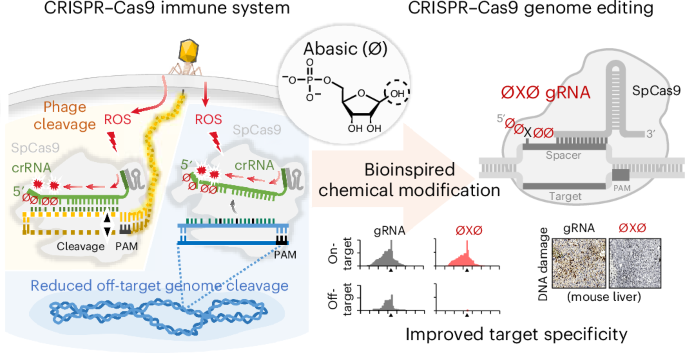
Abasic CRISPR RNAs inherently harness fidelity of SpCas9 for genome editing
Deep in the dappled shadows of a forgotten garden, where emerald moss clings to weathered stones and the scent of damp earth hangs heavy, a drama unfolds with breathtaking precision. It’s a world often overlooked, a symphony of existence played out on a scale so minute it escapes the casual glance. Here, beneath a fallen sycamore leaf, a tiny, iridescent rove beetle, no bigger than a grain of rice, meticulously grooms its antennae, a vital ritual in a life defined by chemical signals and tactile exploration. Its movements are purposeful, a testament not to brute strength, but to the extraordinary adaptations that allow it to thrive in a universe measured in millimeters. This is the realm I call home, the captivating domain of insects and arachnids, where every flicker of an antenna, every scuttling shadow, holds a story waiting to be discovered by the patient observer.
For those of us who dedicate our lives to peeling back the layers of this hidden world, the thrill of discovery isn’t found in distant galaxies or deep-sea trenches, but often right beneath our feet. Take, for instance, the intricate social architecture of an ant colony. It’s not merely a collection of individuals, but a superorganism, each member a cog in a living machine far more complex than any human invention. Consider the leaf-cutter ants of the tropics, those tireless architects who defoliate entire trees, not for consumption, but to cultivate vast underground fungal gardens. Their unwavering commitment to this collective endeavor, the division of labor, the intricate communication pathways – it’s a living blueprint of ecological engineering that continues to astound. Or the solitary wasp, meticulously constructing a mud nest, provisioning it with paralyzed prey, ensuring the survival of its unseen offspring with an instinctual wisdom that predates our own species by millions of years. These are not mere “bugs”; they are paragons of biological ingenuity, each with a unique solution to the challenges of life on Earth.
One of the most profound revelations from studying these creatures is the sheer diversity of their sensory worlds. We navigate primarily through sight and sound, but for many insects, the world is a rich tapestry of chemical cues, vibrations, and even electromagnetic fields. Imagine a male moth, detecting the pheromone of a female from miles away, following an invisible trail with unerring accuracy. Or a jumping spider, with its eight eyes, not only perceiving its surroundings in vivid detail but also processing complex visual information to execute astonishing leaps and ambushes. These are not simple reflexes; they are sophisticated behaviors driven by finely tuned nervous systems, honed over eons of natural selection. My own work often involves documenting these subtle interactions, using macro photography and patient observation to capture the fleeting moments that reveal the underlying principles of their existence. It’s in these moments that we truly begin to understand the depth of their intelligence, their resilience, and their profound connection to the environment around them. Every new behavior observed, every unique adaptation documented, adds another vital piece to the grand puzzle of life.
The ecological context of these small wonders is perhaps their most significant contribution to the planet. Insects and arachnids form the very bedrock of nearly every terrestrial ecosystem. Without them, the intricate web of life would unravel with catastrophic speed. Consider their role as pollinators: a third of the food we eat, from apples to coffee, relies on the tireless work of bees, butterflies, beetles, and countless other insects. They are the essential link in the reproductive cycle of flowering plants, ensuring biodiversity and food security. Then there are the decomposers: dung beetles, termites, and various larvae, tirelessly breaking down organic matter, recycling nutrients back into the soil, keeping our planet from being buried under its own waste. They are nature’s sanitation crew, working silently and efficiently. Predators like dragonflies, ladybugs, and spiders keep populations of other insects in check, preventing outbreaks that could decimate crops or forests. Without spiders, for instance, insect populations would explode, leading to widespread ecological collapse. Even as prey, they are indispensable, providing a critical food source for birds, bats, fish, and countless other animals, sustaining entire food chains. They are the gears and springs of the Earth’s biological machinery, and their health is a direct reflection of the health of our planet. When insect populations decline, it sends ripples of distress throughout the entire ecosystem, signaling a broader environmental crisis that demands our urgent attention.
For those inspired to venture into this captivating world, the good news is that you don’t need a passport or a plane ticket to begin. The hidden world of insects and arachnids is everywhere, waiting just outside your door. Start in your own backyard or a local park. The most rewarding discoveries often come from the simplest acts of observation. Arm yourself with a magnifying glass, a field guide specific to your region, and, most importantly, patience. Spend time simply sitting still and watching. Look under rocks, turn over fallen logs, peer into flower beds. A headlamp can open up an entirely new world after dark, revealing nocturnal moths, spiders hunting on dew-kissed webs, and beetles scuttling across paths. National parks, nature reserves, and even community gardens are fantastic places to explore. In the tropics, a guided night walk through a rainforest can unveil an astonishing array of stick insects, praying mantises, and bioluminescent fungi that illuminate the forest floor. In temperate forests, searching for iridescent jewel beetles or observing the complex social dynamics of ants can be an endlessly rewarding pursuit. Remember to tread lightly, observe without disturbing, and leave everything as you found it. The goal is not to collect, but to connect – to witness the extraordinary lives of these small creatures and to foster a deeper appreciation for their vital role in our shared world. Every moment spent observing is a step towards understanding, and understanding breeds care. So, go forth, explore, and let the wonders of the small world ignite your curiosity.

About admin
A curious explorer documenting the intersection of science and travel. Join the journey to discover the hidden stories of our planet.
Leave a Reply