
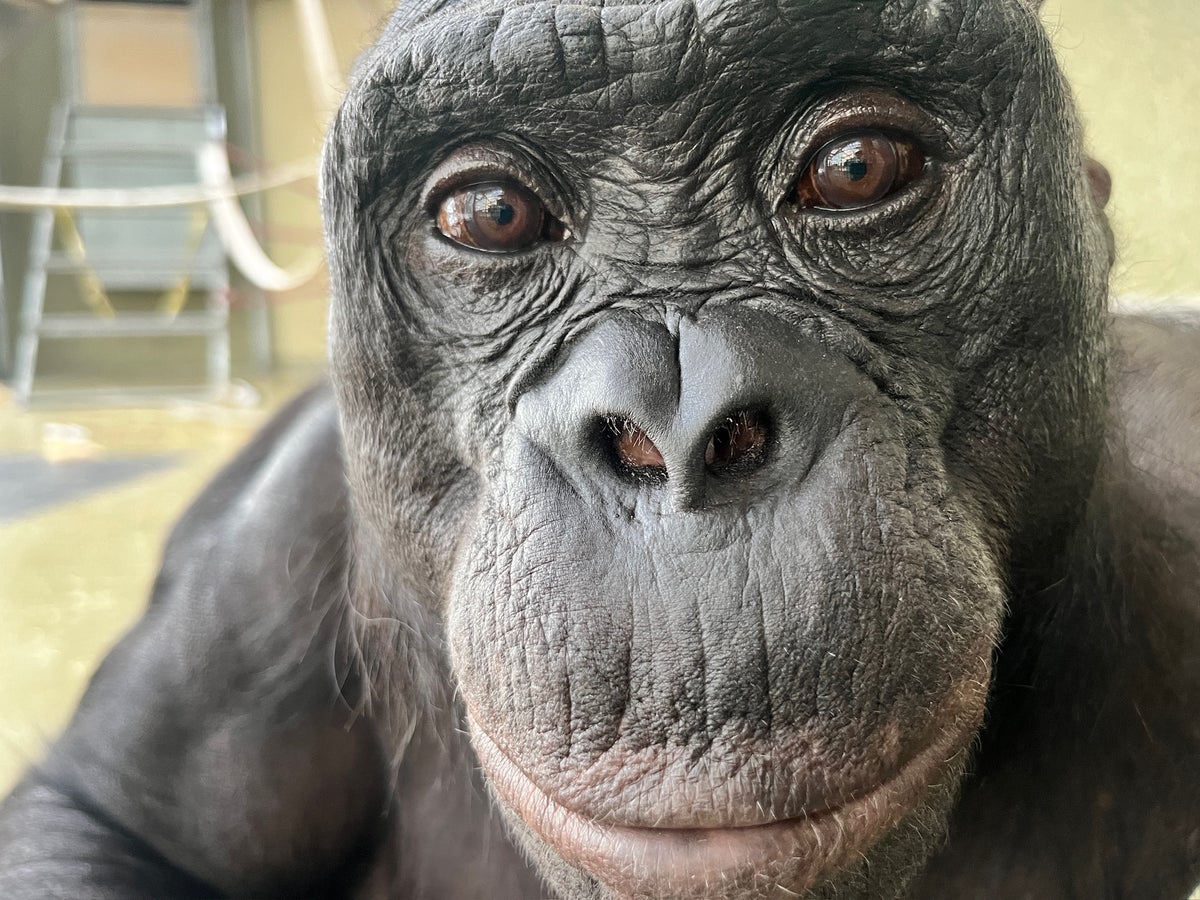
Kanzi the famous bonobo may have understood ‘pretend’ objects
Deep in the leaf litter, a world unfolds beneath our feet, a universe of intricate lives playing out in miniature. The air is thick with the scent of damp earth and decaying leaves, and if you listen closely, you might hear the faint rustle of an unseen drama. Here, a tiny beetle, perhaps a scarab no bigger than your thumbnail, meticulously burrows, its iridescent carapace shimmering faintly in the filtered sunlight. Its antennae, delicate and precise, test the environment, navigating a labyrinth of roots and detritus. This isn’t just a bug; it’s an engineer, a recycler, a vital cog in an unseen machine, and its existence, like that of countless others, is a constant, fascinating dance of survival and purpose.
Most of us walk through our days oblivious to this vibrant, bustling metropolis of life. We see the flash of a butterfly, perhaps swat a mosquito, but the vast majority of insects and arachnids remain hidden, masters of camouflage, nocturnal hunters, or simply too small to command our attention. Yet, their world is one of breathtaking complexity, filled with behaviors that rival any grand terrestrial spectacle. From the intricate silk architecture of a spider’s web, engineered with tensile strength and adhesive precision, to the synchronized aerial ballets of midges, every moment is a testament to adaptation and evolution, a constant whisper of ingenuity that often goes unheard.
Consider the extraordinary phenomenon of mimicry, a behavioral masterclass observed across numerous insect species. Take, for instance, the hoverfly, a harmless creature that has evolved to perfectly imitate the striped livery of a stinging wasp. Its buzzing flight, its body shape, even its movements, are all carefully crafted deceptions designed to ward off predators. This isn’t just a superficial resemblance; it’s a deep-seated evolutionary strategy, a “pretend” identity that grants it a crucial survival advantage. Scientists studying these behaviors employ a blend of field observation, photographic analysis, and even experimental setups to understand the nuances of these interactions. They might use models or observe predator responses in controlled environments to confirm the efficacy of the mimicry, piecing together the intricate data points that reveal the depth of these natural masquerades. Each discovery, whether it’s a new species of mimic or an unraveling of the neural pathways behind a spider’s web-building, adds another layer to our understanding of the planet’s most diverse animal kingdom.
The world of insect communication is equally astounding. Pheromones, chemical signals imperceptible to us, guide complex social structures, attract mates across vast distances, and warn of danger. Fireflies engage in elaborate light shows, each flash a coded message. Crickets serenade potential partners with species-specific songs, while ants leave invisible trails for their colony mates to follow. These aren’t random acts; they are sophisticated languages, fine-tuned over millennia, allowing creatures with seemingly simple nervous systems to coordinate, cooperate, and thrive. Unlocking these codes often involves painstaking observation, recording, and chemical analysis, revealing a hidden symphony of interactions that underpins entire ecosystems.
Beyond these fascinating individual behaviors, the collective intelligence of social insects like ants, bees, and termites offers a profound lesson in distributed problem-solving. A single ant may seem insignificant, but a colony functions as a superorganism, capable of constructing elaborate nests, foraging efficiently, and defending against threats with a coordination that belies the individual’s limited capacity. Their societies are models of efficiency, division of labor, and resilience, providing invaluable insights into emergent properties and complex adaptive systems – lessons that human engineers and computer scientists are only just beginning to grasp.
The Intricate Web: Ecological Context
Perhaps the most critical, yet often overlooked, aspect of insects and arachnids is their foundational role in the grand ecological tapestry of our planet. Without them, life as we know it would simply cease to exist. They are the primary decomposers, tirelessly breaking down organic matter, returning vital nutrients to the soil, and ensuring the continuous cycle of life and death. Imagine a world without the diligent work of dung beetles, termites, and countless soil-dwelling larvae – our landscapes would be choked with unrotted waste, and nutrient cycles would grind to a halt.
Then there are the pollinators. Bees, butterflies, moths, flies, and beetles are the unsung heroes of our food supply. A staggering percentage of the world’s flowering plants, including most of the fruits, vegetables, and nuts we consume, rely entirely on insects for pollination. Their tireless visits from flower to flower ensure the reproduction of plants, which in turn feed herbivores, and those herbivores feed carnivores. Disrupt this delicate balance, and the ripple effects cascade catastrophically through every trophic level, leading to widespread ecosystem collapse.
Insects also form the base of countless food chains. They are the primary diet for birds, bats, fish, amphibians, reptiles, and many mammals. The vibrant dawn chorus, the swift flight of a swallow, the croaking symphony from a pond – all these familiar sounds of nature are inextricably linked to the abundance of insects. A decline in insect populations translates directly into declines for the creatures that depend on them, threatening biodiversity on a massive scale. Their tiny bodies hold the energy that fuels much larger life forms, making them indispensable conduits of energy flow through ecosystems.
Furthermore, insects are invaluable bioindicators. Their presence, absence, or relative abundance can tell scientists a great deal about the health of an ecosystem. A diverse and thriving insect community often signals a healthy environment, while a sudden decline can be an early warning sign of pollution, habitat degradation, or climate change. They are the planet’s silent sentinels, offering crucial data on the state of our world, if only we take the time to observe and understand their messages.
Into the Field: Your Entomological Journey
For those of us at ‘Wandering Science’, the call of the wild, no matter how small, is irresistible. The beauty of entomology is that you don’t need to travel to exotic rainforests to begin your journey. The hidden world of insects and arachnids is literally everywhere – in your backyard, local park, urban garden, or even a crack in the pavement. The thrill of discovery is accessible to anyone with a keen eye and a bit of patience.
So, where can a traveler go to truly immerse themselves in this miniature marvel? Start local. Take a slow walk through any patch of greenery. Get down on your hands and knees and peer into the leaf litter. Turn over a log or a flat stone – you might uncover a bustling community of rove beetles, millipedes, or woodlice. Bring a small magnifying glass; it transforms the mundane into the magnificent, revealing intricate patterns on a beetle’s wing or the delicate hairs on a spider’s leg.
For a more focused experience, consider visiting national parks, nature reserves, or botanical gardens. These protected areas often boast incredible insect diversity. Many parks offer guided nature walks where naturalists can point out hidden species. Nighttime is often when a whole new cast of characters emerges. A simple headlamp and a white sheet illuminated by a black light can attract a spectacular array of moths, beetles, and other nocturnal invertebrates, offering a truly unique viewing experience.
If you’re ready for a dedicated “bug safari,” consider destinations renowned for their biodiversity. The cloud forests of Costa Rica, the Amazon rainforest, or even the arid landscapes of the American Southwest are teeming with unique and often spectacular insect life. Specialized eco-lodges and tour operators often cater to entomology enthusiasts, providing expert guides who can help you spot rare species and understand their ecological roles.
But remember, the core of entomological exploration is observation and respect. Tread lightly, disturb nothing, and leave everything as you found it. Photography is a wonderful way to document your discoveries and share the beauty you find. Learn to identify local species using field guides or apps, and you’ll quickly find yourself building a deeper connection to the living world around you. This isn’t just about identifying creatures; it’s about understanding their stories, their struggles, and their profound importance to our shared planet.
The world of insects and arachnids is a constant source of wonder, a realm of endless discovery that challenges our perceptions of intelligence, beauty, and survival. As the Resident Entomologist for ‘Wandering Science’, my greatest hope is that you, too, will take a moment to pause, look closer, and let yourself be captivated by the extraordinary lives unfolding in the small spaces, for in understanding them, we truly begin to understand ourselves and the intricate, delicate balance of life on Earth.

About admin
A curious explorer documenting the intersection of science and travel. Join the journey to discover the hidden stories of our planet.
Leave a Reply