
Unsinkable metal discovery could build safer ships and harvest wave energy
The North Atlantic churns, a restless giant of dark water and crushing waves. Imagine a vessel, not merely riding these formidable undulations, but almost defying them, a ship crafted from metal that, even when breached by jagged ice or unseen reef, refuses to succumb to the depths. For centuries, the very notion of a truly unsinkable ship has been the stuff of nautical legend, a whispered hope against the ocean’s immutable power. Metal, by its very nature, sinks. Or so we thought. But what if the secret to conquering the ocean’s pull wasn’t found in stronger hulls or more complex compartmentalization, but in the delicate, almost invisible engineering of a creature no larger than a thimble?
Enter the diving bell spider, Argyroneta aquatica, an arachnid marvel that spends its entire life submerged, weaving a silken, air-filled dome amidst aquatic plants. This extraordinary spider doesn’t possess gills; instead, it crafts its own portable atmosphere, a shimmering bubble of air held fast by a unique, superhydrophobic coat of hairs on its abdomen. It’s a tiny, living submarine, a demonstration of nature’s elegant solutions. For researchers grappling with the fundamental properties of materials, this miniature marvel presented a tantalizing blueprint: could we, too, imbue ordinary metal with such an extraordinary ability to trap and hold air, rendering it buoyant even under duress?
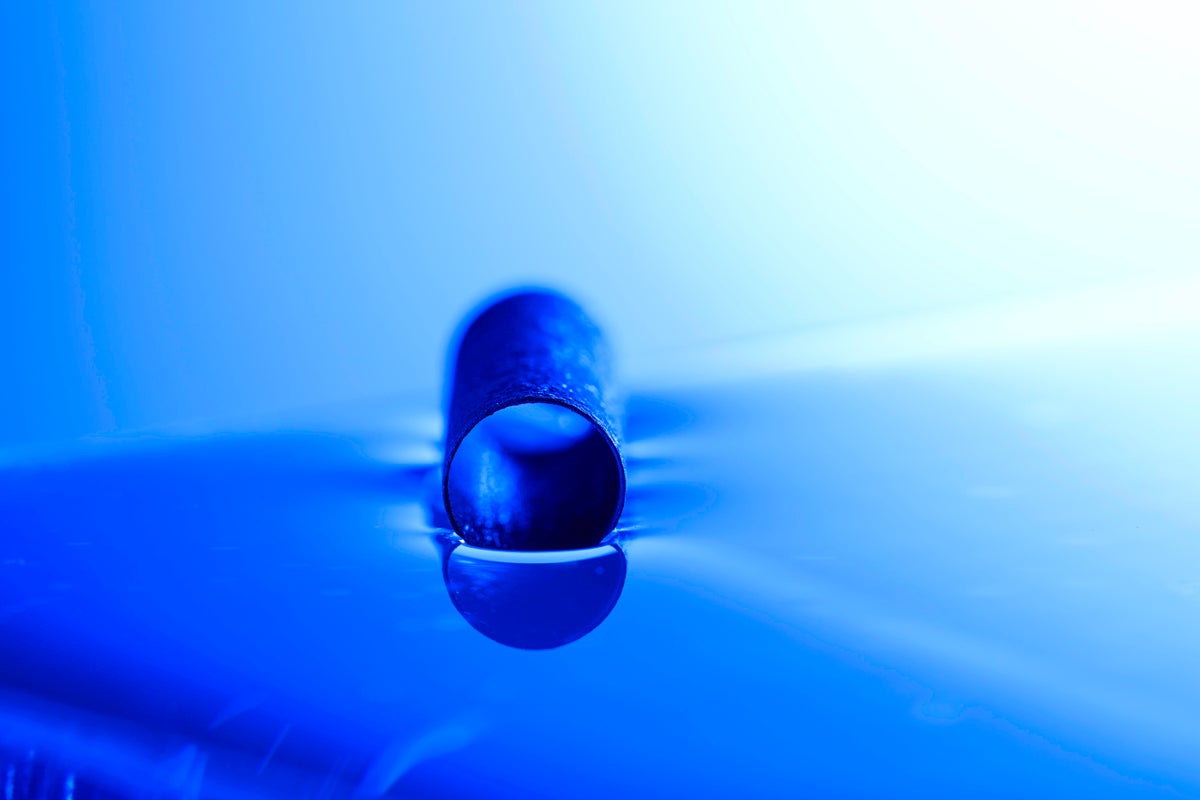
The challenge was immense: how to translate the spider’s biological artistry into an industrial material like aluminum. The breakthrough came through a meticulous process of surface engineering. Scientists at the University of Rochester, inspired by the spider’s ingenious strategy, developed a method to etch intricate patterns onto aluminum surfaces using femtosecond lasers. These microscopic grooves and ridges, far from being mere aesthetics, serve a critical purpose: they create a rough, textured landscape designed to trap air. But surface roughness alone isn’t enough to replicate the spider’s magic. The etched aluminum then undergoes a specialized chemical treatment, rendering its surface superhydrophobic – intensely water-repellent. This combination of intricate topography and extreme water aversion creates a stable cushion of air against the metal, effectively making it buoyant. Crucially, this isn’t just about floating. The research demonstrated that even when these specially treated aluminum samples were punctured, they maintained their buoyancy. The trapped air, held by the complex microstructure, resisted displacement, allowing the metal to stay afloat despite the breach. This is the truly revolutionary aspect, moving beyond simple flotation to puncture-resistant buoyancy, a property previously unimaginable for dense metals.
The implications of this “unsinkable” metal resonate across multiple domains, from maritime safety to sustainable energy. Imagine a world where the tragic losses of vessels like the Titanic, or even modern cargo ships, become historical footnotes. Hulls constructed from this buoyant aluminum could offer an unprecedented layer of safety. A breach would no longer necessarily spell doom; the inherent buoyancy of the material itself would help keep the vessel afloat, providing critical time for repairs or evacuation. This could revolutionize ship design, leading to vessels that are not only more resilient but potentially lighter and more fuel-efficient, as the need for heavy, complex buoyancy systems could be reduced. Beyond traditional shipping, this material holds promise for autonomous underwater vehicles (AUVs) and submersibles, offering enhanced safety and potentially new operational capabilities.
Yet, the vision extends far beyond safer transport. The ocean, a vast reservoir of untapped power, has long captivated engineers seeking renewable energy solutions. Wave energy, in particular, offers immense potential, but the harsh marine environment poses significant challenges to current technologies. Wave energy converters often involve complex mechanical systems exposed to constant wear, tear, and corrosion, leading to high maintenance costs and reliability issues. Here, the unsinkable aluminum presents a compelling alternative. Imagine robust wave energy devices, perhaps giant buoys or oscillating structures, crafted from this material. Their inherent buoyancy would make them incredibly resilient to storm surges and damage, ensuring they stay afloat and operational even in the most tumultuous conditions. This could dramatically reduce the operational costs and increase the lifespan of wave energy farms, making this promising renewable source a more viable and widespread reality. Furthermore, the material’s ability to resist water infiltration could protect sensitive internal components, simplifying designs and improving overall efficiency.
The broader context of this discovery points to a profound shift in material science. For too long, we’ve designed materials based on their bulk properties. This research, however, exemplifies a growing trend towards bio-inspired engineering, where nature’s millennia of evolutionary refinement offer blueprints for human innovation. It underscores the power of looking at the microscopic world for macroscopic solutions. The diving bell spider, a creature often overlooked, now stands as an unlikely muse for engineers, guiding us towards a future where materials are not just strong or light, but possess an array of intelligent, adaptive properties previously thought to be exclusive to living organisms. This approach promises a new era of materials that are not merely inert objects, but active participants in their environment, responding and adapting in ways that enhance their function and durability. From aerospace to construction, the principles of superhydrophobicity and controlled air-trapping could spawn an entirely new generation of smart materials.
For the wandering scientist or curious traveler eager to connect with the essence of this discovery, direct observation of this cutting-edge aluminum might be limited to specialized university labs for now. However, the spirit of this innovation, rooted in biomimicry, is wonderfully accessible. To witness the original architect of this ‘unsinkable’ principle, seek out aquariums or dedicated wetland exhibits that house the diving bell spider, Argyroneta aquatica. While rare in some regions, European freshwater habitats are their natural home. Observe how this tiny arachnid masterfully constructs and maintains its air bubble, a shimmering silver dome beneath the water’s surface – a living demonstration of the very principle now being engineered into metal. Alternatively, a journey to coastal regions where wave energy is being actively explored offers a glimpse into the future applications. Visit places like the European Marine Energy Centre (EMEC) in Orkney, Scotland, or similar test sites in Oregon or Portugal. While the devices there may not yet be built from this specific new aluminum, you’ll encounter the immense challenges and incredible ingenuity involved in harnessing the ocean’s power, and perhaps envision a future where ‘unsinkable’ materials make these endeavors more robust and commonplace. These locations offer tangible connections to the real-world problems this research aims to solve, grounding the scientific marvel in the environments it seeks to transform.
This journey from a spider’s silken dome to the possibility of unsinkable ships and resilient wave energy converters reminds us that the most profound scientific breakthroughs often begin with humble observations. It’s a narrative that bridges the minute with the monumental, inviting us to reconsider what we believe possible, both on the surface of our planet and in its mysterious depths. The ocean, once an adversary, might just become a more navigable, and more generous, partner, all thanks to a tiny, air-trapping arachnid and the human ingenuity it inspired.

About admin
A curious explorer documenting the intersection of science and travel. Join the journey to discover the hidden stories of our planet.
Leave a Reply