
Before Flowers Existed, Ancient Cycad Plants Lured Insects with Heat
Imagine a world painted in shades of green and brown, an epoch long before the riotous blush of a rose or the delicate perfume of a jasmine bloom. This was Earth some 200 million years ago, a landscape dominated by towering conifers, ferns, and strange, palmlike giants. In this primordial garden, the air did not hum with the busy flight of bees, nor did it carry the sweet, intoxicating scents we now associate with plant reproduction. Yet, life found a way to propagate, to diversify, to persist. How did the ancient flora, devoid of petals and nectar, entice the necessary partners for the continuation of their kind? This question has long been a quiet challenge to our understanding of early ecosystems, a puzzle whispered through fossilized leaves and ancient rock formations.
For millennia, the relationship between plants and their pollinators has been framed largely through the lens of flowering plants, the angiosperms, which emerged much later in evolutionary history. Their vibrant colors, intricate shapes, and alluring fragrances are well-known adaptations designed to attract specific insects, birds, and even mammals. But before this floral revolution, a more fundamental, perhaps even more primal, seduction was at play. It was a world where survival hinged on less obvious signals, a subtle dance of chemistry and physics that recent scientific inquiry has begun to illuminate, offering a glimpse into the ingenious strategies that predated the very concept of a flower.
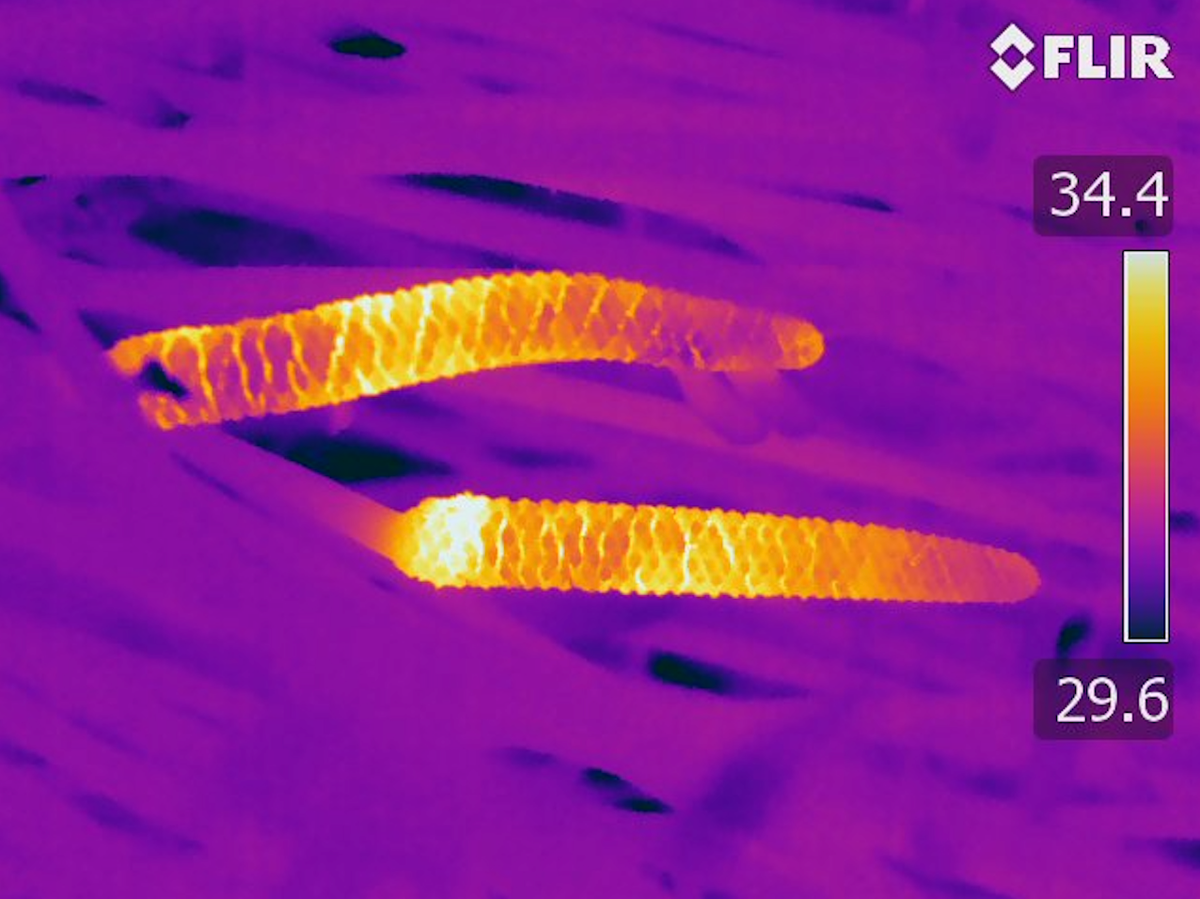
Deep within this ancient lineage, a recent discovery, illuminated by researchers studying cycads, has peeled back another layer of this prehistoric world. These enigmatic plants, often mistaken for palms due to their sturdy trunks and crown of stiff, fern-like leaves, are not flowering plants at all. Instead, they belong to the gymnosperms, a group that includes conifers, and their reproductive strategy has long been a subject of fascination. What scientists have now observed, through meticulous study and thermal imaging, is a remarkable evolutionary innovation: cycads generate their own heat. This isn’t just a byproduct of metabolism; it’s a precisely controlled, cyclical thermogenesis, escalating to temperatures significantly warmer than the ambient air, often concentrated within their cone-like reproductive structures.
This internal furnace, it turns out, is a sophisticated lure. The warmth serves multiple purposes in the ancient biological marketplace. Firstly, it creates a cozy microclimate, particularly appealing to cold-blooded insects like beetles, which were among the earliest pollinators. In a world without the sun-drenched warmth of open flowers, a warm cone offered a sanctuary, a place to rest, feed, and perhaps even mate. Secondly, and perhaps more crucially, this elevated temperature acts as a natural diffuser for volatile chemical compounds. The heat allows the cycad to broadcast its reproductive readiness, releasing a complex cocktail of pheromones and attractants into the air, drawing beetles from afar. These beetles, once drawn into the male cones, become dusted with pollen. When they subsequently seek refuge or food in a receptive female cone, they inadvertently transfer the pollen, completing the ancient cycle of life. This intricate thermal and chemical signaling system highlights a level of evolutionary sophistication in gymnosperms that rivals, and indeed predates, the more celebrated mechanisms of flowering plants.
The implications of this discovery stretch far beyond the peculiar biology of cycads; they reshape our understanding of the co-evolutionary dance between plants and insects. For millions of years, before the first angiosperm unfurled its petals, this thermal beacon and chemical whisper was a dominant mode of interaction. It suggests that the fundamental principles of pollination – attraction, reward, and transfer – were established much earlier and through different means than previously emphasized. The cycad’s strategy demonstrates that plants could actively manipulate their environment, not just passively offer resources, to ensure reproduction. This ancient blueprint likely laid the groundwork for the astonishing diversity of pollination syndromes we observe today. The evolution of flowers, with their vibrant colors and diverse structures, can now be seen not as an abrupt invention, but as a continuation and refinement of these earlier, more rudimentary forms of insect manipulation. It underscores a continuous thread of innovation, where life constantly adapts, repurposes, and perfects its strategies across vast geological timescales. Understanding these deep evolutionary roots can also inform our perspective on current ecological challenges, reminding us of the profound interdependence that has sculpted Earth’s biodiversity for hundreds of millions of years.
For those of us who feel a pull towards the deep past, a desire to connect with the living remnants of ancient epochs, the cycad offers a tangible link. You don’t need a time machine to witness these botanical relics; many species of cycads thrive in botanical gardens and arboreta around the globe, from the Royal Botanic Gardens, Kew, in London, to the Huntington Library, Art Museum, and Botanical Gardens in California, and numerous conservatories across the United States, Europe, and Asia. In their native habitats, they are found in tropical and subtropical regions across Africa, Australia, Central and South America, and parts of Asia, often in specialized ecosystems where they have persisted for eons.
When you encounter a cycad, perhaps a sturdy Encephalartos with its armored trunk or a graceful Cycas revoluta, pause and observe. Feel the texture of its stiff, leathery leaves, note the primeval symmetry of its form. While you may not directly feel the warmth of its reproductive cone, or detect the faint chemical signals it broadcasts, knowing its story allows you to imagine. Picture the ancient beetles, scuttling into the warm embrace of a cone, drawn by a scent we can only hypothesize. Consider the sheer longevity of this lineage, a group of plants that have witnessed the rise and fall of dinosaurs, the shifting of continents, and the emergence of our own species. To stand before a cycad is to stand at a crossroads of deep time, to feel the echoes of a world where evolution was experimenting with ingenious solutions, long before the first flower ever unfurled its petals. It is a profound reminder that the wonders of nature are not just in the vibrant and the immediate, but also in the quiet, persistent ingenuity of life stretching back into the Earth’s most distant past.

About admin
A curious explorer documenting the intersection of science and travel. Join the journey to discover the hidden stories of our planet.
Leave a Reply