
Famous crocodile wrangler jailed for evidence tampering
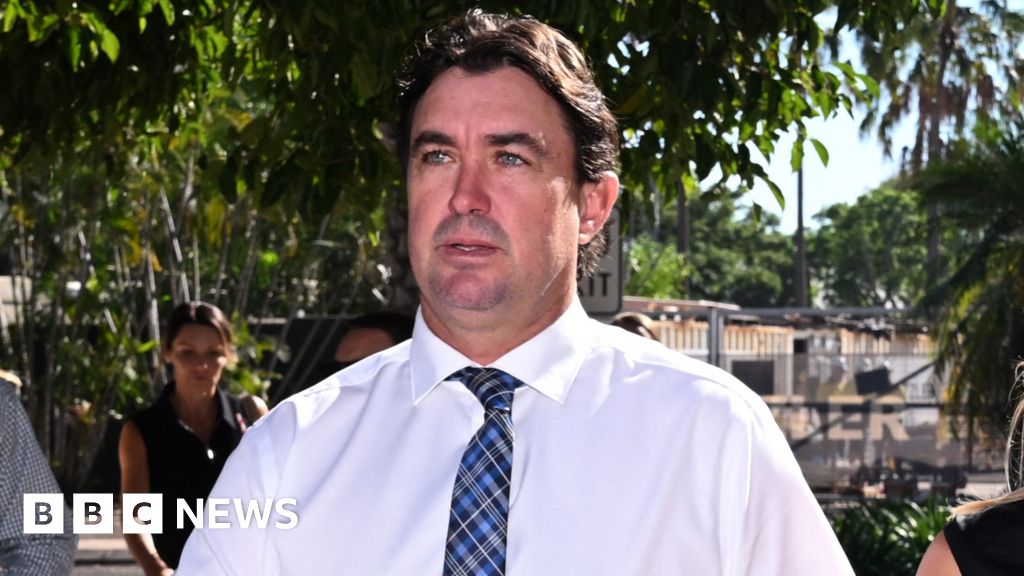
The Australian outback is a land of extremes, where the sun bakes the earth into a cracked mosaic and ancient rivers carve paths through a landscape teeming with life and danger. It is a place that demands respect, a place where a single misstep can carry dire consequences. For years, Matt Wright, the charismatic star of reality television, embodied this rugged spirit. His shows painted a picture of a fearless adventurer, a man at home wrestling colossal saltwater crocodiles, a protector of the wild. He built an empire on daring feats and a perceived intimate understanding of this formidable environment. But the wild, much like the truth, has a way of eventually revealing all. Now, the once-unassailable image of the famous crocodile wrangler lies shattered, replaced by the stark reality of a courtroom conviction and a jail sentence for evidence tampering.
The precipice of Wright’s downfall was a tragic helicopter crash in February 2022, an incident that claimed the life of his friend and co-star, Chris “Willow” Wilson. What began as a routine mission to collect crocodile eggs, an activity deeply entwined with both conservation and commercial enterprise in the Northern Territory, spiraled into a fatal accident. Initial reports spoke of mechanical failure, a sudden, irreversible plummet from the sky. Yet, beneath the surface of this tragedy, a more insidious narrative began to form, one that pointed not to the unforgiving nature of the outback, but to the deliberate actions of individuals attempting to manipulate the facts. Wright, along with others, was accused of obstructing justice, of attempting to conceal information, and of fabricating a narrative that diverged significantly from the events as they truly unfolded. This wasn’t merely a lapse in judgment; it was a concerted effort to mislead investigators, a betrayal of the very principles of truth and accountability that underpin any robust scientific or legal inquiry.
The intersection of a fatal accident and subsequent evidence tampering brings into sharp focus the critical role of forensic science and meticulous investigative methodologies. When a helicopter crashes, it isn’t merely a mechanical failure; it’s a complex event demanding a rigorous, scientific approach to reconstruct the sequence of events. Accident reconstruction specialists employ principles of physics, engineering, and material science to analyze wreckage patterns, flight data recorders (if available), and impact sites. Every twisted piece of metal, every scorch mark, every fragment of debris tells a story. The precise angles of impact, the distribution of components, and even the type of fuel residue can provide invaluable clues about the forces at play and the mechanical integrity of the aircraft before and during the incident. This process is akin to a paleontologist meticulously assembling a dinosaur skeleton from scattered bones, each piece contributing to a larger, coherent picture of a past event. The integrity of this scientific pursuit relies entirely on the untainted preservation of the scene and the honesty of witnesses. Any deliberate alteration of evidence – moving debris, fabricating statements, or concealing crucial components – fundamentally corrupts this scientific process. It introduces noise into the signal, making it impossible to accurately determine causality and prevent future tragedies. In the case of the chopper crash, the alleged tampering directly undermined the ability of investigators to perform this vital scientific duty, raising profound questions about accountability and the pursuit of objective truth even in the face of personal tragedy.
Beyond the immediate legal ramifications for Matt Wright, this saga casts a long shadow over several broader contexts. Firstly, it highlights the often-uncomfortable intersection of celebrity, conservation, and commercial enterprise. Public figures like Wright often become de facto ambassadors for the environments they inhabit and the species they interact with. Their actions, both on and off-screen, shape public perception and influence funding for conservation efforts. When such a figure is compromised by charges of dishonesty and obstruction of justice, it risks eroding public trust not just in the individual, but potentially in the broader cause they represent. The delicate balance of managing dangerous wildlife, like saltwater crocodiles, often involves both scientific research and sustainable commercial activities, such as egg collection for farm breeding programs, which can contribute to the economic viability of conservation. When the ethics of those involved are called into question, it complicates the narrative and makes it harder to advocate for responsible interactions with the wild.
Secondly, the incident underscores the unique challenges of law enforcement and judicial processes in remote, vast regions like the Australian Northern Territory. Distances are immense, resources can be stretched, and the close-knit nature of communities can sometimes create pressures that complicate impartial investigation. The allure of the ‘wild man’ persona, often celebrated in these regions, can also sometimes obscure the need for adherence to legal and ethical standards that apply universally. The justice system, however, must operate without prejudice, ensuring that even those who command public adoration are held accountable. This case serves as a stark reminder that no individual, regardless of their fame or perceived contribution to a region’s identity, is above the law. It reinforces the principle that truth, however inconvenient or painful, must ultimately prevail for justice to be served and for trust in institutions to be maintained.
For the curious traveler or the aspiring citizen scientist, the notion of “witnessing this” might seem abstract when the “this” is a legal entanglement. However, the spirit of ‘Wandering Science’ isn’t just about observing phenomena; it’s about understanding the environments and contexts in which these human dramas unfold. While one cannot witness the legal proceedings directly, one can certainly immerse themselves in the very landscape that shaped Matt Wright’s fame and, ultimately, bore witness to the tragic accident. The Northern Territory of Australia offers unparalleled opportunities to engage with the natural world that forged the legend of the crocodile wrangler.
Kakadu National Park, a UNESCO World Heritage site, is a prime example. Here, travelers can embark on guided cruises along the Yellow Water Billabong, observing saltwater crocodiles in their natural habitat from a safe distance. Knowledgeable guides often share insights into crocodile biology, behavior, and the critical role they play in the ecosystem. This offers a profound appreciation for the power and ancient wisdom of these reptiles, far removed from the sensationalized portrayals. Further afield, the Adelaide River, just outside Darwin, hosts famous “jumping crocodile” cruises, providing another chance to see these magnificent creatures up close, albeit in a more interactive, controlled setting. These experiences are not just about seeing a crocodile; they are about understanding the complex ecological systems that sustain them, the delicate balance between human activity and wildlife preservation, and the sheer force of nature that defines this part of the world.
Beyond the direct observation of crocodiles, a visit to Darwin and its surrounding regions can offer a deeper understanding of the unique culture and challenges of the Australian Top End. Museums and cultural centers provide context on Indigenous land management practices and the long history of human interaction with this demanding environment. Engaging with local communities, perhaps through ethical tourism initiatives, can provide perspectives on the realities of living and working in such remote areas, where the line between survival and disaster can be thin. It’s in these authentic encounters, whether observing a crocodile glide silently through murky waters or listening to stories from those who call the outback home, that the traveler can truly grasp the environment that shaped figures like Matt Wright. It’s an environment that demands honesty, respect, and an unwavering commitment to truth – principles that, as this case painfully illustrates, are as vital in the human realm as they are in the wild.

About admin
A curious explorer documenting the intersection of science and travel. Join the journey to discover the hidden stories of our planet.
Leave a Reply