
Newly discovered mantis species dances like a snake to avoid death after sex
Deep in the emerald heart of Borneo’s ancient rainforests, where the air hangs thick with the scent of damp earth and decaying leaves, a silent, intricate drama unfolds every second of every day. Most of us walk past these miniature worlds without a second glance, our eyes drawn to the grandeur of towering trees or the flash of exotic birds. But for those willing to stoop, to peer beneath the canopy and into the shadowed nooks, an entirely different universe reveals itself – a universe of astonishing beauty, brutal efficiency, and behaviors so bizarre they defy immediate explanation. It’s in this hidden realm, a realm I’ve dedicated my life to exploring, that we’ve recently stumbled upon a revelation that redefines what we thought we knew about one of nature’s most iconic predators: the praying mantis. This isn’t just about another new species; it’s about a creature that has rewritten the rules of survival, adding a graceful, serpentine twist to the age-old dance of life and death.
Imagine a sliver of green, perfectly camouflaged against a moss-covered branch, its triangular head swiveling with unnerving precision. This is the world of the mantis, a creature renowned for its predatory prowess and, famously, its post-coital cannibalism. For generations, the image of a female mantis devouring her mate has been a chilling symbol of nature’s harsh realities, a sacrifice for the continuation of the species. We’ve often framed this act as an almost inevitable conclusion to their reproductive cycle, a biological imperative that prioritizes offspring over individual survival. Yet, nature, in its infinite wisdom and boundless inventiveness, always holds surprises. Our recent expeditions into the unexplored pockets of Southeast Asia have brought us face to face with a species that, seemingly, has found a way to cheat this ultimate fate, introducing an unexpected layer of complexity to its already fascinating life cycle. This discovery challenges our preconceptions and forces us to look even closer at the subtle nuances of insect behavior, reminding us that even the most well-studied groups can harbor profound secrets.
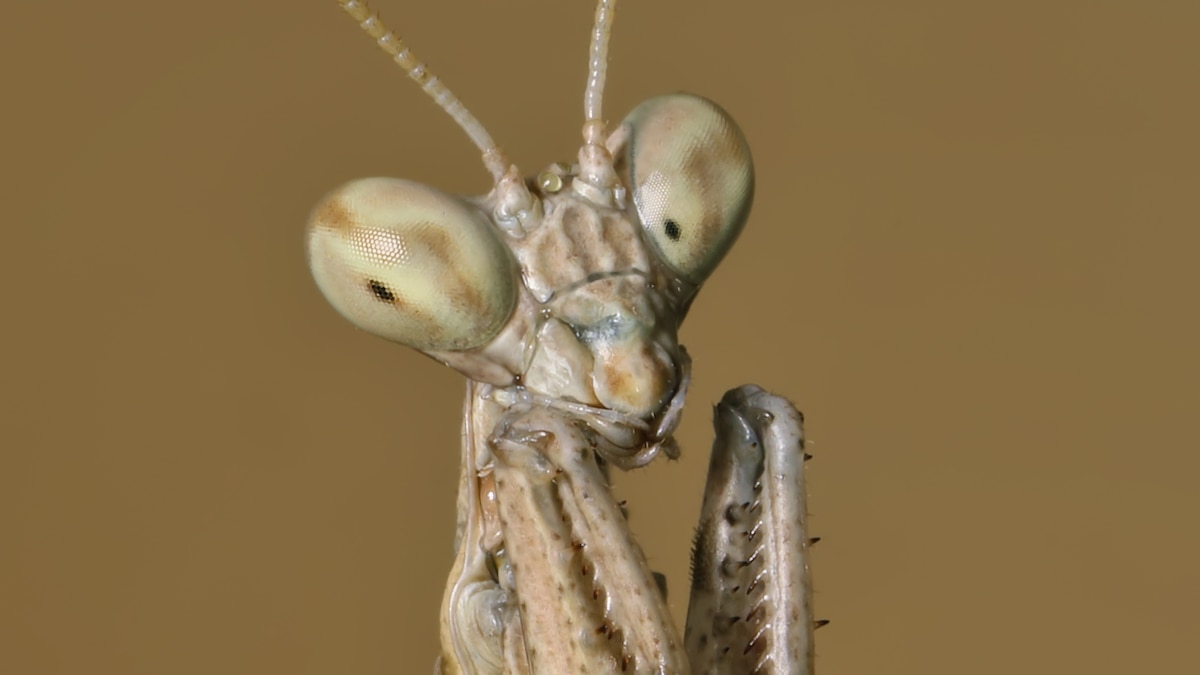
Our team, working under the dim, filtered light of the Bornean understory, first encountered what we now affectionately call the ‘snake-tail mantis,’ or *Serpentimantis chorea*, during a routine nocturnal survey. What initially seemed like a typical mantis interaction quickly transformed into something utterly unprecedented. Following a successful, albeit tense, mating ritual, the male, instead of making a frantic dash for freedom or succumbing to the female’s formidable grasp, began an extraordinary performance. Its abdomen, usually held rigid, started to undulate with a fluid, mesmerizing motion, mimicking the sinuous movements of a small snake. This wasn’t a desperate struggle; it was a deliberate, rhythmic display, a dance of distraction. The female, momentarily captivated or perhaps disoriented by this unexpected spectacle, seemed to pause, her predatory instincts momentarily overridden by curiosity or confusion. This precious window of hesitation provided the male with the critical opportunity it needed to disengage and escape, disappearing into the foliage. Over subsequent observations, meticulously documented through high-speed cameras and patient field work, we confirmed this wasn’t an isolated incident. This ‘snake dance’ is a consistent, post-mating strategy, a sophisticated behavioral adaptation developed over millennia to circumvent the perilous cost of reproduction. It represents a remarkable evolutionary innovation, a bold departure from the typical mantis narrative, and offers a glimpse into the incredible lengths to which life will go to survive and propagate.
The implications of the *Serpentimantis chorea*’s unique survival strategy ripple far beyond the immediate interaction between male and female. In the grand scheme of the rainforest ecosystem, every creature plays a specific role, contributing to the delicate balance of life. Mantises, as apex predators in their micro-habitats, exert significant control over insect populations, preventing certain species from overwhelming the environment. They feast on moths, flies, beetles, and even smaller invertebrates, acting as vital biological regulators. This snake-tail mantis, by allowing the male to survive more frequently, potentially increases the overall reproductive output of the species over its lifetime. Instead of a single, high-stakes mating encounter, a male that survives can go on to mate with multiple females, thereby spreading its genetic material more widely. This could lead to a more robust and adaptable population, better equipped to face environmental challenges. Furthermore, the very existence of such a complex behavioral adaptation highlights the intense evolutionary pressures at play. The drive to reproduce is so fundamental that even the most ingrained and seemingly inescapable biological traps, like sexual cannibalism, can be circumvented through novel solutions. It reminds us that nature is not static; it is a constant laboratory of innovation, where every twitch, every color pattern, every unusual movement could be a clue to an untold story of survival and adaptation, intricately woven into the fabric of the entire ecosystem. Understanding these individual stories allows us to appreciate the profound interconnectedness of all living things, from the smallest insect to the tallest tree.
For the intrepid traveler and the curious naturalist, the question inevitably arises: where can one witness such an extraordinary spectacle? The snake-tail mantis, *Serpentimantis chorea*, has so far only been documented in the primary lowland and hill rainforests of Borneo, specifically within protected areas of Sarawak and Kalimantan. These regions, characterized by their incredible biodiversity and ancient, undisturbed ecosystems, offer the best chance of encountering this elusive species. However, it’s crucial to understand that finding such a master of camouflage and subtle behavior requires immense patience and a keen eye. These mantises are not common roadside attractions. They blend seamlessly into their environment, often remaining perfectly still for hours, waiting for prey or a mate. An encounter would likely involve joining a specialized entomological tour or working with local guides who possess intimate knowledge of the forest and its inhabitants. Night walks, in particular, increase the chances of spotting them, as many mantis species become more active after dusk. Look for areas with dense undergrowth, tangled vines, and a rich diversity of plant life, as these provide both shelter and hunting grounds. Always remember to observe from a respectful distance, minimizing disturbance to the animals and their habitat. The thrill of searching for and perhaps even witnessing a moment of this mantis’s unique dance is an unparalleled experience, a profound connection to the wild heart of our planet. It is a powerful reminder that the most astonishing wonders are often found not in grand vistas, but in the intricate details of the world beneath our feet, waiting for us to simply slow down and truly see.
The discovery of the snake-tail mantis is more than just adding another name to the vast catalog of life; it’s a vibrant illustration of nature’s endless capacity for innovation. It compels us to question our assumptions, to dig deeper, and to appreciate the intricate intelligence embedded in the natural world. Every tiny creature, every unseen interaction, holds a secret, a lesson in survival, a piece of the grand puzzle of evolution. As a resident entomologist for Wandering Science, my greatest hope is that stories like this ignite a spark of curiosity in you, encouraging you to look beyond the obvious, to seek out the hidden marvels that surround us. The world of insects and arachnids is not just a collection of creepy crawlies; it is a dynamic, pulsating universe of drama, beauty, and extraordinary adaptations. So, next time you find yourself outdoors, take a moment. Peer into the foliage, examine the leaf litter, listen to the rustle in the grass. You might just stumble upon your own astonishing discovery, a powerful reminder that the most incredible adventures often begin on the smallest scales.

About admin
A curious explorer documenting the intersection of science and travel. Join the journey to discover the hidden stories of our planet.
Leave a Reply