
Computational strategies for cross-species knowledge transfer
Deep in the dappled light beneath a canopy of ancient oaks, a subtle drama unfolds. A tiny wolf spider, no larger than my thumbnail, navigates a complex terrain of fallen leaves, twigs, and shifting soil. Its eight eyes, a mosaic of differing sizes and orientations, process a flood of visual information. Its delicate leg hairs, exquisitely tuned mechanoreceptors, detect vibrations from a beetle scurrying many inches away. In milliseconds, a decision is made, a trajectory calculated, and the hunt is on. This isn’t just instinct; it’s a sophisticated, real-time computational feat, a marvel of biological engineering playing out on a miniature stage. As an entomologist, these moments are what fuel my fascination, drawing me into the intricate, often overlooked world where life operates with astonishing efficiency and ingenuity.
For too long, our understanding of these incredible creatures has been constrained by rigid classifications, focusing on evolutionary lineage as the primary lens. While crucial, this approach sometimes obscures the remarkable parallels in how different species solve similar ecological problems. Imagine a beetle, perhaps a ground beetle, employing a precise chemical trail to locate its prey, or a solitary bee meticulously constructing a nest chamber, orienting it perfectly to the sun. Are these behaviors merely random acts of survival, or do they represent underlying, elegant problem-solving frameworks? Our work at Wandering Science, in collaboration with wider scientific efforts, is increasingly pointing to the latter. We’re beginning to understand that across the vast spectrum of insect and arachnid life, there exist fundamental “computational strategies” – ways of processing information, making decisions, and executing actions – that transcend direct genetic relationships.
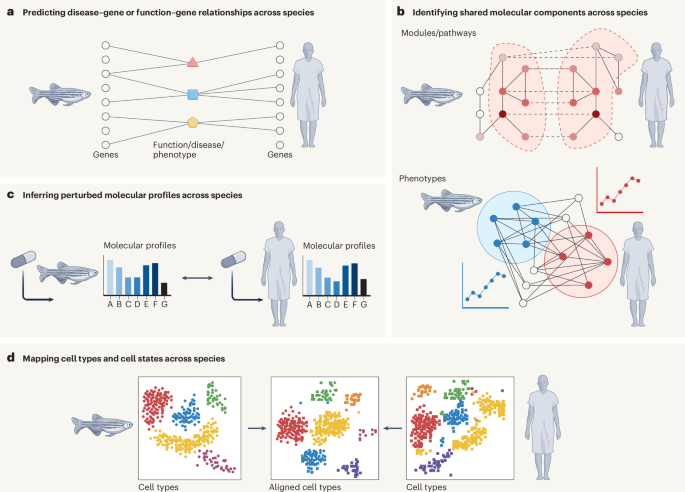
This is where the concept of ‘agnology’ enters the picture – a powerful, data-driven approach to identifying functional equivalence independent of evolutionary origin. Think of it this way: a desert ant navigates using polarized light and an internal step-counter, a honeybee uses a waggle dance to communicate direction and distance, and a noctuid moth tracks pheromone plumes with incredible precision. On the surface, these are distinct sensory modalities and communication methods. But through agnology, we can analyze the underlying computational principles. We can ask: How do these disparate systems achieve robust navigation or efficient resource location? What are the shared algorithmic structures, the common logical operations, even if the biological ‘hardware’ differs wildly? For instance, the way a spider’s web acts as an external sensory array, allowing it to “compute” the location and size of prey from vibrations, might share functional parallels with how a water strider uses surface tension waves to locate a meal. Neither evolved from the other, but their solutions to the challenge of locating moving prey in a fluid environment exhibit striking, quantifiable similarities in their information processing. By employing advanced computational methods – from machine learning to network analysis – we can extract these cross-species insights, revealing a hidden layer of biological intelligence that was previously obscured by our focus on cladistics alone. It’s about recognizing that nature often arrives at similar solutions to common problems, even when starting from very different evolutionary blueprints.
The implications of understanding these cross-species computational strategies ripple far beyond academic curiosity. Our world, with its delicate ecological balance, relies profoundly on the unseen work of insects and arachnids. They are the silent architects of our ecosystems: the pollinators ensuring our food supply, the decomposers recycling nutrients, the predators and prey maintaining population equilibrium. When we grasp the underlying computational logic of how a beetle processes environmental cues to find its niche, or how a colony of ants collectively optimizes foraging paths, we gain a deeper appreciation for the resilience and complexity of life itself. This knowledge isn’t just about marveling at nature; it’s about informing conservation efforts, understanding ecosystem health, and even inspiring human innovation. Imagine biomimetic robots that navigate complex terrains with the efficiency of a desert beetle, or communication networks that adapt with the fluid precision of a honeybee colony. By studying these fundamental ‘algorithms’ of life, we uncover principles that can guide sustainable design, agricultural practices, and technological advancements. The intricate behaviors of these small creatures are not merely isolated phenomena; they are integral components of the vast, interconnected web of life, each ‘computational strategy’ contributing to the planet’s overall stability and vibrancy.
So, where can a curious traveler, a budding scientist, or simply someone looking to reconnect with the natural world, go to witness these computational marvels firsthand? The answer, delightfully, is almost anywhere. You don’t need to book a safari or trek to a remote jungle. Start in your own backyard. Spend an afternoon observing a patch of wildflowers; watch the bees, butterflies, and hoverflies – each with their unique approach to navigating the floral landscape, processing nectar rewards, and avoiding predators. Lie on your stomach near an ant hill and marvel at the coordinated, seemingly chaotic yet incredibly efficient movements of the colony, a collective superorganism solving complex logistical problems. Turn over a log or a flat stone in a local park or forest, and you’ll reveal a bustling metropolis of springtails, beetles, centipedes, and spiders, each executing their life strategies with unwavering focus. Bring a magnifying glass; it transforms the mundane into the magnificent. Observe how a jumping spider stalks its prey with calculated precision, or how a caddisfly larva meticulously constructs its protective case from sand grains or plant fragments. The key is patience and a shift in perspective. Instead of just seeing a “bug,” try to perceive the intricate decision-making, the sensory input, the motor output – the very “computations” happening within that tiny body. The world of insects and arachnids is an open book of endless discovery, a constant reminder that some of the most profound intelligence and sophisticated engineering on Earth operates on a scale we often overlook. Open your eyes, slow down, and prepare to be amazed by the computational wonders beneath your feet.

About admin
A curious explorer documenting the intersection of science and travel. Join the journey to discover the hidden stories of our planet.
Leave a Reply