
‘We were overconfident’ – Spate of mountain rescues involving young men sparks concern
The dawn over Yr Wyddfa, Snowdon, can be a breathtaking deception. A crisp, clear morning, the air sharp and invigorating, promises a day of exhilarating challenge and sweeping vistas. Peaks glint with fresh snow, valleys lie shrouded in ethereal mist, and the urge to ascend, to conquer, becomes an almost primal call, echoing through centuries of human fascination with the wild and untamed. For many, especially the young and robust, this call is irresistible, a siren song of adventure and accomplishment. Yet, beneath this sublime beauty, a treacherous heart beats, particularly as winter tightens its grip. Recently, the rhythmic crunch of boots on frozen ground has been increasingly punctuated by the urgent thrum of helicopter blades and the determined shouts of rescue teams, a stark reminder that the mountains demand not just respect, but an almost reverential caution, often revealing their true nature only when it’s too late.
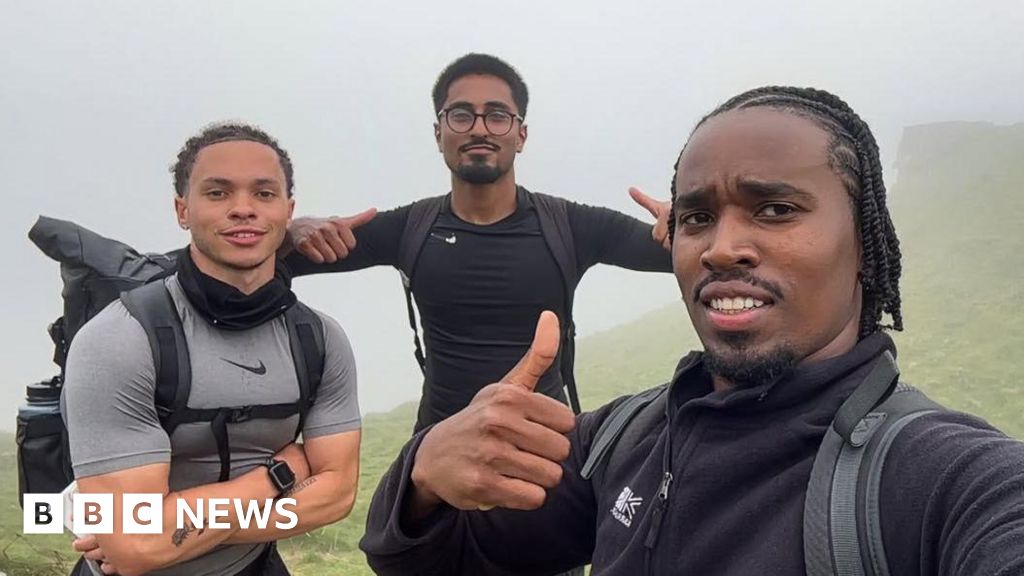
Llanberis Mountain Rescue Team, a dedicated cadre of volunteers who routinely put their own lives at risk, have voiced a growing disquiet. They report a noticeable uptick in callouts involving young men, often fit and seemingly well-equipped, who find themselves in perilous situations. These incidents frequently involve individuals or groups who, despite possessing good physical fitness, lack the nuanced experience required for winter mountaineering. The recurring refrain from those rescued, a phrase echoed with a mix of relief and stark realization, is chillingly simple: “We were overconfident.” This sentiment encapsulates a critical disconnect between perceived capability and the brutal realities of a mountain environment, especially when winter transforms familiar trails into perilous traps. It’s a gap that ‘Wandering Science’ seeks to explore, understanding not just the physical dangers, but the psychological undercurrents that lead individuals into harm’s way, challenging the very notion of human mastery over nature.
The science of winter mountains reveals a complex interplay of forces that conspire to amplify risk, far beyond what casual observation might suggest. It’s not merely about cold; it’s about the speed and intensity of meteorological shifts. A benign temperature at the trailhead can plummet by several degrees Celsius for every hundred meters gained in elevation, exacerbated by wind chill that can make -5°C feel like -20°C, stripping heat from the body at an alarming rate. This rapid cooling transforms rain into freezing rain, then into ice, coating rocks and paths with a veneer of verglas – an invisible, deadly glaze that offers no purchase for boots or even ice axes. Snow, too, is rarely static. Fresh powder might hide deep, treacherous drifts, while older snow can consolidate into hard-packed ice or become unstable, creating slab avalanche conditions even on seemingly gentle slopes, where a small disturbance can trigger a catastrophic release. Shortened daylight hours mean less margin for error; a wrong turn, a minor injury, or a delayed descent can leave a party stranded in darkness, battling the onset of hypothermia. Physiologically, severe cold impairs judgment and motor skills, making simple tasks difficult and complex decisions almost impossible. The body, struggling to maintain core temperature, diverts blood flow from the extremities, leading to numbness, loss of dexterity, and a dangerous cognitive fog, further complicating self-rescue or the effective use of essential gear. These aren’t abstract threats; they are tangible, measurable hazards that demand meticulous preparation, sophisticated navigation skills, and a profound understanding of their potential impact on both the environment and the human body.
Beyond the immediate environmental factors, a broader societal context contributes significantly to this concerning trend. The democratisation of adventure, fueled by accessible travel and the aspirational imagery of social media, has opened up the mountains to a wider demographic. While this is, in many ways, a positive development, fostering appreciation for nature, it also means that individuals with less inherent experience or formal training are venturing into challenging environments. The allure of the ‘epic shot’ or the desire to share a challenging accomplishment can sometimes overshadow prudent risk assessment, leading to decisions driven more by vanity than by safety. There’s a subtle but pervasive cultural narrative, particularly among young men, that equates physical prowess with invulnerability, often coupled with an optimism bias that downplays personal risk. This can manifest as an underestimation of the mountain’s power and an overestimation of one’s own resilience and skill set, sometimes even fostering a competitive spirit where acknowledging limitations feels like weakness. Furthermore, the increasing availability of affordable, high-performance gear can create a false sense of security. While modern equipment is undoubtedly superior, it is merely a tool; it cannot compensate for poor judgment, a lack of fundamental mountain craft, or the absence of crucial decision-making experience in adverse conditions. The burden on volunteer rescue teams, like Llanberis, is immense. These individuals, often juggling full-time jobs and family commitments, dedicate countless hours to intensive training and responding to emergencies, frequently at their own personal cost and risk. Their resources, both human and financial, are finite, and the rising number of preventable incidents places an unsustainable strain on these vital community services, diverting them from situations where genuine, unforeseen accidents occur.
For the curious traveler, the non-scientist eager to experience the majesty of these environments without inviting undue risk, the mountains offer a wealth of opportunity for profound connection. You don’t need to scale the most formidable peaks in winter to appreciate their grandeur and power. Consider visiting national parks and mountain regions during less challenging seasons, such as late spring or early autumn, when paths are clearer, temperatures more forgiving, and daylight hours more generous. Many parks, from the rugged peaks of the Scottish Highlands to the dramatic spires of the Dolomites, offer well-marked trails that provide spectacular views with manageable gradients and accessible visitor centers that offer up-to-date weather information and local advice. For those who wish to experience a winter landscape safely, consider guided snowshoeing tours on gentler terrain, or lower-altitude walks in areas known for their maintained paths, perhaps around a frozen lake or through a snow-dusted forest. These experiences allow for an immersion in the stark beauty of winter without the technical demands and inherent dangers of high-altitude mountaineering. Always check local forecasts rigorously, dress in appropriate layers (avoiding cotton, which loses its insulating properties when wet), carry sufficient food, water, and emergency supplies, and inform someone of your route and expected return time. For more adventurous aspirations, engaging a qualified mountain guide is an invaluable investment. A guide not only ensures safety by providing expert navigation and risk management but also offers a deeper understanding of the environment, its geology, ecology, and the subtle nuances of reading the landscape. This approach transforms a potentially risky endeavor into a rich, educational journey, fostering a profound respect for the wild and an understanding of our place within its immense, powerful systems. The mountains will always be there, silent sentinels of time and weather, inviting us to explore, to learn, and to grow, but always, always on their terms, demanding humility and preparedness.

About admin
A curious explorer documenting the intersection of science and travel. Join the journey to discover the hidden stories of our planet.
Leave a Reply