
‘Deep time’ geological trail planned for Highland village
The wind, sharp and clean, whips off the North Atlantic, carrying the scent of salt and peat. It tugs at your jacket, whispers ancient tales against your ear. Before you, the rugged coastline of Wester Ross in the Scottish Highlands unfurls a panorama of rock, sea, and sky. This isn’t just a pretty view; it’s a colossal library, its pages etched in stone, documenting epochs almost beyond human comprehension. Here, the very ground beneath your feet vibrates with stories of continental collisions, vast ancient oceans, and the slow, inexorable march of geological time. It’s a place where the concept of ‘deep time’ isn’t an abstract scientific notion but a tangible, humbling reality, and soon, a new initiative in the village of Gairloch hopes to make these profound narratives accessible to every wanderer.
For centuries, these silent witnesses – the mountains, the glens, the very pebbles on the shore – have held secrets to Earth’s tumultuous past. Now, thanks to the ambition of the Gairloch Museum and its partners, a dedicated geological trail is taking shape, promising to guide visitors through billions of years of planetary history laid bare along the dramatic coast. Imagine walking a path that serves as a chronological journey, each step traversing millions of years, each outcrop a chapter in the planet’s autobiography. This isn’t merely a hike; it’s an expedition into the foundational forces that shaped our world, offering a rare opportunity to connect intimately with the raw power and immense patience of geological processes.
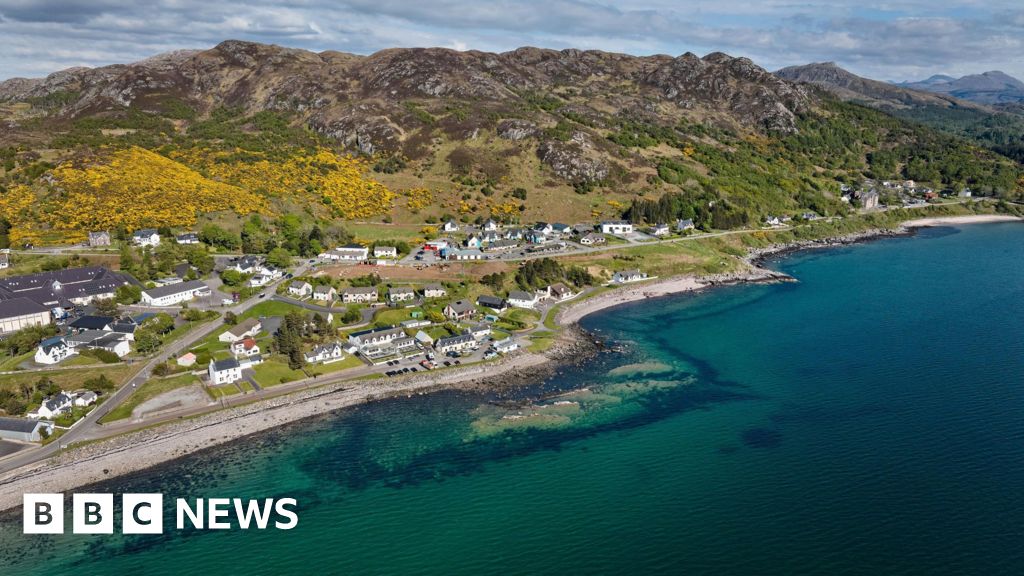
The science underpinning this trail is nothing short of breathtaking. The Highlands of Scotland are a geological marvel, a region where some of the oldest rocks in Europe are exposed. Central to the Gairloch trail will be the Lewisian Gneiss, an ancient crystalline rock formation that dates back an astonishing 3 billion years. To put that into perspective, the Earth itself is approximately 4.5 billion years old. These metamorphic rocks, contorted and folded by unimaginable pressures and heat deep within the Earth’s crust, were formed when life on Earth was still in its most primitive, single-celled stages. They tell a story of a primordial Earth, a time before continents as we know them existed, when vast supercontinents assembled and broke apart in a slow, cosmic dance. Standing beside them, one feels a profound sense of temporal vertigo, an awareness of the immense antiquity of our planet.
Reading the Earth’s Chronicle
Beyond the Lewisian Gneiss, the Gairloch area also showcases the younger, yet still ancient, Torridonian Sandstone. These distinctive red sandstones, approximately 1 billion years old, were deposited in vast river systems and lakes, the eroded remnants of even older mountain ranges. Their distinctive bedding planes and ripple marks offer tangible evidence of ancient environments, hinting at a world very different from today’s. Imagine mighty rivers flowing across a desert landscape, carrying sediment from mountains long since vanished, slowly building up layers that would one day become solid rock. These sandstones are not just pretty rocks; they are fossilized landscapes, preserving clues about atmospheric conditions, water cycles, and the very topography of a Proterozoic Earth.
Further along the proposed trail, visitors will encounter evidence of the Caledonian Orogeny, a monumental mountain-building event that occurred between 500 and 400 million years ago. This period saw the collision of ancient continents, pushing up vast mountain ranges that would have rivalled the Himalayas in scale. The famous Moine Thrust, a geological fault where older rocks have been pushed over younger ones for many kilometres, is a prime example of the colossal forces involved. While the Gairloch area might not feature the main Moine Thrust itself, the regional geology bears the unmistakable scars of this event, visible in the folding and faulting of rock layers. Understanding these processes helps us comprehend the dynamic nature of our planet, where continents are constantly in motion, reshaping the surface over geological timescales.
The Gairloch trail, therefore, serves as an open-air classroom, illustrating fundamental principles of geology: uniformitarianism – the idea that the same geological processes we observe today have operated throughout Earth’s history – and plate tectonics, the unifying theory that explains earthquakes, volcanoes, and mountain building. It’s a place where the abstract concepts from textbooks gain tangible form, where the sheer scale of geological time becomes less intimidating and more awe-inspiring. For students and enthusiasts alike, it offers a rare opportunity to see these concepts in action, laid out in a natural laboratory.
Deep Time in the Public Eye
The creation of a ‘deep time’ trail in Gairloch represents a significant step in making complex scientific ideas accessible to a broader audience. It reflects a growing global recognition of the importance of geo-conservation and geotourism. Places like the Scottish Highlands, with their unique geological heritage, are not just scenic landscapes; they are vital archives of Earth’s history. Projects such as this trail aim to foster a deeper appreciation for these natural wonders, encouraging responsible engagement and inspiring a sense of stewardship.
Scotland has a proud history in the field of geology, being the birthplace of modern geology through the work of figures like James Hutton in the late 18th century. Hutton, often called the “Father of Modern Geology,” observed the unconformities in Scottish rocks, leading him to conclude that the Earth was far older than previously imagined, a concept that laid the groundwork for ‘deep time.’ The Gairloch trail builds upon this legacy, continuing the tradition of using Scotland’s remarkable geology to educate and inspire. It’s an affirmation of how local initiatives can connect with profound global scientific narratives, enriching both the community and visiting scholars and tourists.
Such trails also bridge the gap between pure science and cultural heritage. The landscape, shaped by billions of years of geological activity, has in turn influenced human settlement patterns, resource availability, and even local folklore. The ruggedness of the Highlands, its unique flora and fauna, and the very character of its communities are intrinsically linked to its deep geological past. By highlighting these connections, the Gairloch trail can offer a holistic understanding of the region, demonstrating how geology is not an isolated discipline but a foundational element of our natural and cultural world.
Walking Through Epochs: The Traveler’s Experience
For the curious traveler, the prospect of walking the Gairloch ‘deep time’ trail is an enticing one. It’s an invitation to engage with the natural world on an entirely new level. While the trail is still in its planning stages, with hopes of being available next year, visitors can anticipate a carefully curated experience. Interpretive panels will likely guide them through the various geological formations, explaining their origins and significance in clear, engaging language. There might be opportunities for guided walks led by local experts, offering deeper insights and answering questions that arise as one stands before rocks that predate complex life.
What can a non-scientist truly gain from such an experience? More than just facts and figures, it’s an opportunity for perspective. To stand on 3-billion-year-old gneiss, to trace the ripple marks in a 1-billion-year-old sandstone, is to gain a profound sense of humility and wonder. It’s an antidote to the hurried pace of modern life, a reminder of the vastness of time and the enduring processes that shape our planet. It encourages a shift in perception, allowing one to see not just a rock, but a chapter in Earth’s grand, ongoing story.
Beyond Gairloch, the Scottish Highlands are replete with similar opportunities for geological exploration. The Isle of Skye, with its dramatic Cuillin mountains and volcanic landscapes, tells a different chapter of Earth’s history. The North West Highlands Geopark, encompassing a vast area, offers numerous sites where deep time is vividly displayed. Even driving the famous North Coast 500 route, one is constantly surrounded by geological narratives, from ancient fault lines to glacial valleys. These regions collectively offer a masterclass in Earth science, accessible to anyone willing to look closer.
As the Gairloch Museum works towards unveiling its ‘deep time’ trail, it offers more than just a new tourist attraction; it offers a gateway to understanding our planet’s incredible journey. It’s a chance to step outside the confines of human history and ponder the truly immense timescales that govern our world. To feel the ancient rock beneath your hand, to gaze at horizons shaped by forces active across billions of years – this is the essence of wandering science, an exploration that promises not just knowledge, but a profound and lasting connection to the very foundations of Earth.

About admin
A curious explorer documenting the intersection of science and travel. Join the journey to discover the hidden stories of our planet.
Leave a Reply