
Searching for life across the planet’s frigid frontiers
The Arctic air bites, a relentless sculptor of ice and land. It’s a place where the very breath you exhale crystallizes into a fleeting cloud, a stark reminder of the extreme conditions. Yet, even here, life persists, not just in the majestic polar bear or the sleek seal, but in an infinitely smaller, often overlooked dimension. As the Resident Entomologist for Wandering Science, my passion lies in coaxing these hidden narratives from the most unlikely corners of our planet. And few corners are as challenging, or as revealing, as the rapidly changing polar regions.
Imagine, if you will, a microscopic world unfolding within a single snowflake, or clinging to the underside of a melting ice floe. This isn’t science fiction; it’s the daily reality for creatures whose entire existence is predicated on survival in extremes. We often think of insects and arachnids as denizens of warmth, buzzing through sun-drenched meadows or skittering across desert sands. But the resilience of the arthropod world extends far beyond our conventional understanding, pushing the boundaries of what life can endure. In the frigid reaches of the Arctic and Antarctic, a silent, persistent drama is playing out, one that holds crucial clues to the health of our global ecosystem.
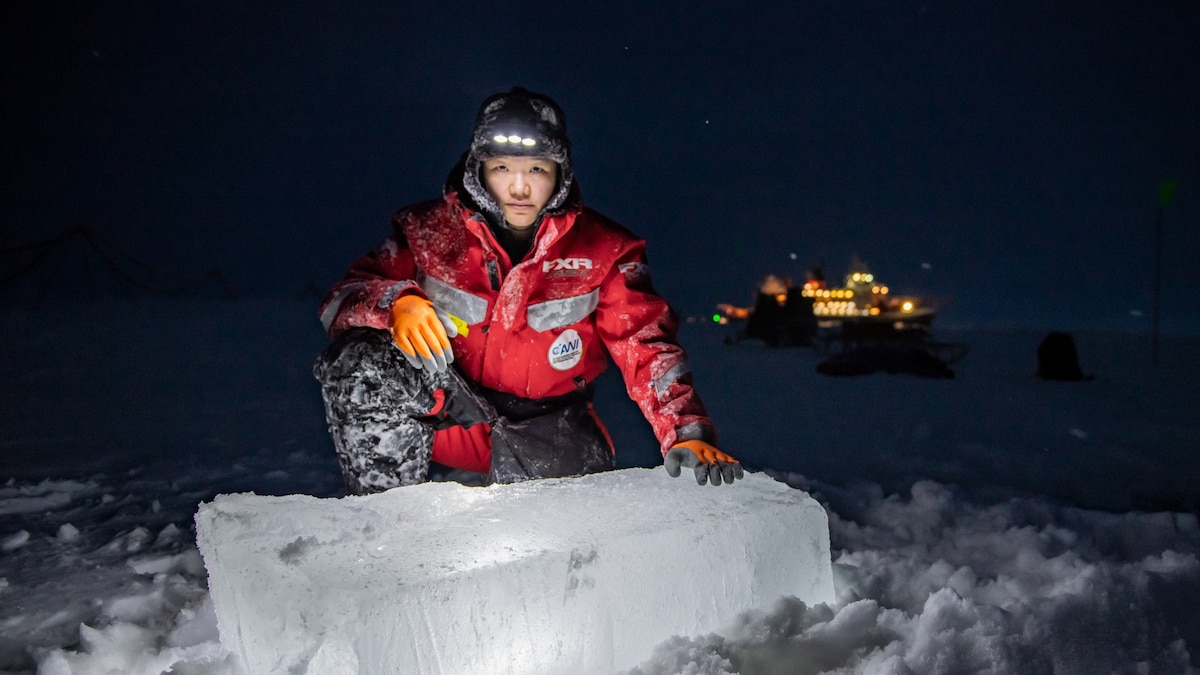
Deep in the ice-laden waters, or nestled within the sparse tundra, oceanographer Allison Fong is engaged in a hunt for these minuscule indicators of life. Her work, highlighted by National Geographic, is a profound testament to the power of the small. She’s not after charismatic megafauna; her focus is on the planktonic organisms, the diatoms, the copepods – the foundational building blocks of the polar food web. These are the unsung heroes, the microscopic engines that drive nutrient cycles and support every larger creature, from the smallest fish to the largest whale. What Fong discovers about their presence, their abundance, and their health, provides an invaluable baseline for understanding the massive, accelerating changes occurring as these regions warm. For us, the entomologically inclined, this resonates deeply. Just as a forest’s health can be read in its soil invertebrates, the pulse of the poles beats strongest in its smallest inhabitants.
The ecological context here is critical. The polar regions, often perceived as barren and desolate, are in fact vibrant, interconnected ecosystems. The melting of sea ice, for instance, doesn’t just impact polar bears. It fundamentally alters the habitat for ice algae, which are the primary food source for zooplankton like copepods. These copepods, in turn, are a crucial food source for fish, which are then eaten by seals, and so on, up the food chain. A disruption at the microbial or invertebrate level can cascade upwards, impacting entire populations and, ultimately, the global climate system. Our atmosphere and oceans are inextricably linked to these remote frontiers, making the study of their smallest residents a global imperative.
Consider the remarkable adaptations of some of these Arctic arthropods. Take the Arctic woolly bear moth (Gynaephora groenlandica). Its larvae are perhaps the most extreme example of insect cryopreservation. They spend up to seven years in their caterpillar stage, repeatedly freezing solid in winter and thawing in summer. They produce glycerol and other cryoprotectants in their bodies, essentially turning themselves into living antifreeze. This incredible survival strategy allows them to persist in an environment where growing seasons are impossibly short. Or think of the springtails (Collembola), ancient relatives of insects, which thrive on glaciers and in snowfields, feeding on algae and bacteria, their tiny bodies often containing natural antifreeze proteins.
These aren’t just biological curiosities; they are living laboratories of resilience. As the planet warms, the delicate balance that allows these creatures to survive is being thrown into disarray. A slightly warmer winter might mean they don’t freeze as deeply, altering their metabolic rates. A longer summer might provide more feeding time, but also expose them to different predators or pathogens. The timing of ice melt directly impacts the bloom of the algae they feed upon, creating a mismatch that can starve entire populations. By focusing on these hidden populations, Allison Fong and others are providing the early warning signals, the vital data points that reveal the true extent of climate change’s impact.
For the curious traveler, the idea of “bug hunting” in the Arctic might seem counterintuitive, yet it offers some of the most profound insights into nature’s tenacity. While you might not be donning a wetsuit to collect plankton samples like Allison Fong, there are still incredible opportunities to witness life in these extreme environments. Where can a traveler go to see this hidden world? The vast tundras of Alaska, Canada, and Scandinavia are prime locations. In late summer, as the permafrost briefly thaws, the ground comes alive. Look closely at the mosses and lichens, and you might spot the iridescent sheen of a ground beetle or the slow, deliberate crawl of a spider. Turn over a small rock, and you could uncover springtails or mites, busy in their microscopic universe.
For a more direct encounter with the aquatic world, consider small ship expeditions to the Arctic or Antarctic. While the focus is often on larger marine mammals, many natural history guides on board are knowledgeable about the smaller forms of life. With a good quality magnifying glass or a portable microscope, you can examine samples of meltwater or even snow, revealing a surprising diversity of microbial and invertebrate life. Tour operators focusing on ecological travel often emphasize the interconnectedness of these ecosystems, providing context for even the smallest observations.
Even more accessible, consider national parks and protected areas in sub-Arctic regions. Places like Denali National Park in Alaska, or the national parks of Norway and Sweden, offer hiking trails through tundra and taiga ecosystems. Here, you can observe species that are closely related to their high-Arctic counterparts, experiencing similar environmental pressures. Look for specialized pollinators like bumblebees, which are incredibly adapted to cold climates, or the myriad of flies and mosquitoes that, while sometimes annoying, are crucial components of the food web.
The message from the poles, conveyed through the tireless work of scientists like Allison Fong, is clear: every creature, no matter how small, plays an indispensable role. The health of a single copepod, the survival of a resilient woolly bear caterpillar, speaks volumes about the health of our entire planet. As an entomologist, I find endless fascination and a profound sense of responsibility in these findings. It’s a call to look closer, to appreciate the quiet strength of the small, and to understand that their future, and ours, are intertwined in ways we are only just beginning to fully comprehend. The next time you hear about the warming poles, remember the hidden world beneath the ice and snow – a world teeming with life, fighting for its survival, and offering us invaluable lessons.

About admin
A curious explorer documenting the intersection of science and travel. Join the journey to discover the hidden stories of our planet.
Leave a Reply