
It’s so cold in Florida that iguanas might rain from the skies
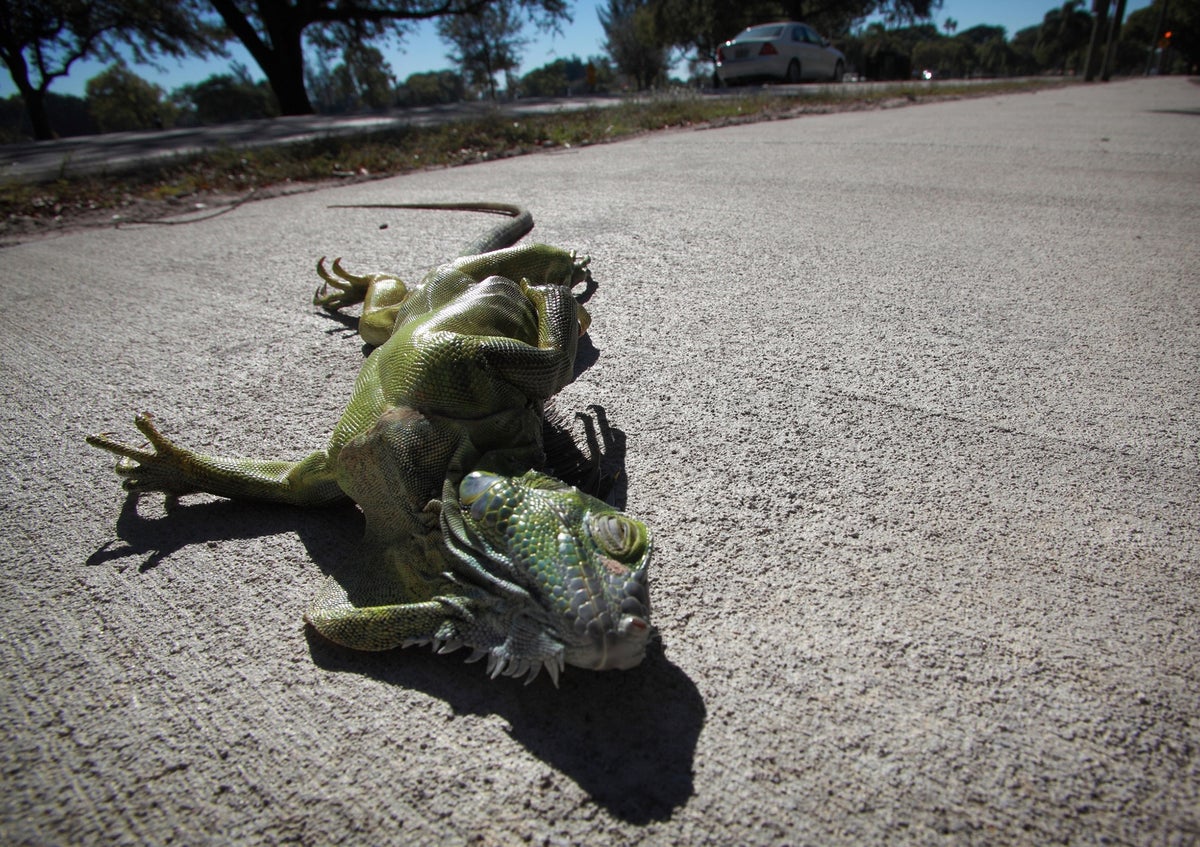
The morning air in Florida bites with an unfamiliar chill. News reports are awash with images of stiffened iguanas, plummeting from palm trees, temporarily immobilized by temperatures alien to their tropical physiology. It’s a striking, almost comical spectacle that captures headlines. But as an entomologist, my gaze rarely lingers on the obvious. While the world looks up, I’m often looking down, or even closer, at the minute drama unfolding beneath a frost-kissed leaf, within a decaying log, or deep in the insulated labyrinth of the soil. For every iguana temporarily stunned into immobility, countless insects and arachnids – the true residents of these ecosystems – are navigating their own, often far more intricate, dance with the cold.
Consider the ground beneath your feet, even in a “cold” Florida. It hums with life, a vibrant, hidden metropolis that rarely pauses. On a typical balmy day, a squadron of ants might be busily ferrying provisions, a beetle larva tunneling through damp wood, or a spider meticulously repairing its silken snare. But when the mercury dips, the bustling activity doesn’t simply cease; it transforms. The ants might retreat to deeper, warmer chambers in their colony, clustering together for collective warmth. The beetle larva, with its slower metabolism, might enter a state of torpor, its growth paused until more favorable conditions return. Spiders, often more exposed, might seek refuge under bark flaps, in rock crevices, or within the insulating embrace of a tightly woven silk retreat. It’s a world of microclimates, where a single degree difference can mean the difference between survival and succumbing to the chill.
The physiological adaptations insects and arachnids employ to survive such cold snaps are nothing short of astounding, a testament to millions of years of evolutionary refinement. Unlike those iguanas, which simply shut down when their body temperature drops too low, many invertebrates have developed sophisticated internal antifreeze mechanisms. Some produce cryoprotectants – compounds like glycerol or sorbitol – that act much like the antifreeze in your car, lowering the freezing point of their bodily fluids and preventing ice crystals from forming and rupturing cells. This allows them to enter a state of “supercooling,” where their internal temperature can drop several degrees below freezing without ice formation. Other species, particularly those in truly frigid environments, have even evolved to tolerate freezing solid, their cells protected by specialized proteins, only to thaw and revive once temperatures rise. Take the woolly bear caterpillar, a familiar sight in northern climes; it can freeze solid, its heart stopping, its bodily fluids turning to ice, and then reanimate in the spring. In Florida, while such extreme measures are less common, even subtle cold spells can trigger a diapause, a suspended state of development and metabolism, allowing them to ride out the unfavorable conditions. Researchers studying these mechanisms often focus on specific enzymes or genetic pathways, revealing the intricate biochemical ballet that allows life to persist in seemingly impossible conditions. It’s a quiet miracle happening under our noses, a profound demonstration of biological resilience that often goes unnoticed.
These individual survival strategies ripple outwards, profoundly impacting the intricate web of life. When insects and arachnids slow down or disappear into hiding, it creates immediate shifts in the ecosystem. Consider the birds, bats, and reptiles that rely on them as a primary food source. A sudden cold snap means a temporary scarcity, forcing predators to expend more energy searching for food, or even to enter their own states of torpor or migration. Those stiffened iguanas, for instance, aren’t just a spectacle; they represent a temporary disruption in the food chain for anything that might prey on them or compete with them for resources. Furthermore, insects are vital for decomposition, breaking down organic matter and returning nutrients to the soil. A prolonged period of reduced insect activity can slow this crucial process, impacting soil health and plant growth. Pollination, another cornerstone ecological service, also suffers. Fewer active bees, butterflies, and other insect pollinators mean reduced fruit and seed set for many plants, which in turn affects the animals that feed on those plants. The delicate balance of predator-prey relationships is also temporarily skewed; a spider in diapause isn’t catching flies, and a beetle larva in torpor isn’t being hunted by a hungry bird. Every creature, no matter how small, plays a role, and when one part of the system experiences a shock, the vibrations are felt throughout, demonstrating the profound interconnectedness of all living things.
For the curious traveler or aspiring naturalist, these moments of climatic stress offer a unique window into the hidden world of invertebrate survival. You don’t need a research grant or specialized equipment; you just need patience and a keen eye. When the weather turns unexpectedly cool, resist the urge to simply retreat indoors. Instead, bundle up and venture out. Start by gently turning over logs, rocks, or even a discarded piece of cardboard in your garden or a local park. You might find clusters of ladybugs huddling together for warmth, or a millipede coiled tightly, its many legs drawn in. Look under the loose bark of trees; this is a favored refuge for many beetles, spiders, and woodlice. Sift through leaf litter with a gloved hand – many small ground-dwelling insects and mites will burrow deep, seeking insulation. Observe the undersides of leaves, particularly those of broad-leafed plants, where insects might be clinging, their metabolism slowed, waiting for the sun’s return. Pay attention to microclimates: south-facing walls or sun-warmed patches of pavement can act as temporary thermal oases, attracting the few brave insects still venturing out. A small magnifying glass can transform these observations into moments of profound discovery, allowing you to appreciate the intricate details of their cold-weather morphology or behavior. Remember to always return anything you disturb exactly as you found it, minimizing your impact on their fragile refuges. These aren’t just “bugs”; they are living examples of incredible adaptation, tiny marvels navigating a world that often ignores their existence. By taking the time to observe, we not only gain a deeper understanding of our planet’s biodiversity but also cultivate a sense of wonder for the often-overlooked resilience that surrounds us, even when the iguanas are raining down.

About admin
A curious explorer documenting the intersection of science and travel. Join the journey to discover the hidden stories of our planet.
Leave a Reply