
Deep in the hushed, climate-controlled chambers of a grand art museum, where priceless masterpieces and ancient artifacts rest in their carefully curated silence, a battle rages unseen. It’s a conflict not of human ambition or political intrigue, but of life itself – microscopic, tenacious, and utterly devastating. As an entomologist, my gaze is often drawn to the minute, the overlooked, the six-legged and eight-legged denizens that share our world, often unnoticed. I marvel at the springtail’s jump across a dewy leaf, the intricate architecture of a spider’s web, or the slow, deliberate excavation of a beetle through decaying wood. But even I, accustomed to the silent drama of the arthropod world, am sometimes startled by life forms even more subtle, yet profoundly destructive, sharing these hidden spaces.
We’re talking about extremophile molds – organisms so resilient, so insidiously adaptable, they are staging a quiet, devastating siege on humanity’s cultural heritage. These aren’t the common, fuzzy growths you might find in a forgotten corner of your refrigerator; these are specialized survivors, fungi that thrive in conditions most life forms would consider utterly hostile. They persist in environments of extreme dryness, fluctuating temperatures, and even in the presence of corrosive chemicals or radiation. And now, fueled by a complex interplay of environmental shifts and human oversight, they are invading our museums, turning priceless relics into their next meal.
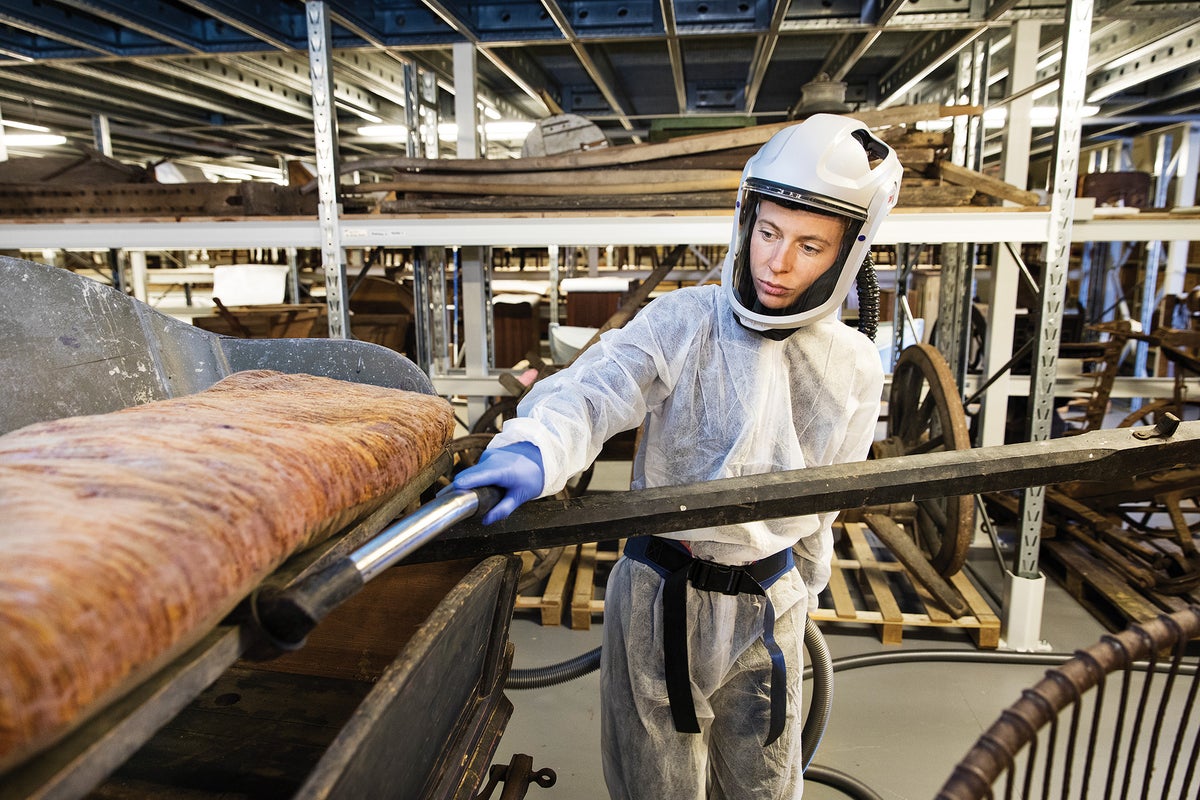
The discovery of these microscopic saboteurs often begins subtly. A conservator might notice a faint discoloration on a canvas, a slight weakening in the fibers of an ancient textile, or an inexplicable powdery residue on a delicate papyrus. Initially, these signs might be attributed to age, improper handling, or even the lingering effects of past insect infestations. However, as the damage progresses, often accelerating with alarming speed, closer inspection under powerful microscopes reveals the true culprits: intricate networks of fungal hyphae, slowly but inexorably consuming the very fabric of history. Scientific analysis has identified species such as Aspergillus and Penicillium, but also more obscure genera like Wallemia and Eurotium, known for their xerophilic (dry-loving) tendencies, previously thought unlikely to thrive in controlled museum settings. These molds don’t just sit on the surface; they penetrate deep, breaking down cellulose in paper, collagen in leather, pigments in paint, and even the very mineral structure of stone artifacts. The data is stark: specific fungal colonies have been observed to degrade organic materials at rates far exceeding previous estimates for museum decay, often leaving behind irreversible damage, turning a vibrant hue into a dull smudge or a crisp edge into a brittle crumble. While my primary adversaries in these hallowed halls are often the carpet beetles or silverfish, these molds present a challenge on a different scale, often thriving in the very conditions that might deter larger pests, or even paving the way for them.
To truly understand the threat, we must place these extremophile molds within their broader ecological context – the intricate web of life that connects us all. These fungi are, by nature, decomposers, playing a vital role in breaking down organic matter in ecosystems worldwide. Their natural habitats include some of Earth’s most challenging environments: the arid expanses of deserts, the salty crusts of hypersaline lakes, the frigid plains of the Arctic, or even deep within the rock of caves. Their spores, incredibly resilient, are ubiquitous, carried by air currents across continents. The problem arises when these hardy spores find their way into what should be a sanctuary: a museum.
Several factors conspire to turn these cultural repositories into fertile ground for extremophile molds. Climate change, a global phenomenon impacting every facet of life, plays a significant, albeit indirect, role. Increased frequency of extreme weather events – sudden humidity spikes, prolonged periods of dampness, or even minor flooding – can create microclimates within museum buildings that push their environmental control systems to their limits. A slight increase in ambient humidity, even for a short period, can be enough to activate dormant spores. Moreover, there’s the pervasive issue of stigma. Museum professionals, understandably protective of their collections and reputations, can sometimes be reluctant to openly acknowledge infestations. This delay in reporting and intervention provides extremophile molds with crucial time to establish themselves, spread, and inflict substantial damage before countermeasures are fully implemented. From my entomological perspective, this mirrors the challenges faced with insect pest management; early detection is paramount, yet often hampered by a desire to avoid public alarm. The presence of certain fungivorous mites or psocids (booklice) can often signal elevated humidity, a precursor to mold proliferation, acting as living barometers of environmental risk. Consider the humble dust mite, an arachnid often found in these same dusty corners; while not directly consuming artifacts, their movements and waste could inadvertently distribute fungal spores, acting as unwitting vectors in this microbial war. The decay initiated by these molds can alter the very fabric of an artifact, creating new substrates that might then become appealing to secondary decomposers, including various species of fungivorous beetles or even specialized springtails, further complicating conservation efforts.
So, where can a curious traveler, keen to observe the tenacity of life and the intricate interplay between organisms, go to see this hidden world? While direct observation of active mold outbreaks in museums is, understandably, restricted for conservation reasons – and rightly so – understanding the preventative measures taken is a way to “see” the battle. Many institutions offer behind-the-scenes tours that highlight the meticulous environmental controls and integrated pest management strategies employed – strategies that combat not just mold, but also the myriad insect pests that can accelerate decay. Seeing the precise calibration of humidity sensors, the specialized air filtration systems, and the traps for fabric-eating beetles offers a glimpse into this constant, vigilant struggle.
To truly appreciate the resilience of extremophile life in a more natural setting, one needn’t break into a museum vault. Instead, venture into a cave system. Here, in the constant darkness, high humidity, and often nutrient-poor conditions, you’ll find specialized fungi alongside unique cave-dwelling arthropods – blind cave spiders, unique species of springtails, and specialized beetles – all adapted to conditions that push the boundaries of life. These environments are natural laboratories for studying extremophiles, where the lines between what constitutes “life” and “survival” blur. Similarly, exploring salt flats or arid desert landscapes reveals other extremophile marvels: specialized bacteria and fungi that tolerate extreme salinity or desiccation, existing alongside incredibly adapted arachnids and insects that have evolved unique strategies to cope with these harsh conditions. These places demonstrate life’s incredible tenacity against chemical gradients and extreme dryness, the very qualities that make museum molds so formidable.
The lesson from these hidden worlds, whether in a pristine cave, a parched desert, or a museum’s vulnerable archive, is that life, in all its forms – from microscopic mold to macroscopic beetle – is constantly adapting, pushing boundaries, and shaping its environment. The threats posed by extremophile molds to our cultural heritage serve as a potent reminder of the interconnectedness of all living things and the profound impact of our changing planet. Understanding these interconnections is not just about preserving artifacts; it’s about appreciating the intricate ballet of existence itself, a dance where even the smallest players can hold immense power.

About admin
A curious explorer documenting the intersection of science and travel. Join the journey to discover the hidden stories of our planet.
Leave a Reply