
How charge frustration causes ion ordering and microphase separation at surfaces
Deep in the leaf litter, beneath the gnarled roots of an ancient oak, a drama unfolds daily, unseen by most. A millipede, a segmented marvel of locomotion, navigates a labyrinth of decaying leaves, its countless legs a rhythmic wave propelling it forward. Suddenly, a flicker of movement – a ground beetle, its chitinous armor gleaming, ambushes a springtail, a creature so small it often goes unnoticed. The world we inhabit is teeming with such intricate ballets, hidden beneath our very feet, humming in the air, or clinging to the bark of trees. As the Resident Entomologist for Wandering Science, my mission is to pull back the curtain on this miniature universe, to reveal the extraordinary lives of the creatures that truly run the planet: insects and arachnids. They are not merely “bugs”; they are engineers, architects, hunters, and vital components of every ecosystem, each playing an indispensable role in the grand theatre of life.
The Micro Hook: Zooming In
Consider the humble ant. We often dismiss them as mere pests, yet their colonies are superorganisms of staggering complexity, rivaling human cities in their organization and efficiency. A single worker ant, no larger than a grain of rice, possesses an array of sensory organs that put our most advanced robotics to shame. Its antennae, exquisitely sensitive to chemical cues, guide it through a pheromone-laden highway, communicating with its sisters, identifying food sources, and even detecting threats with astonishing precision. Zoom in further, and you see the intricate mandibles, perfectly adapted for cutting, carrying, or defense. Its six legs, each jointed with precision, allow it to scale vertical surfaces with ease, often carrying loads many times its own body weight, showcasing a strength-to-size ratio that continues to baffle engineers. This is the magic of the micro-scale – a world where every appendage, every hair, every cuticle serves a precise, often astonishing, purpose, revealing a level of biological engineering that is truly awe-inspiring.
The Discovery: Data and Behavioral Analysis
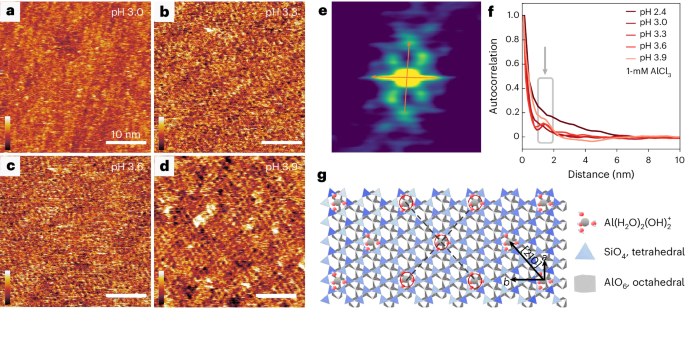
What truly captivates me is not just their existence, but the ingenious solutions these creatures have evolved to survive and thrive in environments ranging from scorching deserts to frozen tundras. Take, for instance, the remarkable adaptations for water repulsion and adhesion, critical for survival in a world defined by microclimates and surface interactions. Many insects, from the water strider gliding effortlessly across a pond’s surface, its delicate legs dimpling the water without breaking the tension, to the beetle that sheds mud with a single shake, possess cuticles engineered at a nano-scale to interact with water in specific, often counter-intuitive ways. Scientists, using advanced techniques like atomic force microscopy – a tool more commonly associated with material science and nanotechnology – are now beginning to uncover the secrets of these natural microstructures. They are meticulously mapping the intricate patterns of hydrophobic hairs and hydrophilic patches, understanding precisely how surface tension is exploited for locomotion or how minute electrostatic charges might play a role in adhesion or repellency. It’s a field where the lines between biology, physics, and chemistry blur, revealing nature’s unparalleled mastery of surface science. The elegant simplicity of a gecko’s foot, for example, with its millions of spatulae, uses van der Waals forces for powerful, reversible adhesion – a principle also at play in how some insects, like certain beetles or flies, can cling to seemingly smooth, vertical surfaces with astonishing tenacity. These discoveries aren’t just academic curiosities; they are profound insights that inspire biomimicry, guiding the development of new materials, self-cleaning surfaces, advanced adhesives, and water-resistant coatings for our own technologies, proving that the smallest creatures often hold the biggest lessons.
Ecological Context: The Web of Life
But beyond their individual marvels, insects and arachnids are the silent, tireless architects and maintainers of nearly every terrestrial ecosystem. Without them, the world as we know it would grind to a halt, collapsing under the weight of its own unmanaged processes. Pollinators, primarily insects like bees, butterflies, moths, and even some specialized beetles and flies, are directly responsible for the reproduction of over 75% of the world’s flowering plants, including a significant portion of our global food crops. Imagine a world without apples, coffee, chocolate, or almonds – that’s a world without insect pollinators, a stark and unsettling prospect. Decomposers – termites, dung beetles, springtails, millipedes, and countless other detritivores – tirelessly break down organic matter, from fallen leaves to animal carcasses, returning vital nutrients to the soil, shaping landscapes, and preventing the planet from being buried under its own waste. Predators, from the lightning-fast ambush of a praying mantis to the intricate, strategic traps woven by a web-spinning spider, keep herbivore populations in check, preventing ecological imbalances that could devastate plant communities. And in turn, they serve as a crucial, energy-rich food source for countless other animals, including birds, bats, fish, amphibians, reptiles, and even other mammals. Their sheer biomass and staggering diversity underscore their irreplaceable role in the intricate, interconnected web of life. The health of insect populations is, therefore, a direct and undeniable indicator of the health of our planet; a decline in their numbers signals a profound disruption to the very foundations of life on Earth, a warning that we ignore at our peril.
The Field Angle: Where Can a Traveler Go to See This?
The unparalleled beauty and complexity of this hidden world is that it is profoundly accessible to everyone, everywhere, regardless of their travel budget or geographical location. You don’t need to embark on an expensive safari to witness extraordinary natural history. It begins quite literally in your own backyard, or even in a crack in the pavement. Turn over a forgotten log, gently sift through a handful of leaf litter, or simply sit quietly beside a flowering plant for a few minutes. A simple magnifying glass can be your personal portal to discovery, transforming the mundane into the magnificent. For those who wish to go further afield, national parks, state forests, and nature reserves worldwide offer unparalleled opportunities for immersive observation. Imagine the thrill of wandering through the misty cloud forests of Costa Rica, where iridescent morpho butterflies glide past like sapphire jewels, and massive columns of leaf-cutter ants march with their meticulously cultivated fungal crops. Or picture the breathtaking vastness of the Amazon rainforest, where Hercules beetles lumber through the canopy and tarantulas patrol the forest floor beneath a symphony of unseen life. Even closer to home, a visit to a local botanical garden, a quiet community park, or even a nocturnal walk in a well-lit suburban area can reveal astonishing creatures: moths the size of your hand drawn to streetlights, glow-worms illuminating the undergrowth with their ethereal light, or the silent, patient hunt of an orb-weaver spider meticulously repairing its dew-kissed web. Specialized entomological tours are increasingly gaining popularity, taking curious travelers to biodiversity hotspots like Borneo for its incredible diversity of stick insects and vibrant lantern bugs, or to the arid deserts of Namibia for its unique tenebrionid beetles, perfectly adapted to extreme conditions. The key to unlocking these wonders is patience, keen observation, and a willingness to look beyond the obvious, to slow down and truly see. Equip yourself with a good field guide, a macro lens for your camera to capture their intricate details, and an open, inquisitive mind, and you will find an entire universe waiting to be explored, right beneath your nose, teeming with stories of survival, adaptation, and sheer biological artistry.
This world of insects and arachnids is not just fascinating; it is fundamental. It is a constant reminder of nature’s boundless innovation and resilience. By understanding these creatures, by appreciating their complex lives and vital roles, we gain a deeper respect for the delicate balance of our planet. They are the silent architects, the tireless recyclers, the essential pollinators, performing their duties with an efficiency and elegance that we can only aspire to replicate. So next time you encounter a “bug,” pause. Observe. See not just a tiny creature, but a marvel of evolution, a cornerstone of life, and a gateway to understanding the profound interconnectedness of all living things. Let your curiosity lead you into their hidden realms, and you will find a world far richer and more astonishing than you ever imagined.

About admin
A curious explorer documenting the intersection of science and travel. Join the journey to discover the hidden stories of our planet.
Leave a Reply