
What to see and do in Rovaniemi, Finland
The air bites with a crispness unique to the Arctic Circle, a cold that sharpens the senses rather than dulling them. Beneath a sky often painted in hues of deep indigo, Rovaniemi, the official home of Santa Claus, twinkles with a gentle, inviting glow. Yet, to journey here merely for the famed jolly figure is to glimpse only the festive icing on a profound, complex cake. Rovaniemi, and indeed the vast expanse of Finnish Lapland it anchors, is a gateway to a world of raw natural phenomena, ancient cultures, and scientific inquiry, a place where the spirit of exploration finds its most elemental expression.
Beyond the cheerful bustle of Santa’s Village, where the Arctic Circle line is playfully marked for all to straddle, lies an environment shaped by extreme conditions and breathtaking beauty. This is a landscape of profound silence, broken only by the crunch of snow underfoot, the whisper of wind through frost-laden pines, or the distant howl of a husky team. It is a place where the very rhythm of life is dictated by the sun’s elusive presence and the dramatic interplay of Earth’s magnetic field with cosmic winds. For the curious mind, Rovaniemi offers not just a holiday destination, but a living laboratory, a vibrant classroom under the vast, often luminous, northern sky.
At the heart of Rovaniemi’s scientific allure is, undoubtedly, the Aurora Borealis. This celestial ballet, a phenomenon of awe-inspiring beauty, is a direct result of intricate physics playing out millions of miles away. Solar winds, streams of charged particles ejected from the sun, journey across space. Upon encountering Earth’s magnetosphere, these particles are largely deflected, but some are channeled towards the magnetic poles. Here, they collide with atoms and molecules in our upper atmosphere – primarily oxygen and nitrogen. The energy released from these collisions excites the atmospheric gases, causing them to emit light. Green hues, the most common, arise from oxygen atoms at lower altitudes, while rarer reds appear from oxygen at higher altitudes. Nitrogen contributes blues and purples. Researchers at institutions like the Sodankylä Geophysical Observatory, a key facility associated with the University of Oulu and close to Rovaniemi, continuously monitor these solar events and their impact on Earth’s ionosphere, studying everything from space weather’s effect on communication systems to the fundamental processes of plasma physics. Their work helps us understand not just the spectacle above, but also the complex interactions that govern our planet’s protective shield.
The Arctic environment itself presents a compelling natural experiment. Rovaniemi experiences the polar night (Kaamos) in winter, where the sun remains below the horizon for weeks, and the midnight sun in summer, where it never sets. This extreme variation in light profoundly impacts ecosystems. Plants and animals have evolved remarkable adaptations: reindeer, for instance, possess specialized eyes that can switch between summer and winter vision, absorbing more light in the darker months. Their thick coats and unique digestive systems allow them to thrive on lichen found beneath the snow. The permafrost, the perpetually frozen ground that underlies much of the Arctic, is another critical area of study. It acts as a vast carbon sink, locking away organic matter for millennia. As global temperatures rise, monitoring its thaw becomes crucial, as the release of stored methane and carbon dioxide could significantly accelerate climate change. Scientists at the Arctic Centre of the University of Lapland in Rovaniemi are at the forefront of this research, analyzing permafrost dynamics, Arctic biodiversity, and the socio-ecological impacts of a rapidly changing climate on indigenous communities and fragile ecosystems.
Beyond the pure physics and biology, Rovaniemi exists at a fascinating nexus where rigorous scientific understanding meets profound cultural heritage. The Sámi people, the indigenous inhabitants of Lapland, have lived in harmony with this environment for thousands of years, developing an intricate knowledge system that complements modern scientific inquiry. Their traditional reindeer herding practices, for example, demonstrate a deep understanding of animal behavior, migration patterns, and sustainable land use. Sámi oral traditions are rich with stories of the aurora, often attributing spiritual significance to its dancing lights, viewing them as the spirits of ancestors or messages from the heavens. This traditional ecological knowledge offers invaluable insights into long-term environmental changes and the resilience required to thrive in such a demanding landscape, providing a crucial counterpoint to data-driven scientific models.
Furthermore, Rovaniemi serves as a significant hub for international cooperation on Arctic issues. The city hosts numerous conferences and dialogues concerning climate change, resource management, and indigenous rights in the Arctic. It is a place where scientists, policymakers, and local communities converge to discuss the future of a region disproportionately affected by global warming. The melting of Arctic ice, the changing distributions of marine and terrestrial species, and the increased accessibility of Arctic shipping routes all present complex challenges and opportunities that demand a holistic, interdisciplinary approach. Understanding Rovaniemi means understanding a microcosm of these global Arctic challenges, where the local experience is a direct reflection of planetary shifts.
For the traveler, this intellectual and environmental richness translates into an unparalleled array of experiences that go far beyond the festive. To truly witness the science and culture of Rovaniemi, one must step out into the wild. Chasing the Aurora Borealis is, for many, the pinnacle of an Arctic journey. While sightings are never guaranteed, venturing away from city lights significantly increases the chances. Guided tours on snowmobiles, husky sleds, or snowshoes take visitors to prime viewing locations, often equipped with warming huts and hot beverages. These excursions are not just about seeing the lights, but about experiencing the profound silence and vastness of the Arctic night, connecting with the very forces that create the spectacle.
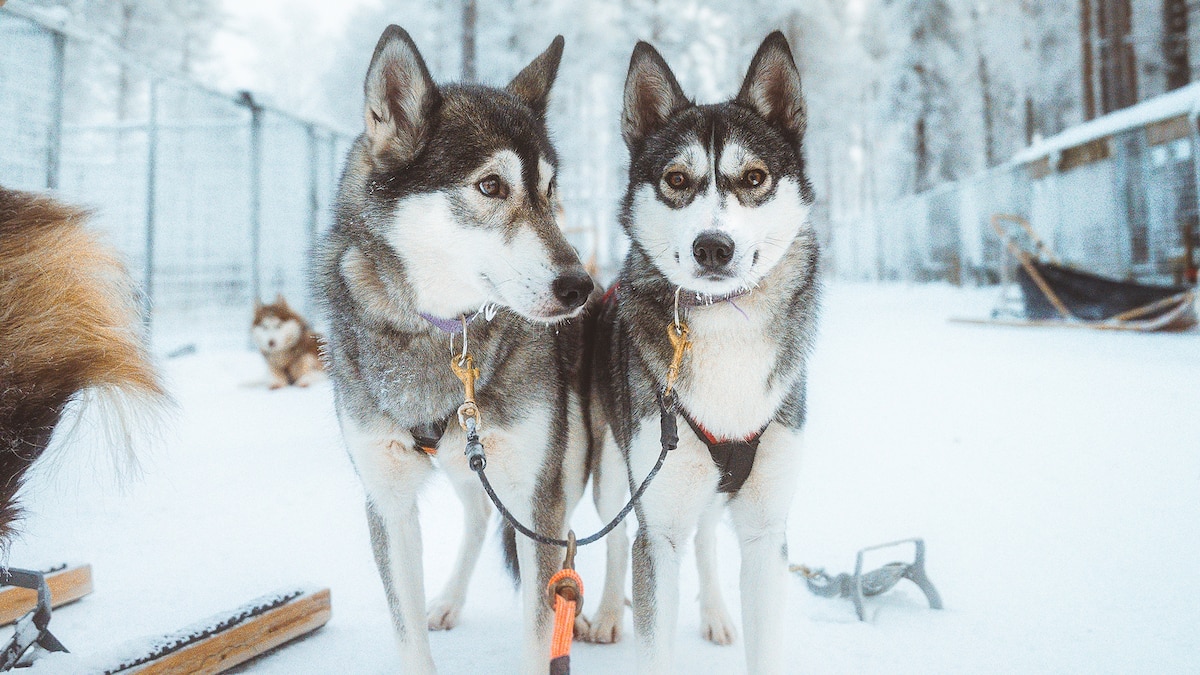
Engaging with the local wildlife offers another window into the Arctic’s unique adaptations. Visits to Sámi-run reindeer farms provide an opportunity to learn about traditional herding, interact with these iconic animals, and understand their central role in Sámi culture and economy. Husky safaris, a quintessential Lapland experience, allow travelers to feel the exhilarating power of a dog team pulling a sled through snow-covered forests, harkening back to ancient modes of Arctic travel and survival. While direct sightings of elusive creatures like Arctic foxes or wolverines are rare, venturing into the national parks and wilderness areas surrounding Rovaniemi on cross-country skis or snowshoes offers a chance to observe tracks and immerse oneself in their habitat.
Cultural immersion is equally vital. The Arktikum Museum and Science Centre in Rovaniemi is an absolute must-visit. It brilliantly intertwines the natural science of the Arctic with the history and culture of Finnish Lapland and the Sámi people. Its exhibits explain the aurora, the effects of permafrost, and the adaptations of Arctic life, while simultaneously showcasing Sámi artistry, traditional livelihoods, and the challenges faced by indigenous communities. It is a place where the narrative of science and the narrative of human experience become one. Beyond the museum, local markets, artisan shops, and traditional Sámi restaurants offer tastes and textures of the region, from smoked reindeer to cloudberry liqueurs, connecting the visitor to the land’s bounty.
Winter activities like snowmobiling, ice fishing, and exploring the intricately carved structures of an ice hotel offer thrilling ways to engage with the environment. Each experience, whether it’s drilling a hole through thick ice to fish for perch or gliding across frozen lakes, deepens one’s appreciation for the extreme conditions and the ingenious ways humans have adapted to them. Rovaniemi, therefore, is not just a destination for festive cheer, but a profound journey into the heart of the Arctic. It is a place where the wonder of nature meets the rigor of science, where ancient traditions inform modern understanding, and where every crunch of snow underfoot tells a story of survival, beauty, and the enduring spirit of exploration.

About admin
A curious explorer documenting the intersection of science and travel. Join the journey to discover the hidden stories of our planet.
Leave a Reply