
Bridging behaviour and genomics for tsetse fly control
Deep in the sun-drenched savannas of sub-Saharan Africa, where acacia trees cast dappled shadows and the air hums with life, an almost imperceptible drama unfolds. A tiny shadow, no bigger than a housefly, drifts silently through the bush. Its flight is deliberate, its mission singular: to find a blood meal. This is the tsetse fly, a creature often maligned, yet one whose existence profoundly shapes the landscapes and lives of millions across the continent. For the casual observer, it’s just a persistent buzz and a painful bite; for the entomologist, it’s a marvel of evolution, a key player in complex ecosystems, and a formidable challenge.
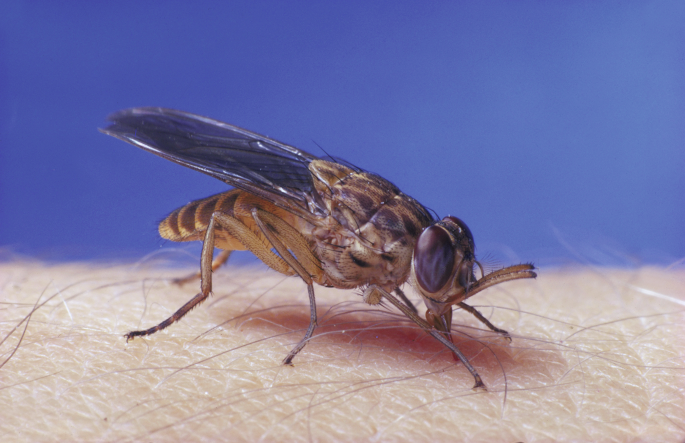
My fascination with these insects began not with their notorious role as disease vectors, but with their sheer efficiency. Observe a tsetse fly up close, perhaps through a macro lens, and you see not just a nuisance, but an organism finely tuned to its environment. Its large, iridescent eyes scan for movement, its antennae sample the air for chemical plumes, and its sturdy body is built for endurance. They are masters of stealth, often landing unnoticed, their proboscis a finely honed tool for piercing skin.
Understanding such a creature requires more than just observation; it demands a blend of careful fieldwork and cutting-edge laboratory analysis. For decades, scientists have grappled with the tsetse fly’s evasiveness, its ability to thrive in vast, wild areas, and its devastating capacity to transmit trypanosomiasis – sleeping sickness in humans and nagana in livestock. The quest to control these flies has led us down pathways that merge the visible world of their behavior with the invisible realm of their genetic code.
Early pioneers in tsetse research, like C. H. Green, laid crucial groundwork. In a seminal 1986 publication, Green meticulously detailed how specific visual cues, particularly certain shades of blue and black, combined with particular odor compounds, acted as powerful attractants for tsetse flies. His experiments, often involving simple but ingeniously designed traps, revealed that these insects weren’t just randomly searching; they were responding to a highly specific sensory language. This understanding transformed control efforts, moving from broad-spectrum pesticide spraying to targeted traps and screens that mimicked these alluring signals, drawing flies away from hosts and into containment.
Green’s work was a revelation, showing that by understanding the fly’s behavioral biases, we could outsmart it. But what exactly was happening at a deeper level? What biological machinery underpinned this attraction to a blue cloth or the scent of an animal’s breath? The answers to these questions began to emerge with the advent of advanced genomics. The publication by Attardo et al. in 2019 represented a monumental leap, providing comprehensive genomic insights across six different Glossina species. By sequencing their entire genetic blueprints, scientists could begin to identify the genes responsible for olfactory reception, visual processing, and the metabolic pathways crucial for their unique blood-feeding lifestyle. This was not just about mapping genes; it was about understanding the molecular symphony that orchestrates a tsetse fly’s life, from its birth to its relentless pursuit of a meal.
These genomic studies opened up new avenues for intervention. For instance, identifying the genes encoding specific olfactory receptors that bind to host odors could lead to the development of more potent lures or repellents. Understanding the genetic basis of their reproduction or immune response could inform novel control strategies like sterile insect techniques or gene drives. It’s a powerful synergy: behavioral ecology provides the ‘what’ and ‘how’ of their actions, while genomics reveals the ‘why’ at the most fundamental biological level. This combined approach allows us to design interventions that are not only effective but also highly specific, minimizing collateral damage to non-target species and the broader ecosystem.
The tsetse fly’s ecological role extends far beyond its infamous reputation as a disease vector. In the vast African savannas, their presence, or absence, can profoundly influence the distribution of wildlife and human settlements. Areas infested with tsetse flies often remain less developed, acting as de facto wildlife refuges by deterring cattle ranching and human habitation, ironically preserving biodiversity in some regions. However, this comes at a tremendous cost: the debilitating effects of sleeping sickness on human populations and nagana on livestock cripple economies and perpetuate poverty, limiting food security and agricultural development across huge swathes of the continent.
The intricate web of life in these ecosystems means that any intervention must be carefully considered. Simply eradicating tsetse flies, even if technologically feasible on a large scale, could have unforeseen consequences on the delicate balance of predator-prey relationships or plant communities. Instead, the focus has shifted towards sustainable control strategies that aim to suppress populations to manageable levels, breaking the disease transmission cycle without completely removing the species from its ecological niche. This nuanced approach is only possible with a deep, holistic understanding of the tsetse fly, gleaned from both its observable behaviors and its genetic makeup.
For the curious traveler venturing into the heart of Africa, the impact of this research is sometimes visible on the landscape. If your wanderings take you through national parks or game reserves in countries like Tanzania, Kenya, Uganda, or Zambia – places like the Serengeti, Murchison Falls, or South Luangwa – you might encounter the tangible results of this scientific endeavor. Look for the distinctive blue and black cloth panels, often treated with insecticide, hanging from trees or posts. These are tsetse traps, direct descendants of Green’s behavioral observations, now enhanced by genomic insights into the most effective attractants. They are silent sentinels, working tirelessly to reduce fly populations and protect both wildlife and human communities.
These traps, seemingly simple, are a powerful symbol of human ingenuity applied to a complex biological challenge. They represent decades of dedicated research, from observing a fly’s preference for a particular color to decoding the genes that make that preference possible. For the ‘Wandering Science’ enthusiast, seeing these traps in their natural setting offers a unique connection to the ongoing scientific efforts to manage one of Africa’s most impactful insects. It’s a reminder that even the smallest creatures can hold immense sway over our world, and that understanding them, in all their intricate detail, is a profound and necessary pursuit.
So, the next time you hear a buzzing sound in the African bush, pause for a moment. Beyond the immediate irritation, consider the extraordinary journey of discovery that has gone into understanding this tiny creature. From the subtle dance of attraction to the complex symphony of its genes, the tsetse fly continues to reveal the hidden marvels of the natural world, inspiring scientists to bridge the gap between observed behavior and the deepest biological secrets, all in the service of a healthier, more sustainable future for both humans and wildlife.

About admin
A curious explorer documenting the intersection of science and travel. Join the journey to discover the hidden stories of our planet.
Leave a Reply