
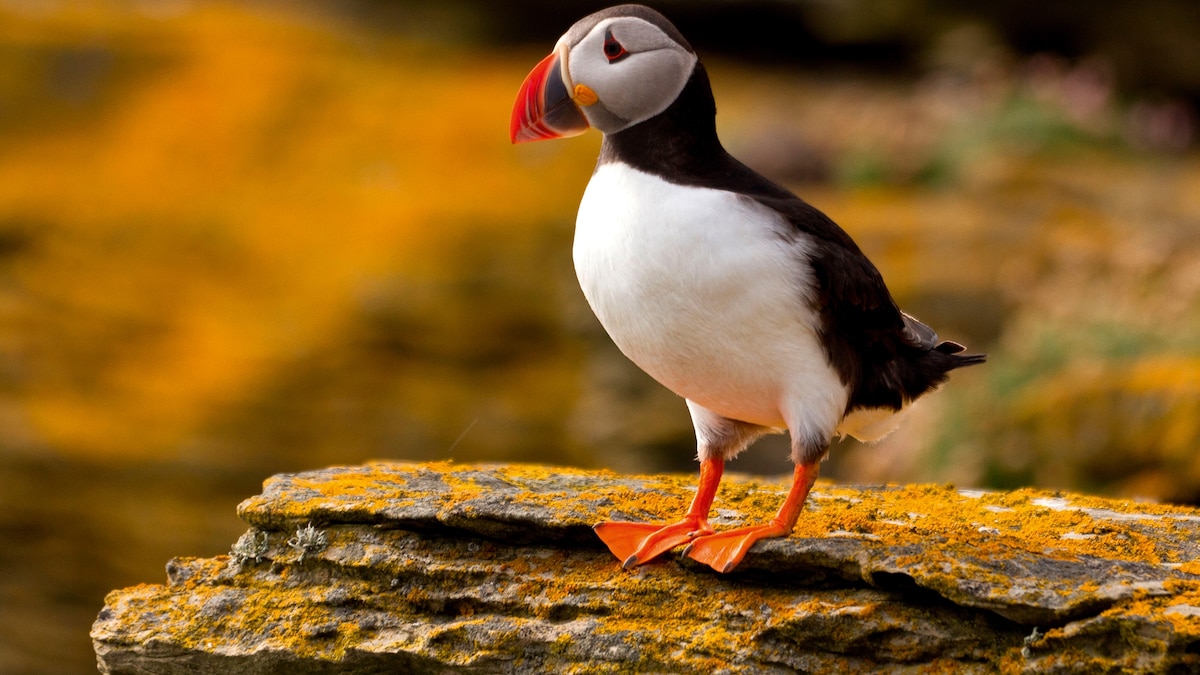
Want to see puffins? Then head to Scotland’s wild Orkney Islands
The wind whips off the North Sea, carrying the scent of salt and damp earth across the ancient stones of Orkney. Most visitors to this magnificent archipelago, just ten miles off the northern tip of mainland Scotland, come with their eyes fixed on the horizon, binoculars poised. They seek the charismatic puffins, those vibrant, clown-faced seabirds that nest in burrows along the dramatic cliffs. Or perhaps their gaze is drawn to the monumental Neolithic relics, the Ring of Brodgar, or the standing stones of Stenness, silent sentinels against a vast sky. But as a Resident Entomologist for ‘Wandering Science’, my fascination often pulls me closer to the ground, to the intricate, bustling world that thrives unseen beneath the very boots of these eager explorers.
Imagine, for a moment, standing at the edge of a windswept cliff, the roar of the ocean a constant companion. While the puffins dart in and out of their cliff-face burrows, bringing sand eels to their hungry chicks, what lies beneath the sparse tussocks of grass and the damp, lichen-covered rocks? A universe of activity, a vibrant, microscopic ecosystem supporting the very foundations of this rugged landscape. It’s a world where the smallest scuttling leg, the most delicate antenna, plays a role as vital as the grandest geological formation or the most magnificent bird. These tiny inhabitants are the unsung architects and maintainers of Orkney’s wild charm, and understanding them unlocks a deeper appreciation for the islands’ enduring magic.
Take, for instance, the humble ground beetle, a creature often overlooked yet profoundly important. On Orkney, where the soil can be thin and the weather harsh, these robust little predators are masters of survival. During a recent field expedition near the cliffs of Marwick Head, a site renowned for its seabird colonies, I observed a fascinating interaction. Beneath a loose piece of turf, a dark, iridescent Carabus nitens, one of the larger ground beetle species, was methodically hunting. Its sharp mandibles were perfectly adapted for seizing the small invertebrates that constitute its diet – springtails, mites, and even the occasional fly larva. This particular individual was patiently tracking a slow-moving slug, a common inhabitant of the damp coastal grasses. The beetle’s movements were precise, a miniature hunter operating with ancient instinct. We collected samples, analyzing gut contents and habitat preferences, revealing that these beetles are crucial regulators of detritivores and smaller herbivorous insects. Their presence ensures that the decomposition cycle remains efficient, returning nutrients to the sparse soil, and controlling populations of potential pests that could otherwise overwhelm the delicate coastal flora. This constant, unseen predation is a foundational force, sculpting the micro-landscape and enabling the very plants that stabilize the puffins’ nesting grounds.
The ecological contributions of Orkney’s smaller inhabitants extend far beyond predation. Consider the pollinators, a legion of bees, flies, and moths that brave the relentless winds to visit the islands’ hardy wildflowers. Without them, the vibrant displays of thrift, sea aster, and wild thyme that paint the coastal meadows would simply not exist. These plants, in turn, provide food and shelter for a myriad of other creatures, from small mammals to the very insects that puffins might inadvertently disturb as they waddle to their burrows. The common carder bee, Bombus pascuorum, a fuzzy, golden-brown species, is a tireless worker here, its long tongue perfectly suited for extracting nectar from the tubular flowers that cling to life in exposed areas. We’ve meticulously tracked their foraging routes, discovering that even on days with significant wind, these bees show remarkable resilience, adapting their flight paths to utilize sheltered depressions and the lee sides of rocks. Their success directly influences the seed set of vital plants, ensuring the next generation of coastal vegetation, which, in turn, stabilizes the soil and provides critical habitat for the entire food web.
Decomposers are another unsung army. Beneath every fallen leaf, every blade of dead grass, and within every decaying seabird feather, an intricate community of detritivores is at work. Woodlice, millipedes, and countless species of mites and springtails are tirelessly breaking down organic matter. These creatures, often dismissed as mere “bugs,” are the recycling engineers of the ecosystem. Without their constant activity, nutrients would remain locked in dead material, unavailable for new plant growth. The rich, peaty soils of Orkney, formed over millennia, are a direct result of their relentless efforts. They aerate the soil, create channels for water, and transform complex organic compounds into simpler forms that plants can absorb. This process is especially critical in an island environment where resources can be limited and the cycle of life and death is often accelerated by harsh weather conditions. The health of the entire island, from the smallest blade of grass to the most majestic puffin, hinges on the efficiency of these tiny, often invisible, workers.
So, where can a traveler, eager to witness the wonders of Orkney, engage with this hidden world? The beauty is, it’s everywhere. You don’t need specialized equipment, just a willingness to slow down and look closely. Start at any of Orkney’s numerous nature reserves, such as the RSPB reserves at Birsay Moors or Cottascarth. While your primary goal might be to spot a hen harrier or a short-eared owl, take a moment to observe the ground beneath your feet. Gently turn over a small, loose stone or a piece of driftwood (and always return it exactly as you found it to minimize disturbance). You might uncover a bustling community of woodlice, a scurrying centipede, or the iridescent gleam of a ground beetle. Look closely at the wildflowers – the dense clusters of thrift along the cliffs, the vibrant patches of tormentil in the moorlands. Watch for the bees and flies that visit them, even on breezy days. Notice the subtle differences in their behavior, their resilience against the elements.
The Neolithic sites themselves offer unique microhabitats. The ancient stones, weathered by thousands of years, harbor specialized lichens and mosses, which in turn support unique communities of mites and springtails. Look into the crevices of the stones, or at the base of the standing monoliths. The sheer age of these structures means that the insect communities associated with them have had millennia to adapt and evolve in place. Even a stroll along a sandy beach or through a rocky intertidal zone will reveal a hidden world of sand fleas, beach hoppers, and specialized marine insects adapted to life at the edge of the land and sea. Each one is a testament to evolution’s ingenuity, a tiny survivor in a challenging environment.
To truly appreciate Orkney’s wild heart, one must learn to look beyond the obvious. The puffins are magnificent, the ancient sites awe-inspiring, but their grandeur is inextricably linked to the unseen legions that toil beneath. When you next stand on those windswept cliffs, feeling the ancient pull of the islands, take a moment to shift your gaze downwards. Observe the ground, the plants, the very air around you. You might not see a specific rare beetle or a particularly industrious bee, but you will feel their collective presence. You’ll understand that the health and vitality of this remarkable place, from the iconic seabirds to the enduring Neolithic monuments, are built upon the intricate, robust foundations laid by creatures often too small to even notice. And in that moment, Orkney’s magic will reveal itself in a whole new, profoundly beautiful light.

About admin
A curious explorer documenting the intersection of science and travel. Join the journey to discover the hidden stories of our planet.
Leave a Reply