
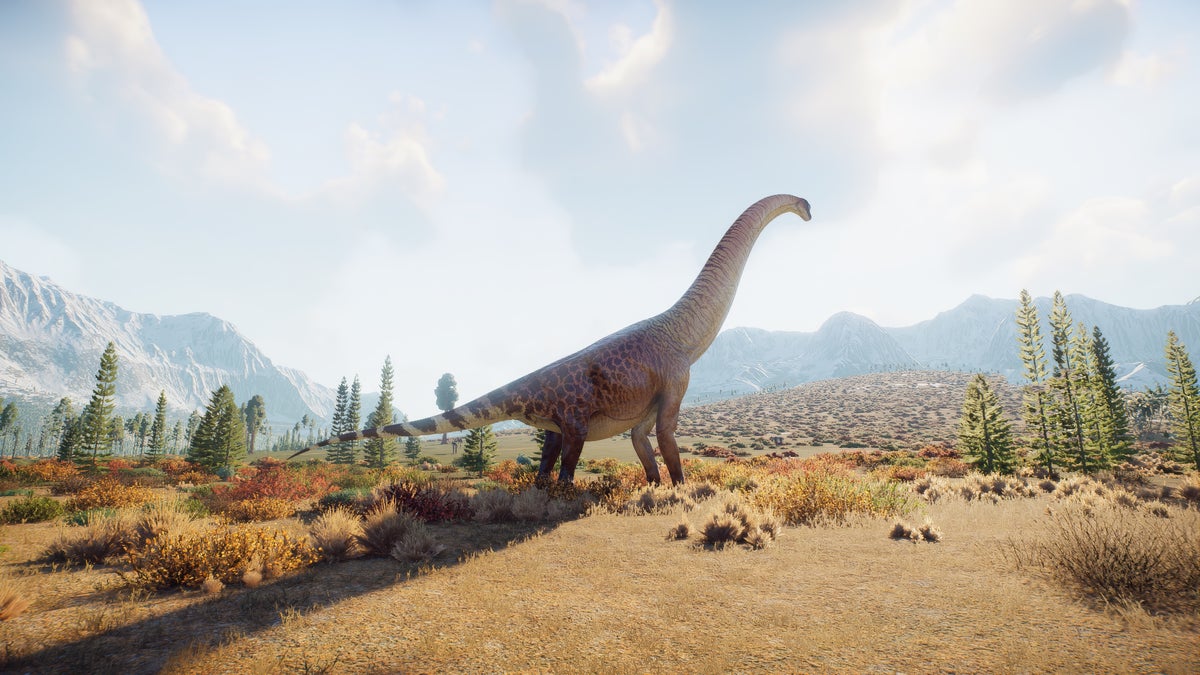
For predatory dinosaurs, the Late Jurassic was an all-you-can-eat sauropod buffet
The Micro Hook: A World Beneath the Giants’ Feet
Deep in the dappled light of a forgotten forest, where the colossal footsteps of sauropods once shook the very earth, a different drama unfolded. It was a world teeming with life, a complex fabric of life, vibrant and relentless, yet utterly unnoticed by the towering giants above. Imagine the Late Jurassic, not just as a stage for magnificent dinosaurs, but as a dynamic ecosystem built from the countless lives of the small. Beneath the ferns and cycads, a metallic-green beetle diligently rolled a pellet of dung, a vital act of recycling. A spider, with patience honed over millions of years, meticulously repaired its silken snare, ready for the next unwary flyer. These aren’t just quaint observations; they are echoes of an ancient world, a persistent hum of life that has outlasted nearly every other creature from that distant epoch.
As a Resident Entomologist for Wandering Science, my passion lies in pulling back the curtain on this hidden realm. We often gaze upwards, mesmerized by the scale of extinct megafauna, but the true architects of enduring ecosystems have always been those that creep, crawl, and fly just beneath our notice. While Allosaurus stalked its ponderous prey, the ground beneath its claws was a bustling metropolis of activity. Each fallen leaf, every fragment of wood, and certainly every scrap of organic matter left by the gargantuan herbivores, became a resource, a home, or a hunting ground for an incredible array of invertebrates. This unseen world was not merely present; it was fundamental, shaping the very soil, cycling nutrients, and forming the base of food webs that supported even the smallest of the early mammals and reptiles, and indeed, the juvenile dinosaurs themselves.
The Discovery: Jurassic Insights from Modern Behavior
How do we know about these ancient, diminutive lives? The evidence is often subtle, requiring a keen eye and an understanding of modern insect and arachnid behavior. Amber, that fossilized tree resin, provides unparalleled snapshots, preserving ancient ants, wasps, mites, and even delicate midges in exquisite detail. These amber inclusions from the Jurassic and Cretaceous periods reveal creatures remarkably similar to those we see today. Consider the wood-boring beetles, whose fossilized tunnels scar ancient logs, mirroring the work of their modern descendants that tirelessly break down fallen timber. Or the fossilized droppings, coprolites, of early insectivorous animals, often packed with the chitinous remains of beetles and crickets – direct evidence of a thriving invertebrate food source. Every fossilized footprint of a sauropod pressed into ancient mud was, in fact, an ephemeral monument above a world of worms, springtails, and mites, constantly tilling and enriching the substrate. Their sheer numbers and metabolic rates meant they were, collectively, a force of nature, quietly processing the planet’s biomass. We analyze these ancient traces, compare them to present-day ecological roles, and reconstruct a vibrant, miniature world that was just as complex and interconnected then as it is now. The behaviors we observe in a forest today – a dung beetle’s tireless work, a termite colony’s architectural marvels, a parasitic wasp’s intricate life cycle – are echoes of strategies perfected over hundreds of millions of years, strategies that enabled these creatures to persist through geological upheavals that wiped out far larger, more celebrated life forms.
Ecological Context: The Unsung Architects of Life
The headline speaks of sauropods as a “buffet” for predators, and indeed they were. But who cleaned up the leftovers? Who processed the vast quantities of plant matter they consumed and subsequently excreted? The answer lies with the unsung heroes of the ecosystem: insects and other invertebrates. Without the decomposers – the beetles, the millipedes, the fungi, and bacteria – the planet would be buried under its own detritus. Nutrient cycling, the very engine of life, relies critically on these organisms. Imagine a world without them; the soil would be barren, nutrients locked away, and the grand cycles that sustain plant growth, and thus herbivore existence, would grind to a halt. The sauropods, for all their bulk, were utterly dependent on this microscopic workforce to prepare their food and clean up after them. Beyond decomposition, insects played other vital roles. Early pollinators, even before the widespread advent of flowering plants, facilitated the reproduction of gymnosperms. Predatory insects and arachnids kept other invertebrate populations in check, maintaining a delicate balance. They were the primary food source for countless smaller vertebrates, filling niches that allowed for the diversification of early birds, mammals, and amphibians. Their adaptability, their rapid reproductive cycles, and their incredible diversity ensured that no matter what cataclysm befell the larger creatures, the invertebrate world found a way to rebound, to adapt, and to continue its foundational work.
This enduring presence isn’t just a historical footnote; it’s a living lesson. The stability and resilience of any ecosystem, from the Jurassic swamps to modern rainforests, are directly proportional to the health and diversity of its invertebrate inhabitants. They are the gears in the ecological machine, often hidden, but indispensable. When we consider the grand sweep of evolutionary history, it becomes clear that while dinosaurs came and went, rising to spectacular dominance only to vanish, the insects and arachnids persisted. They are the quiet survivors, the continuous thread running through the fabric of life on Earth, constantly evolving, constantly adapting, and constantly performing the vital services that allow all other forms of life to flourish.
The Field Angle: Discovering the Ancient World in Your Own Backyard
You don’t need a time machine to witness the echoes of the Jurassic invertebrate world. The wonder I speak of is not confined to fossil beds or remote jungles; it is alive and thriving all around us, waiting for your observation. As a Wandering Science traveler, your greatest tool is not a compass or a sophisticated camera, but a willingness to look closer. Turn over a log in your local park, and you might disturb a colony of ants, whose social structures and foraging behaviors are ancient legacies. Observe a spider meticulously spinning its web between blades of grass – a predatory strategy honed over hundreds of millions of years. Watch a bee, a direct descendant of ancient wasps, visiting a flower, performing a dance of pollination that has shaped plant evolution for eons.
Take a moment to sit quietly in your garden or a nearby patch of wilderness. Let your eyes adjust to the miniature scale. Notice the iridescent flash of a beetle, the purposeful march of a caterpillar, the silent vigil of a praying mantis. Each of these creatures is a living link to that ancient world where dinosaurs roamed. They occupy similar ecological roles, employ similar survival strategies, and contribute to the same fundamental processes that kept the Jurassic world humming. By simply observing, by allowing ourselves to be captivated by their intricate lives, we gain a profound appreciation for the enduring power of the small. The next time you hear about colossal dinosaurs, remember the silent, persistent, and utterly essential world beneath their feet. That world continues to thrive, a testament to the power of adaptation and the beauty of life in its most intricate forms. All you have to do is look.