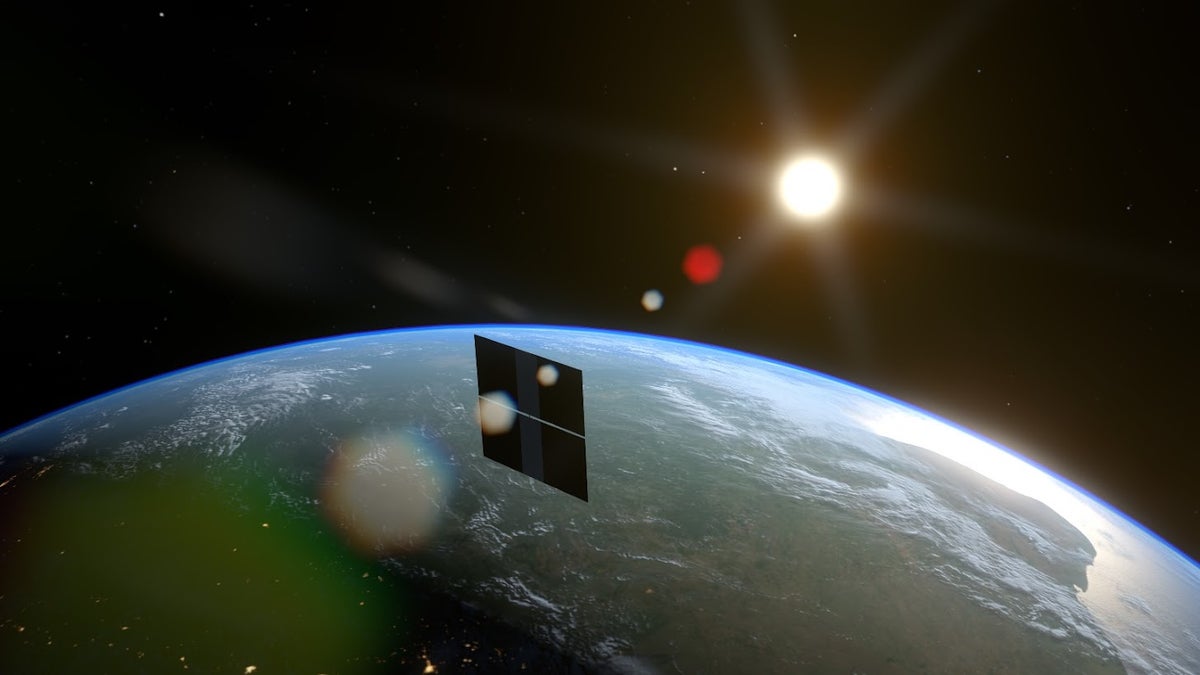

Space-Based Data Centers Could Power AI with Solar Energy—at a Cost
The desert night descends, and with it, a silence broken only by the whisper of wind through parched scrub. Above, the Milky Way arcs, a river of starlight so dense it feels almost tangible. This celestial spectacle, a beacon of raw, untamed energy, has fueled human imagination for millennia. Yet, back on Earth, another kind of energy consumption proceeds relentlessly: the ceaseless hum of artificial intelligence. Its appetite for power is gargantuan, its growth exponential, and its environmental footprint a growing concern. What if the very stars we gaze upon could power this digital revolution, shifting our computational burden from a warming planet to the cold, constant embrace of space?
The idea sounds like science fiction, a distant cousin to Dyson spheres, but it is a concept gaining serious traction among engineers and visionaries. Terrestrial data centers, the physical backbone of our digital world, are notorious energy hogs. They consume immense amounts of electricity, primarily to run servers and, perhaps even more so, to cool them. The heat generated by billions of calculations requires colossal air conditioning systems, often powered by fossil fuels, contributing to carbon emissions and straining local grids. The promise of space-based data centers, as explored in recent discussions, lies in their potential to tap into an uninterrupted stream of solar power, free from atmospheric interference and the Earth’s day-night cycle. In orbit, sunlight is a constant, potent force, ready to be converted into the electrical current that feeds the hungry silicon brains of AI.
The mechanics are complex, certainly. Imagine vast arrays of solar panels, unfurling like colossal metallic wings against the black void, continuously bathing in the sun’s radiance. These would feed power directly to server farms enclosed in

About admin
A curious explorer documenting the intersection of science and travel. Join the journey to discover the hidden stories of our planet.
Leave a Reply