
Cancer neuroscience: illuminating the neural dimension of tumor biology
Deep in the cool, damp embrace of a forest floor, where sunlight filters through a canopy of ancient leaves, a silent, intricate drama unfolds. Beneath a decaying log, a minuscule, segmented explorer navigates a labyrinth of soil particles and fungal hyphae. Its antennae, mere threads of life, twitch with an almost imperceptible rhythm, sampling the chemical whispers of its subterranean world. This isn’t just a creature moving; it’s a living, breathing testament to billions of years of evolution, a tiny marvel whose very existence is a symphony of sensory input and neural computation. As an entomologist for Wandering Science, my passion lies in pulling back the veil on these hidden realms, to reveal the astonishing complexity that thrives just out of our everyday sight, reminding us that the grandest narratives often play out on the smallest stages.
What we often dismiss as “bugs” are, in fact, master engineers, sophisticated communicators, and survival artists par excellence. Consider the humble ant, for instance. Its individual brain, no larger than a poppy seed, houses an astonishing network of neurons, enabling it to contribute to a superorganism whose collective intelligence can rival, and in some ways surpass, our own problem-solving capabilities. From foraging for food and defending the colony to constructing elaborate underground cities, every action is orchestrated by an intricate dance of electrochemical signals. These miniature nervous systems, fine-tuned over millennia, allow for navigation using polarized light, chemical trail following, and even complex division of labor, demonstrating a “neural dimension” to their biology that is as profound as it is overlooked.
It is in these intricate behaviors that we begin to truly appreciate the sophistication of the insect nervous system. Take the intricate dance of a honeybee scout, returning to the hive to communicate the location of a rich nectar source. Through a precise series of waggles, turns, and vibrations, she conveys not only direction but also distance and quality of the find. This isn’t simply instinct; it’s a sophisticated form of symbolic communication, underpinned by complex neural processing that integrates spatial memory, visual cues, and an internal clock. Scientists, using micro-electrodes and advanced imaging techniques, are only just beginning to map the neural pathways responsible for such feats, revealing an internal world of decision-making, learning, and memory that challenges our anthropocentric biases about intelligence. The study of these minute brains offers profound insights not just into insect life, but into the fundamental principles of neural organization and information processing itself, hinting at universal mechanisms that govern complex behaviors across the tree of life.
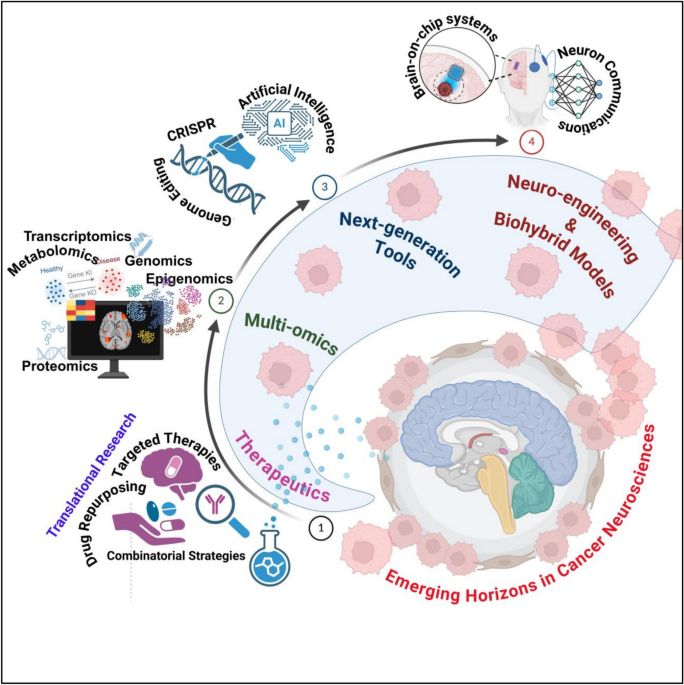
This hidden world, powered by these incredible neural systems, forms the very bedrock of our planet’s ecological health. Insects and arachnids are the silent architects and essential workers of nearly every ecosystem. They pollinate the vast majority of our food crops, ensuring the bounty of our harvests and the diversity of our plant life. Without bees, butterflies, and countless other lesser-known pollinators, our agricultural systems would collapse, and the vibrant tapestry of flowering plants that beautifies our world would fade. They are also crucial decomposers, tirelessly breaking down organic matter, recycling nutrients back into the soil, and creating the fertile ground that sustains all life. Dung beetles, termites, and a myriad of soil mites work unseen, turning waste into wealth, preventing the accumulation of detritus that would otherwise smother our landscapes. Furthermore, many insects and arachnids serve as vital food sources for countless birds, fish, amphibians, reptiles, and mammals, forming the foundational links in food webs. A healthy insect population signifies a healthy environment, a robust food chain, and a thriving planet. Their intricate lives, driven by their neural machinery, are not just fascinating curiosities; they are indispensable gears in the grand ecological clockwork, and their well-being directly reflects our own. The ongoing decline in insect populations globally is a stark warning sign, a tremor in the foundations of the very ecosystems we depend upon. Understanding their neural complexity helps us appreciate their ecological roles even more deeply, underscoring the urgent need for their conservation.
For the intrepid traveler or the curious mind eager to witness these marvels firsthand, the world is your laboratory. You don’t need a passport to a remote jungle; often, the most astonishing discoveries await in your own backyard. Start with a simple magnifying glass and a keen eye. In the early morning, when dew still clings to spiderwebs, you can observe the painstaking repairs of an orb-weaver, its eight eyes coordinating the delicate placement of silk. Under a porch light at night, moths, drawn by the illumination, reveal incredible wing patterns and antennae designed to detect pheromones from miles away. For a deeper dive, visit a local nature reserve or a botanical garden. Many offer guided “bug walks” that highlight nocturnal insects or specific habitats. A headlamp and a little patience will open up a nocturnal world buzzing with life – cicadas singing, crickets chirping, and predatory beetles hunting. Consider investing in a good field guide specific to your region; identifying species enhances the observation experience. Even a small patch of wildflowers can become a vibrant hub of activity, attracting bees, hoverflies, and butterflies. Remember to observe respectfully: avoid disturbing creatures or their habitats, and always leave things as you found them. By taking the time to look closely, by truly seeing the “small world,” you’ll not only gain a profound appreciation for the neural wonders that drive these creatures but also connect more deeply with the intricate, beautiful, and essential ecological web that surrounds us all. The journey into the hidden dimensions of insect life is a journey into the very heart of nature’s ingenuity, and it’s an adventure open to everyone.

About admin
A curious explorer documenting the intersection of science and travel. Join the journey to discover the hidden stories of our planet.
Leave a Reply