
The city, any city, pulses with a rhythm both ancient and utterly modern. From the spice-laden air of Marrakech’s souks to the neon glow of Tokyo’s Shibuya crossing, human lives unfold in an intricate dance of ambition, joy, struggle, and solace. We wanderers, whether on foot or through the pages of a scientific journal, often seek to understand the deeper currents shaping these lives. We observe the visible: the architecture, the customs, the daily rituals. But beneath the surface, a more insidious narrative often plays out, one that whispers of changing health landscapes, quiet epidemics, and the evolving burdens placed upon individuals and societies. What unseen forces, we might wonder, are truly shaping the well-being of our global village, transforming its very fabric over decades?
For those of us at ‘Wandering Science’, bridging the gap between rigorous data and the human story, few insights offer as stark a reflection of these underlying shifts as the comprehensive Global Burden of Disease (GBD) studies. These are not mere snapshots; they are meticulously constructed epidemiological canvases, painted with data from hundreds of researchers across the globe. The latest GBD analysis, spanning 204 countries from 1990 to 2023, meticulously charts the prevalence and impact of drug use disorders involving amphetamines, cannabis, cocaine, and opioids. Its findings present a sobering picture: the burden of these disorders has not merely persisted, but has demonstrably grown, particularly in high-income countries, with the United States emerging as a central point of concern.
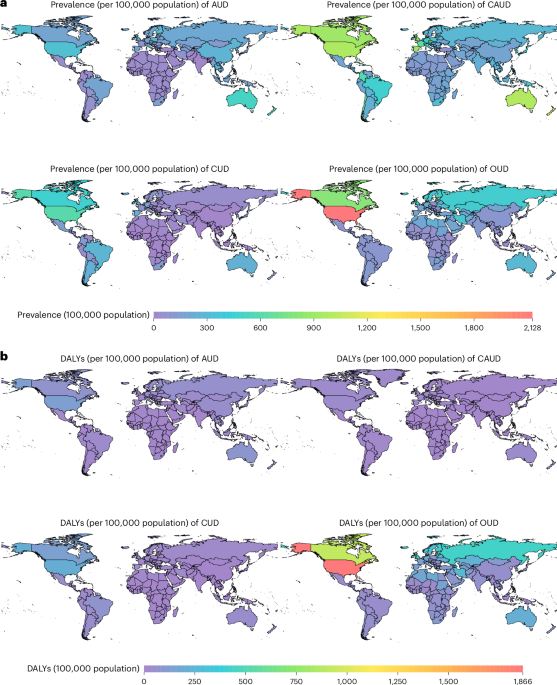
This monumental study moves beyond simple counts of addiction, employing metrics like Disability-Adjusted Life Years (DALYs) to quantify the total years of healthy life lost due to premature mortality and years lived with disability. By this measure, the GBD study reveals that the global health impact of substance use disorders is far more profound than many might assume, extending beyond individual suffering to exert a significant drag on public health systems and national productivity. The data points to a consistent upward trend in the prevalence of these disorders over the past three decades. While the specific drugs contributing most to the burden vary by region – opioids dominating in some areas, cannabis and amphetamines in others – the overarching trend of increasing prevalence and DALYs is undeniable. This isn’t just about more people using drugs; it’s about more people suffering from the debilitating and often fatal consequences of drug use disorders, placing an escalating demand on healthcare, social services, and economic resources.
Understanding the “why” behind these statistics requires looking beyond the immediate data. The rise in drug use disorders is a complex phenomenon, deeply intertwined with socioeconomic shifts, evolving drug markets, and public health policies. In high-income countries, for instance, the opioid crisis in North America has been a catastrophic driver of increased burden, fueled by a confluence of factors including aggressive pharmaceutical marketing, over-prescription of pain medication, and the subsequent proliferation of illicit synthetic opioids like fentanyl. This has created a devastating public health emergency, claiming hundreds of thousands of lives and leaving countless families fractured. Elsewhere, the legalization or decriminalization of cannabis in various regions has brought new challenges and opportunities, shifting public perception and access, while simultaneously requiring robust public health frameworks to monitor and mitigate potential harms. The globalized nature of drug production and trafficking also plays a critical role, with supply chains adapting rapidly to demand and enforcement efforts, leading to the emergence of novel psychoactive substances and the constant evolution of drug markets.
Furthermore, the past few decades have seen significant societal changes that exacerbate vulnerability to substance use disorders. Economic inequality, job insecurity, and a widespread mental health crisis contribute to an environment where individuals may turn to substances as a coping mechanism. The erosion of social safety nets, coupled with inadequate access to mental healthcare and addiction treatment services, creates a vicious cycle. Stigma surrounding drug use disorders further acts as a barrier, preventing individuals from seeking help and perpetuating cycles of harm. Public health responses have often been reactive rather than proactive, struggling to keep pace with the dynamic nature of drug trends. The debate between harm reduction strategies – such as supervised consumption sites, needle exchange programs, and naloxone distribution – and more punitive, abstinence-focused approaches continues to shape policy, with varied outcomes across different nations. The GBD study, by offering a long-term, global perspective, underscores the urgent need for evidence-based, compassionate, and comprehensive strategies that address both the supply and demand for drugs, as well as the underlying social determinants of health.
For the ‘Wandering Science’ reader, someone who seeks to understand the world not just through data but through lived experience, the question arises: where can one witness the tangible manifestations of this global burden? While the statistics might feel abstract, the human story is everywhere, if you know where to look. One could travel to Portugal, a pioneer in drug policy, which decriminalized all drug use in 2001. Here, a traveler might observe a system focused on public health rather than criminalization, with outreach teams connecting individuals to treatment and social support services rather than incarceration. Visiting a “dissuasion commission” in Lisbon offers a direct glimpse into this unique approach, seeing how individuals caught with drugs are offered health assessments and referrals, a stark contrast to punitive models elsewhere.
Alternatively, an exploration of North American cities deeply affected by the opioid crisis, such as Vancouver, British Columbia, or various urban centers in the American Rust Belt, offers a different perspective. Here, one might visit supervised consumption sites – places where people can use pre-obtained drugs under medical supervision, reducing overdose deaths and the spread of disease. Engaging with community organizations involved in harm reduction, distributing naloxone kits, or running peer support groups reveals the incredible resilience and dedication of those on the front lines. These are not sterile medical facilities but often vibrant, community-led spaces striving to save lives and build connections in the face of overwhelming challenges.
For those interested in the evolving landscape of cannabis, a trip to Amsterdam, a long-standing hub for cannabis culture, or more recently, to states like Colorado or California in the USA, or even Canada, provides insight into the societal integration of legalized cannabis. Observing the regulated dispensaries, the public health campaigns, and the ongoing debates around taxation, public safety, and youth access offers a firsthand look at the complexities of managing a newly legal psychoactive substance. These locations provide a window into the ongoing experiment of balancing individual liberty with public health responsibilities, a microcosm of the broader global challenge.
Ultimately, to witness the global burden of drug use disorders is to engage with humanity at its most vulnerable and its most resilient. It means seeking out the stories behind the numbers, understanding the policies that shape lives, and observing the tireless efforts of communities striving for healing and change. It is an invitation to move beyond judgment and embrace a more nuanced understanding of a profound global challenge, recognizing that every statistic represents a life, a family, and a community grappling with a complex, evolving reality.

About admin
A curious explorer documenting the intersection of science and travel. Join the journey to discover the hidden stories of our planet.
Leave a Reply