
Trump says UK handing over Chagos Islands sovereignty is act of ‘great stupidity’
The vast, shimmering expanse of the Indian Ocean often conjures images of tranquil turquoise waters, untouched coral gardens, and islands so remote they feel like whispers on the wind. Yet, beneath this idyllic surface, currents of geopolitical ambition, colonial legacy, and human displacement churn with relentless force. It is into these complex waters that former US President Donald Trump recently waded, declaring the United Kingdom’s potential handover of the Chagos Islands to Mauritius an act of “great stupidity.” His commentary, made in the context of his own past desire to acquire Greenland, rips open a decades-old wound, exposing the delicate interplay between sovereignty, strategic imperative, and the profound environmental and human narratives embedded in these distant specks of land.
For all the bluster of political pronouncements, the Chagos Archipelago itself stands as a remarkable testament to the Earth’s intricate geological and biological processes. This chain of 60 islands, spread over 54,400 square kilometers of ocean, is the world’s largest contiguous coral atoll system, a living laboratory of marine science. Formed atop ancient submerged volcanoes, these low-lying islands are the visible tips of vast coral structures that have grown over millennia, creating a breathtaking underwater landscape. Scientists studying the archipelago marvel at its pristine condition, particularly the Great Chagos Bank, which hosts an unparalleled diversity of hard and soft corals, supporting a rich tapestry of marine life from iridescent reef fish to large pelagic predators like sharks and tuna. It serves as a critical nursery and feeding ground, a vital part of the global ocean ecosystem, and a crucial benchmark for understanding coral health in an era of climate change.
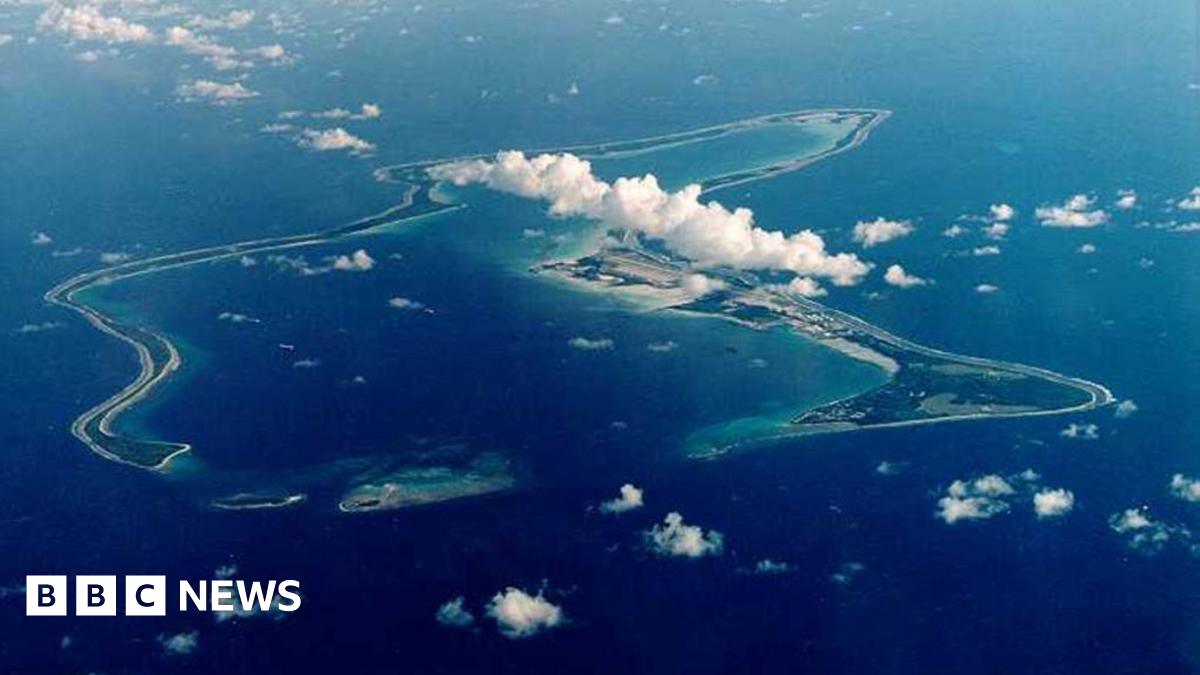
The archipelago’s remote location has shielded it from much of the anthropogenic pressures seen elsewhere, allowing its ecosystems to thrive with a resilience rarely observed. Researchers here investigate the impact of ocean acidification, rising sea temperatures, and plastic pollution on a relatively intact system, hoping to glean insights that can inform conservation efforts worldwide. The unique combination of deep ocean trenches surrounding the atolls creates upwellings that enrich the waters, contributing to the exceptional productivity. Seabirds, including various species of boobies, terns, and frigatebirds, nest on the uninhabited islets, their guano fertilizing the sparse vegetation and contributing to the delicate nutrient cycle. The very existence of these vibrant ecosystems, thriving in such isolation, underscores the immense ecological value that often becomes a silent backdrop to human political maneuvering.
Yet, the story of the Chagos Islands is inextricably woven with a darker thread of human history and geopolitical calculation. Acquired by the British in the early 19th century, the islands remained a quiet colonial outpost until the mid-20th century. With the Cold War heating up, the United States sought a strategically vital military base in the Indian Ocean, and the largest island, Diego Garcia, was deemed perfect. In a controversial move in 1965, the UK detached the Chagos Archipelago from Mauritius, creating the British Indian Ocean Territory (BIOT), a separate colony, before Mauritius gained independence. This detachment paved the way for a secret agreement: the UK would lease Diego Garcia to the US for defense purposes, on the condition that the islands be “swept clean” of their inhabitants.
Between 1968 and 1973, the entire indigenous population, the Chagossians or Ilois people – descendants of enslaved Africans and indentured laborers brought to the islands in the 18th century – were forcibly removed. They were deported to Mauritius and the Seychelles, often under brutal conditions, their homes and communities dismantled. This act of displacement, justified by the UK and US as a military necessity, has since been condemned by international bodies as a gross violation of human rights. For decades, the Chagossians have fought tirelessly for their right to return, a struggle that has gained increasing international support.
The legal landscape surrounding the Chagos Islands has become increasingly complex. In 2019, the International Court of Justice (ICJ) issued an advisory opinion stating that the UK’s administration of the Chagos Archipelago was unlawful, given its separation from Mauritius before decolonization. The UN General Assembly subsequently overwhelmingly voted in favor of a resolution demanding that the UK relinquish control. While the ICJ’s opinion is not legally binding, it carries significant moral and political weight, intensifying pressure on London to negotiate a settlement with Mauritius.
This is the intricate backdrop against which Donald Trump’s recent comments land. His assertion that handing over the islands is an act of “great stupidity,” particularly in light of the US military base on Diego Garcia, reflects a transactional, national-interest-driven worldview. It also contradicts the Trump administration’s own previous stance in 2019, when it reportedly backed a deal that would see the UK transfer sovereignty to Mauritius, contingent on continued US access to the base. His current remarks appear to frame the islands purely as a strategic asset to be held, echoing his earlier desire to “buy” Greenland. This perspective largely ignores the historical injustices, the international legal consensus, and the deeply personal connection of the Chagossians to their ancestral homeland, reducing a multi-faceted human and ecological crisis to a simple matter of territorial acquisition.
For the curious mind, the Chagos Islands present an enigmatic challenge. Direct travel to the archipelago, particularly Diego Garcia, remains highly restricted due to its military status. For most, experiencing this unique part of the world must come through proxy, through an engagement with its themes rather than its physical shores. One might journey to the Seychelles or the Maldives, neighboring island nations that share similar coral ecosystems, to witness the breathtaking biodiversity and understand the fragility of atoll life in the face of climate change. Here, one can snorkel over vibrant reefs, learn about marine conservation efforts, and gain a tangible appreciation for the scientific marvels that define the Chagos.
To grasp the human dimension, one could engage with the stories of displaced communities globally, or seek out documentaries and historical accounts detailing the Chagossians’ struggle. Visiting the communities in Mauritius or the UK where Chagossians now reside offers a chance to understand the enduring impact of forced migration and the resilience of a people fighting for justice. These experiences, though not a direct visit to the Chagos, offer a profound connection to the essence of the islands: a place of unparalleled natural beauty, scarred by human decisions, and now at the center of a global debate about sovereignty, justice, and the future of remote territories in an interconnected world. The “stupidity” of a political act, as Trump suggests, might well be measured not just in strategic advantage, but in the cost to human dignity and the health of our shared planet.

About admin
A curious explorer documenting the intersection of science and travel. Join the journey to discover the hidden stories of our planet.
Leave a Reply